
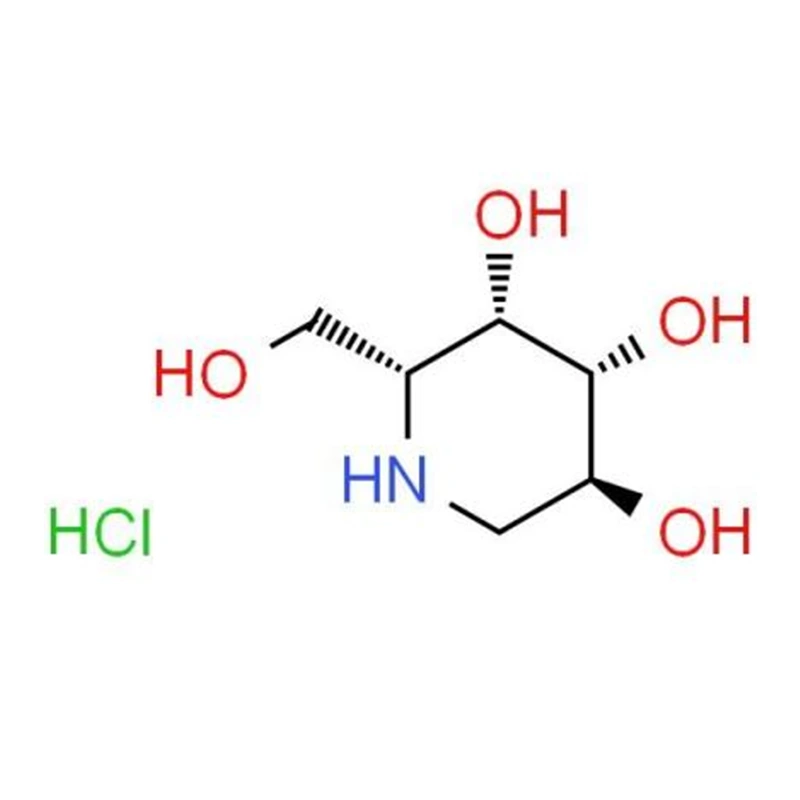
Migalastat (CAS 108147-54-2), marketed under the brand name Galafold, represents a fundamentally different treatment paradigm for Fabry disease. Unlike traditional enzyme replacement therapy (ERT) — which requires intravenous infusions every 1-2 weeks — Migalastat is an oral pharmacological chaperone that works by stabilizing the patient‘s own dysfunctional enzyme.
But here’s the key difference: instead of replacing the missing enzyme (ERT), Migalastat binds to and stabilizes the patient‘s existing but misfolded α-galactosidase A (α-Gal A) enzyme, helping it reach the lysosome where it can break down accumulated disease substrates. This approach offers several important advantages: oral administration eliminates the need for regular clinic visits for IV infusions; lower immunogenicity risk compared to infused proteins; and potentially more convenient long-term disease management.
As a pharmacological chaperone, Migalastat is not a one-size-fits-all therapy — it is indicated specifically for Fabry disease patients with amenable GLA gene mutations. This targeted approach ensures that the drug only reaches patients whose enzyme can be effectively stabilized by the molecule. An estimated 35% to 50% of Fabry disease patients carry amenable mutations and may benefit from this oral therapy.
At Cosperpharm, we produce Migalastat API under strict GMP conditions, achieving ≥98% purity by HPLC. We hold a valid pharmaceutical export license, ensuring smooth customs clearance and providing full documentation support for your regulatory filings.
|
Parameter |
Specification |
|
CAS Number |
108147-54-2 |
|
Chemical Name |
(2R,3S,4R,5S)-2-(hydroxymethyl)piperidine-3,4,5-triol hydrochloride |
|
Molecular Formula (Free Base) |
C₆H₁₃NO₄ |
|
Molecular Weight (Free Base) |
163.17 g/mol |
|
Molecular Formula (HCl Salt) |
C₆H₁₄ClNO₄ |
|
Molecular Weight (HCl Salt) |
199.63 g/mol |
|
Purity (HPLC) |
≥98% |
|
Any single impurity |
≤0.50% |
|
Total impurities |
≤1.0% |
|
Appearance |
White to off-white crystalline powder |
|
Solubility |
Freely soluble in aqueous media (pH 1.2–7.5) |
|
Storage |
2-8°C or room temperature, protected from light, air-tight |
|
Packaging |
10g, 50g, 100g, 500g, 1kg (customizable) |
The above specifications are a comprehensive reference version based on general standards of EMA (Europe) and FDA (USA).
|
Advantage |
Detail |
|
Production Strength |
GMP-certified campus spanning 100+ mu, 3 multi-purpose workshops, 6 D-grade clean zone production lines, and 150+ reactors (20L–5000L), supporting high/low temp, anaerobic & hydrogenation; kg to ton scale production |
|
Fast Delivery |
R&D samples: one week; commercial orders: 1-2 months after payment. Express (DHL/FedEx) or air/sea freight available |
|
Global Partners |
Trusted by 30+ pharmaceutical companies in USA, Europe, India, Brazil, and Southeast Asia; long-term cooperation with generic drug manufacturers and CROs |
|
Licensed Exporter |
Valid drug import/export license — no compliance delays. |
Fabry disease (FD) is an X-linked lysosomal storage disorder caused by mutations in the GLA gene, leading to deficient or absent α-galactosidase A (α-Gal A) enzyme activity [11†L15-L17]. This deficiency results in progressive accumulation of globotriaosylceramide (GL-3) and related substrates in cells throughout the body — particularly in the kidneys, heart, and nervous system.
Migalastat is indicated for the long-term treatment of adults and adolescents (aged 12 years and older) with a confirmed diagnosis of Fabry disease and an amenable GLA gene variant based on in vitro assay data.
Unlike ERT that supplies exogenous enzyme, Migalastat works as a pharmacological chaperone. Here‘s how:
·Selective Binding: Migalastat selectively and reversibly binds to the active site of mutant α-Gal A enzymes produced by amenable GLA mutations.
·Enzyme Stabilization: This binding stabilizes the otherwise misfolded and unstable enzyme, allowing it to escape degradation in the endoplasmic reticulum .
·Lysosomal Trafficking: The stabilized enzyme with bound Migalastat can now be properly trafficked to the lysosome — its site of action.
·Substrate Clearance: Once in the lysosome‘s acidic environment and in the presence of natural substrates (GL-3), Migalastat dissociates, freeing the enzyme to break down accumulated disease substrates.
Migalastat is not for every Fabry disease patient. Its efficacy depends entirely on the patient‘s specific GLA mutation. This is precision medicine in action.
A GLA mutation is considered “amenable” to Migalastat if, in the validated HEK-293 in vitro assay, the mutant α-Gal A enzyme shows:
·An absolute increase in activity of at least 3% of wild-type levels;
·A relative increase of at least 20% (approximately 1.2-fold) compared to baseline enzyme activity.
`Estimated 35% to 50% of Fabry disease patients carry amenable mutations and may be candidates for Migalastat therapy .
`The Galafold Amenability Assay is used to identify which specific GLA mutations are expected to respond .
This targeted approach represents a shift from one-size-fits-all treatment to personalized medicine — ensuring that only patients likely to benefit receive the therapy.
The pivotal FACETS trial (NCT00925301) evaluated Migalastat in Fabry disease patients with amenable mutations. Key efficacy outcomes included:
`Diarrhea Improvement: After 6 months, significantly more patients receiving Migalastat experienced clinically meaningful improvement in diarrhea compared to placebo (43% vs 11%; p=0.02). Among those with baseline diarrhea, the improvement rate reached 71% (vs 20% with placebo; p=0.02) .
`Biomarker Correlation: A decline in kidney peritubular capillary GL-3 inclusions correlated with diarrhea improvement; patients with a reduction >0.1 were 5.6 times more likely to experience improvement .
`Substrate Reduction: Reductions in kidney globotriaosylceramide serve as a useful surrogate endpoint to predict clinical benefit
The phase 3b ASPIRE trial evaluated Migalastat in 21 adolescents (12 to <18 years, mean age 14.7 years) with amenable GLA variants, with up to 48 months of follow-up. Key results published in 2025 showed:
`Well Tolerated: No new or unexpected safety findings were observed in this adolescent population.
`Renal & Cardiac Stability: Renal and cardiac measures remained within the normal range throughout the study period.
`Quality of Life: Pain related to heat or exertion improved with Migalastat treatment; other patient-reported measures of pain, GI symptoms, and quality of life remained stable.
A systematic review published in Expert Opinion on Pharmacotherapy (2024) comprehensively assessed the safety and efficacy of Migalastat for Fabry disease, confirming its clinical benefit in patients with amenable mutations.
`First-in-class oral pharmacological chaperone — unique mechanism of action
`First FDA-approved oral therapy for Fabry disease (2018)
`Precision medicine approach — indicated only for patients with amenable GLA mutations
`Oral administration vs. IV infusions — better patient compliance
`Well-tolerated with favorable safety profile
`Valid export license — Cosperpharm is an authorized API exporter
|
Aspect |
Migalastat |
ERT |
|
Administration |
Oral (capsule) |
IV infusion (clinic-based) |
|
Dosing frequency |
123 mg every other day |
Every 1-2 weeks |
|
Immunogenicity risk |
Low |
Higher |
|
Patient convenience |
At-home |
Requires clinic visits |
`FDA Orphan Drug Designation for treatment of Fabry disease granted on February 25, 2004 — highlighting the significant unmet medical need for Fabry disease treatments.
`Orphan drug exclusivity protection period: August 10, 2018 to August 10, 2025.
`Approval expanded to adolescents (aged 12 years and older) based on ASPIRE trial results.
`Ongoing studies in pediatric patients aged 2 to <12 years are currently underway.
Cosperpharm manufactures Migalastat API in modern GMP multi-purpose workshops equipped with 6 D-grade clean zone production lines. Our 150+ reactors (20L–5000L) support high/low temperature, anaerobic, and hydrogenation conditions, enabling production from kilogram to metric ton scale. Each batch undergoes rigorous QC testing: HPLC, GC, LC-MS, residual solvents (ICH Q3C), heavy metals, and genotoxic impurity analysis. We provide full traceability from raw material to finished API.
Q1: What is the difference between Migalastat and enzyme replacement therapy (ERT)?
A: ERT replaces the missing enzyme via IV infusion every 1-2 weeks, while Migalastat is an oral pharmacological chaperone that stabilizes the patient‘s own dysfunctional enzyme. Migalastat offers oral administration, lower immunogenicity risk, and greater patient convenience.
Q2: Who can benefit from Migalastat?
A: Migalastat is indicated only for Fabry disease patients with amenable GLA mutations — an estimated 35% to 50% of all Fabry patients. The Galafold Amenability Assay is used to determine mutation amenability.
Q3: What is your MOQ for Migalastat API?
A: R&D samples: 10g. Commercial orders: 100g–1kg. Larger quantities available upon request.
Q4: What is your typical lead time?
A: In-stock R&D samples: one week. Bulk orders: 1-2 months after payment confirmation.
Q5: Which countries have you exported to?
A: USA, Canada, Germany, UK, Spain, India, Brazil, South Korea, Japan, and more. We have experience with local customs and regulatory requirements.
Q6: Can you provide third-party testing or audit?
A: Yes. We welcome customer audits or SGS/BV inspections. Third-party testing can be arranged at buyer‘s cost.
Q7: What certificates do you hold?
A: GMP certificate (ISO 9001:2015), pharmaceutical import/export license, and COA for each batch.
Q8: Do you offer customized packaging?
A: Yes. We can customize packaging size, labeling, and even inner lining materials per your request.
Q9: Is Migalastat API stable for long-term storage?
A: Yes. When stored at 2-8°C (or room temperature) in an air-tight container protected from light, Migalastat API remains stable for 24 months. We provide accelerated and long-term stability data upon request.
Ready to buy Migalastat API? Contact Cosperpharm today for a sample or quote. We look forward to becoming your long-term China Migalastat supplier.
Address
No. 2 Yangguang 3rd Road, Duodao Chemical Cycle Industrial Park, Jingmen City, Hubei Province, China
Tel