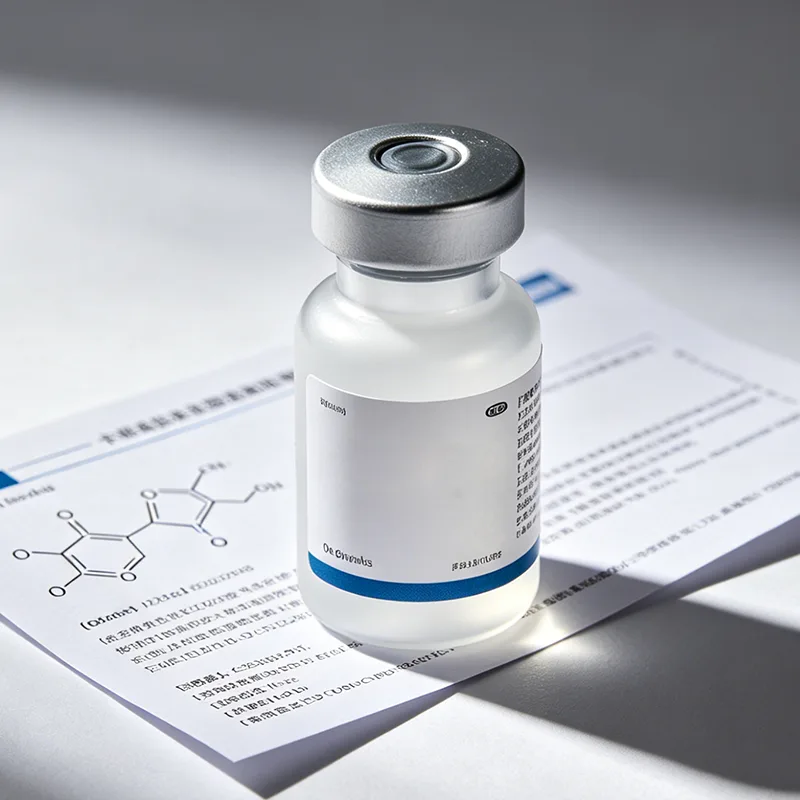

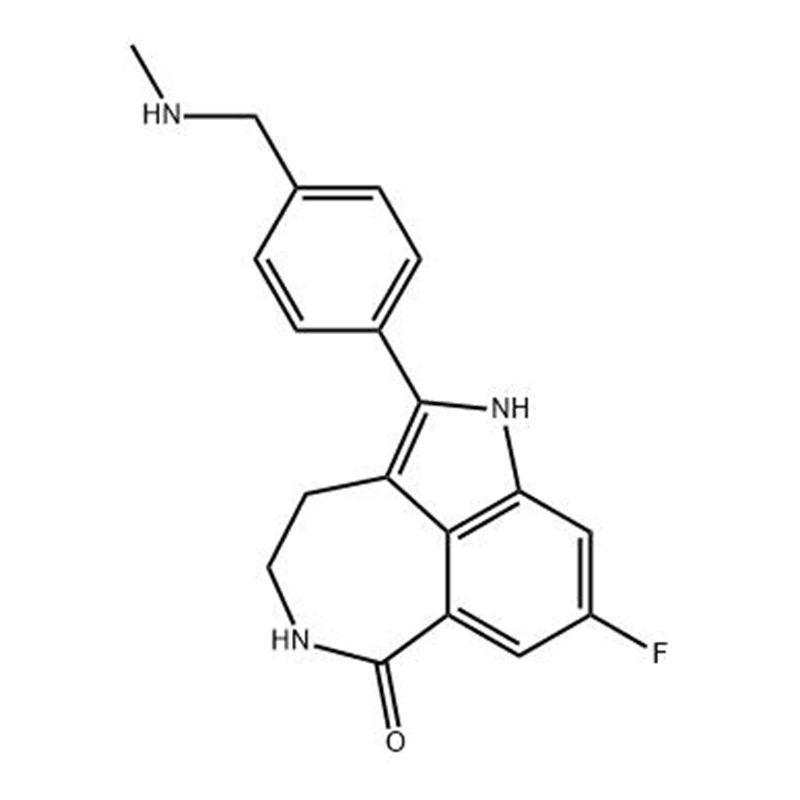
Rucaparib (CAS 283173-50-2), marketed under the brand name Rubraca, is a potent, orally bioavailable inhibitor of poly (ADP-ribose) polymerase (PARP) enzymes — including PARP-1, PARP-2, and PARP-3 — which play critical roles in DNA repair.
But here‘s what makes rucaparib unique among its class:
Unlike traditional chemotherapeutics that indiscriminately kill dividing cells, rucaparib exploits a biological vulnerability called “synthetic lethality.” In cancer cells with existing DNA repair deficiencies — specifically mutations in BRCA1 or BRCA2 genes — inhibiting PARP creates a catastrophic failure of DNA repair, leading to selective cancer cell death while sparing healthy cells.
But rucaparib does more than just inhibit PARP. It also possesses a unique property known as PARP trapping — the ability to trap PARP enzymes on damaged DNA, forming toxic complexes that are particularly lethal to cancer cells. This dual mechanism of action (enzymatic inhibition + trapping) contributes to rucaparib‘s potent anti-tumor activity.
Rucaparib holds a historic position in precision oncology: It was the first FDA-approved PARP inhibitor to be approved with a companion diagnostic — a test that identifies which patients carry deleterious BRCA mutations most likely to respond to therapy. This makes rucaparib a true pioneer in the field of precision medicine.
At Cosperpharm, we produce Rucaparib API under strict GMP conditions, achieving ≥99% purity by HPLC. We hold a valid pharmaceutical export license, ensuring smooth customs clearance and providing full documentation support for your regulatory filings.
|
Parameter |
Specification |
|
CAS Number |
283173-50-2 |
|
Chemical Name (IUPAC) |
8-fluoro-2-{4-[(methylamino)methyl]phenyl}-1,3,4,5-tetrahydro-6H-azepino[5,4,3-cd]indol-6-one |
|
Molecular Formula |
C₁₉H₁₈FN₃O |
|
Molecular Weight |
323.36 g/mol |
|
Purity (HPLC) |
≥99% |
|
Any single impurity |
≤0.50% |
|
Total impurities |
≤1.0% |
|
Solubility |
DMSO ≥50 mg/mL |
|
Appearance |
Off-white to yellow crystalline powder |
|
Storage |
-20°C (long-term) or 2-8°C (short-term), protected from light, air-tight |
|
Packaging |
10g, 50g, 100g, 500g, 1kg (customizable) |
*Note: Rucaparib is also available as the camsylate salt (CAS 1327258-57-0) in some formulations.*
The above specifications are a comprehensive reference version based on general standards of EMA (Europe) and FDA (USA).
|
Advantage |
Detail |
|
Production Strength |
GMP-certified campus spanning 100+ mu, 3 multi-purpose workshops, 6 D-grade clean zone production lines, and 150+ reactors (20L–5000L), supporting high/low temp, anaerobic & hydrogenation; kg to ton scale production |
|
Fast Delivery |
R&D samples: one week; commercial orders: 1-2 months after payment. Express (DHL/FedEx) or air/sea freight available |
|
Global Partners |
Trusted by 30+ pharmaceutical companies in USA, Europe, India, Brazil, and Southeast Asia; long-term cooperation with generic drug manufacturers and CROs |
|
Licensed Exporter |
Valid drug import/export license — no compliance delays. |
Rucaparib‘s Regulatory Journey: From Ovarian Cancer to Prostate Cancer
Rucaparib (Rubraca) has received FDA approval for the following indications:
Rucaparib was granted accelerated approval by the FDA on December 19, 2016, for the treatment of women with advanced ovarian cancer who have been treated with two or more chemotherapies and whose tumors have deleterious BRCA1 or BRCA2 mutations, as identified by an FDA-approved companion diagnostic test. This marked rucaparib as the second PARP inhibitor to be approved for advanced BRCA-mutant ovarian cancer, following olaparib.
`Approval basis: Two single-arm clinical trials involving 106 patients with advanced, previously treated BRCA-mutant ovarian cancer.
`Key efficacy finding: In patients with BRCA1/2 mutations, rucaparib demonstrated an objective response rate (ORR) that supported accelerated approval.
Based on the positive results of the Phase 3 ARIEL3 trial, the FDA converted accelerated approval to full approval and expanded the indication to include maintenance treatment for women with recurrent ovarian cancer who are in response to platinum-based chemotherapy.
`ARIEL3 Phase 3 Trial: Rucaparib significantly improved clinically meaningful endpoints including chemotherapy-free interval and progression-free survival (PFS) on next therapy line compared with placebo in all three patient populations evaluated.
In May 2020, the FDA granted accelerated approval to rucaparib for the treatment of adult patients with deleterious BRCA mutation (germline and/or somatic)-associated metastatic castration-resistant prostate cancer (mCRPC) who have been treated with androgen receptor-directed therapy and a taxane-based chemotherapy. This marked a significant milestone, as it was the first time a PARP inhibitor received FDA approval for the treatment of prostate cancer.
`Approval basis: The multi-center, single-arm TRITON2 clinical trial (NCT02952534)
`Key efficacy finding: In 62 evaluable patients with BRCA-mutated mCRPC, rucaparib achieved an ORR of 44% , regardless of whether patients carried germline or somatic BRCA mutations.
Dual Mechanism: Why Rucaparib Is More Than Just a PARP Inhibitor
Rucaparib exerts its anti-cancer effects through two complementary mechanisms:
Rucaparib potently inhibits the catalytic activity of PARP enzymes (PARP-1, PARP-2, and PARP-3), with a Ki of 1.4 nM for PARP-1. PARP enzymes are key players in the base excision repair (BER) pathway, a critical DNA repair mechanism. By blocking PARP activity, rucaparib prevents cancer cells from repairing single-strand DNA breaks, which then convert into double-strand breaks during DNA replication.
Beyond simple enzymatic inhibition, rucaparib exhibits a unique property: PARP trapping. It traps PARP enzymes onto damaged DNA, forming stable, toxic PARP-DNA complexes. These trapped complexes are particularly lethal to cancer cells and are believed to be a major contributor to rucaparib’s potent anti-tumor activity.
|
Healthy Cells |
BRCA-Mutant Cancer Cells |
|
Have functional BRCA genes (BRCA1/BRCA2) for homologous recombination repair (HRR) |
Lack functional HRR due to BRCA mutations |
|
Can repair DNA damage via multiple pathways (BER + HRR) |
Rely heavily on PARP-mediated BER for DNA repair |
|
Survive PARP inhibition via backup HRR pathway |
Cannot repair DNA when PARP is inhibited → DNA damage accumulates → cell death |
By exploiting this genetic vulnerability, rucaparib selectively kills cancer cells while largely sparing healthy cells — the essence of synthetic lethality.
|
Trial |
Phase |
Population |
Key Findings |
|
ARIEL2 (Study 10) |
Phase 2 |
Advanced BRCA-mutant ovarian cancer |
Demonstrated durable responses and acceptable safety profile |
|
ARIEL3 |
Phase 3 |
Recurrent ovarian cancer (maintenance) |
Rucaparib significantly improved PFS compared with placebo; chemotherapy-free interval and PFS on next therapy line also improved |
|
ARIEL4 |
Phase 3 |
Relapsed BRCA-mutated ovarian cancer |
Rucaparib showed improved investigator-assessed PFS compared with standard-of-care chemotherapy; published in The Lancet Oncology. |
|
Trial |
Phase |
Population |
Key Findings |
|
TRITON2 |
Phase 2 |
BRCA-mutated mCRPC (post androgen receptor-directed therapy and taxane) |
ORR of 44% (62 evaluable patients), regardless of germline or somatic mutation status; acceptable safety profile |
|
TRITON3 |
Phase 3 |
mCRPC with BRCA or ATM mutations |
Ongoing; evaluating rucaparib vs physician‘s choice of therapy |
|
Indication |
Key Outcome |
|
BRCA-mutant ovarian cancer (heavily pre-treated) |
ORR supported accelerated approval |
|
BRCA-mutant mCRPC |
ORR 44%, DOR >6 months |
|
Ovarian cancer maintenance |
Significant improvement in PFS (ARIEL3) |
`First FDA-approved PARP inhibitor with a companion diagnostic — pioneer in precision oncology
`Dual mechanism: PARP enzymatic inhibition + potent PARP trapping
`First PARP inhibitor approved for prostate cancer (May 2020) — expanded market opportunity
`Oral, twice-daily dosing (600 mg BID, total 1,200 mg daily) — convenient outpatient administration
`Strong clinical validation across ARIEL and TRITON programs
`Valid export license — Cosperpharm is an authorized API exporter
Cosperpharm manufactures Rucaparib API in modern GMP multi-purpose workshops equipped with 6 D-grade clean zone production lines. Our 150+ reactors (20L–5000L) support high/low temperature, anaerobic, and hydrogenation conditions, enabling production from kilogram to metric ton scale. Each batch undergoes rigorous QC testing: HPLC, GC, LC-MS, residual solvents (ICH Q3C), heavy metals, and genotoxic impurity analysis. We provide full traceability from raw material to finished API.
Q1: What is the difference between rucaparib free base and rucaparib camsylate?
A: Rucaparib is often formulated as the camsylate salt (CAS 1327258-57-0) in commercial products like Rubraca. The salt form improves oral bioavailability (approximately 36-37%). Each 300 mg rucaparib free base tablet contains 516 mg rucaparib camsylate
Q2: What makes rucaparib unique among PARP inhibitors?
A: Rucaparib combines potent PARP enzymatic inhibition (Ki 1.4 nM for PARP-1) with strong PARP trapping activity — a dual mechanism that contributes to its efficacy. Additionally, rucaparib was the first PARP inhibitor approved with an FDA companion diagnostic, enabling precise patient selection
Q3: What is your MOQ for Rucaparib API?
A: R&D samples: 10g. Commercial orders: 100g–1kg. Larger quantities available upon request.
Q4: What is your typical lead time?
A: In-stock R&D samples: one week. Bulk orders:1-2 months after payment confirmation.
Q5: Which countries have you exported to?
A: USA, Canada, Germany, UK, Spain, India, Brazil, South Korea, Japan, and more. We have experience with local customs and regulatory requirements.
Q6: Can you provide third-party testing or audit?
A: Yes. We welcome customer audits or SGS/BV inspections. Third-party testing can be arranged at buyer‘s cost.
Q7: What certificates do you hold?
A: GMP certificate (ISO 9001:2015), pharmaceutical import/export license, and COA for each batch.
Q8: Do you offer customized packaging?
A: Yes. We can customize packaging size, labeling, and even inner lining materials per your request.
Q9: Is Rucaparib API stable for long-term storage?
A: Yes. When stored at -20°C in an air-tight container protected from light, rucaparib API remains stable for 36 months. Short-term storage at 2-8°C is also acceptable. We provide accelerated and long-term stability data upon request.
Ready to buy Rucaparib API? Contact Cosperpharm today for a sample or quote. We look forward to becoming your long-term China Rucaparib supplier.
Address
No. 2 Yangguang 3rd Road, Duodao Chemical Cycle Industrial Park, Jingmen City, Hubei Province, China
Tel