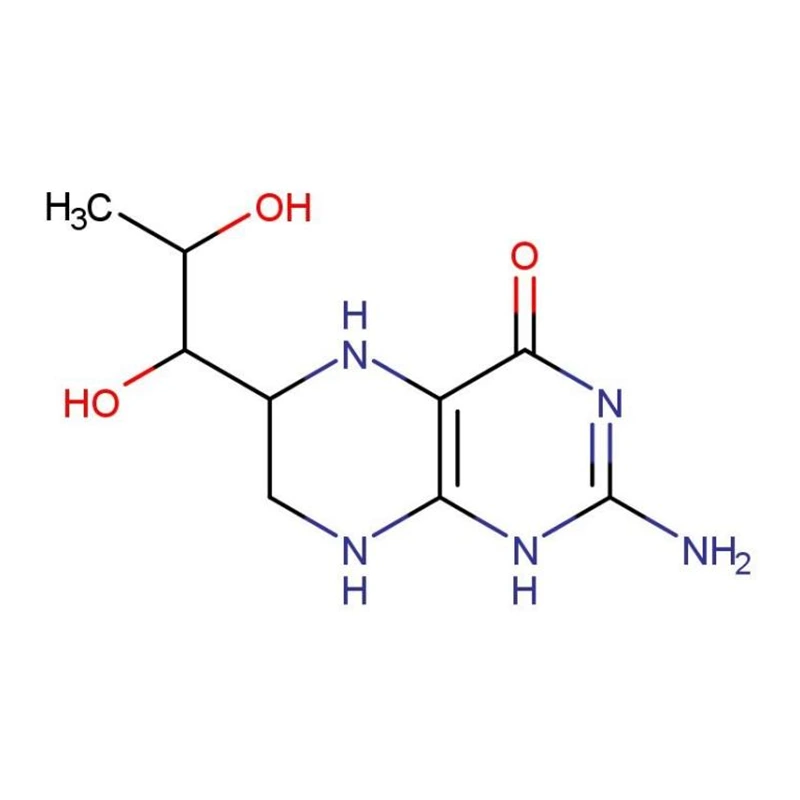
Sapropterin dihydrochloride (CAS 62989-33-7), marketed under the brand name Kuvan, represents a fundamentally different approach to treating Phenylketonuria (PKU). While conventional PKU management relies on lifelong dietary restriction of phenylalanine (Phe) — a highly burdensome approach requiring specialized medical foods and frequent blood monitoring — sapropterin works by addressing the underlying cause of the disease.
Here’s the key difference: instead of bypassing the defective enzyme through dietary restriction, sapropterin acts as an oral synthetic form of tetrahydrobiopterin (BH4), the natural cofactor of the enzyme phenylalanine hydroxylase (PAH). BH4 plays an indispensable role in the metabolism of phenylalanine. By replenishing this cofactor, sapropterin directly activates the patient’s residual PAH enzyme, restoring its ability to convert Phe into tyrosine and reducing toxic Phe accumulation in the blood.
The drug is not a one-size-fits-all therapy. It is indicated specifically for BH4-responsive PKU patients — estimated to be approximately 25-50% of all PKU patients. This targeted approach ensures that only patients whose residual PAH enzyme can be activated by sapropterin receive the therapy, embodying the principles of precision medicine in rare disease treatment.
At Cosperpharm, we produce Sapropterin API under strict GMP conditions, achieving ≥98% purity by HPLC. We hold a valid pharmaceutical export license, ensuring smooth customs clearance and providing full documentation support (COA, stability data) for your regulatory filings.
|
Parameter |
Specification |
|
CAS Number (Free Base) |
62989-33-7 |
|
CAS Number (Dihydrochloride) |
69056-38-8 |
|
Molecular Formula (Free Base) |
C₉H₁₅N₅O₃ |
|
Molecular Weight (Free Base) |
241.25 g/mol |
|
Molecular Formula (Dihydrochloride) |
C₉H₁₇Cl₂N₅O₃ |
|
Molecular Weight (Dihydrochloride) |
314.17 g/mol |
|
Purity (HPLC) |
≥98% |
|
Any single impurity |
≤0.50% |
|
Total impurities |
≤1.0% |
|
Solubility |
Soluble in water (90 mg/mL), slightly soluble in organic solvents |
|
Appearance |
White to off-white crystalline powder |
|
Storage |
2-8°C, dry, protected from light, air-tight |
|
Packaging |
10g, 50g, 100g, 500g, 1kg (customizable) |
The above specifications are a comprehensive reference version based on general standards of EMA (Europe) and FDA (USA).
|
Advantage |
Detail |
|
Production Strength |
GMP-certified campus spanning 100+ mu, 3 multi-purpose workshops, 6 D-grade clean zone production lines, and 150+ reactors (20L–5000L), supporting high/low temp, anaerobic & hydrogenation; kg to ton scale production |
|
Fast Delivery |
R&D samples: one week; commercial orders: 1-2 months after payment. Express (DHL/FedEx) or air/sea freight available |
|
Global Partners |
Trusted by 30+ pharmaceutical companies in USA, Europe, India, Brazil, and Southeast Asia; long-term cooperation with generic drug manufacturers and CROs |
|
Licensed Exporter |
Valid drug import/export license — no compliance delays. |
Phenylketonuria (PKU) is an autosomal recessive inborn error of metabolism caused by mutations in the PAH gene, leading to deficient or absent activity of the phenylalanine hydroxylase (PAH) enzyme. PAH is responsible for converting dietary phenylalanine (Phe) into tyrosine. Without functional PAH, Phe accumulates to toxic levels in the blood and brain, causing progressive intellectual disability, seizures, behavioral problems, and psychiatric disorders if untreated.
Sapropterin dihydrochloride is indicated to reduce blood phenylalanine (Phe) levels in adult and pediatric patients one month of age and older with hyperphenylalaninemia (HPA) due to tetrahydrobiopterin- (BH4-) responsive Phenylketonuria (PKU). It is used in conjunction with a Phe-restricted diet.
Sapropterin exerts its therapeutic effects through a straightforward but elegant mechanism:
Tetrahydrobiopterin (BH4) is the essential cofactor for phenylalanine hydroxylase (PAH), the enzyme responsible for the first and rate-limiting step of phenylalanine metabolism. In BH4-responsive PKU patients, the mutated PAH enzyme retains some residual activity but has reduced affinity for BH4. Sapropterin, as a synthetic form of BH4, provides an exogenous supply of this cofactor, binding to and stabilizing the mutant PAH enzyme.
When supplemented with sapropterin, the stabilized mutant PAH enzyme regains its catalytic activity, converting excess dietary Phe into tyrosine. This reduces blood Phe levels, preventing the accumulation of toxic metabolites that cause neurocognitive damage.
Notably, BH4 is also a required cofactor for tyrosine hydroxylase (TH) and tryptophan hydroxylase (TPH), enzymes involved in the synthesis of dopamine and serotonin — neurotransmitters critical for mood regulation, cognition, and motor function. Sapropterin supplementation may improve dopamine and serotonin synthesis, potentially contributing to neuropsychiatric benefits beyond simple Phe reduction.
·First-in-class oral BH4 cofactor replacement therapy for PKU — unique mechanism of action
·First FDA-approved oral therapy for BH4-responsive PKU (December 2007)
·Precision medicine approach — indicated only for patients who demonstrate BH4 responsiveness (requires diagnostic test period)
·Oral administration vs. lifelong dietary restriction alone — improves quality of life
·Reduces need for restrictive diets — allows natural protein intake in responding patients
·Demonstrated efficacy across all age groups, including infants ≥1 month of age
·Valid export license — Cosperpharm is an authorized API exporter
Cosperpharm manufactures Sapropterin API in modern GMP multi-purpose workshops equipped with 6 D-grade clean zone production lines. Our 150+ reactors (20L–5000L) support high/low temperature, anaerobic, and hydrogenation conditions, enabling production from kilogram to metric ton scale. Each batch undergoes rigorous QC testing: HPLC, GC, LC-MS, residual solvents (ICH Q3C), heavy metals, and genotoxic impurity analysis. We provide full traceability from raw material to finished API
Q1: What is the difference between sapropterin free base and sapropterin dihydrochloride?
A: Sapropterin free base (CAS 62989-33-7) is the active pharmaceutical ingredient. The dihydrochloride salt (CAS 69056-38-8) is the commercially used form, offering improved stability and solubility for oral formulation. Our API is supplied as the dihydrochloride salt.
Q2: What is a BH4-responsive PKU patient?
A: BH4-responsive PKU patients are those whose mutated PAH enzyme retains some residual activity and can be activated by supplemental BH4. This group comprises approximately 25-50% of all PKU patients. Responsiveness is determined through a diagnostic test period (typically 2-4 weeks of sapropterin administration).
Q3: How does sapropterin improve quality of life for PKU patients?
A: For responding patients, sapropterin allows increased natural protein intake, reducing or eliminating the need for costly and unpalatable medical foods. This significantly reduces dietary burden and improves daily living.
Q4: What is your MOQ for Sapropterin API?
A: R&D samples: 10g. Commercial orders: 100g–1kg. Larger quantities available upon request.
Q5: What is your typical lead time?
A: In-stock R&D samples: 7 days. Bulk orders: 1-2 months after payment confirmation.
Q6: Which countries have you exported to?
A: USA, Canada, Germany, UK, Spain, India, Brazil, South Korea, Japan, and more. We have experience with local customs and regulatory requirements.
Q7: Can you provide third-party testing or audit?
A: Yes. We welcome customer audits or SGS/BV inspections. Third-party testing can be arranged at buyer‘s cost.
Q8: What certificates do you hold?
A: GMP certificate (ISO 9001:2015), pharmaceutical import/export license, and COA for each batch.
Q9: Do you offer customized packaging?
A: Yes. We can customize packaging size, labeling, and even inner lining materials per your request.
Q11: Is Sapropterin API stable for long-term storage?
A: Yes. When stored at 2-8°C in an air-tight container protected from light, Sapropterin API remains stable for 36 months. We provide accelerated and long-term stability data upon request.
Q12: Can sapropterin be used in infants?
A: Yes. The FDA-approved labeling includes pediatric patients one month of age and older. Dosing is weight-based (recommended starting dose: 10 mg/kg once daily).
Ready to buy Sapropterin API? Contact Cosperpharm today for a sample or quote. We look forward to becoming your long-term China Sapropterin supplier.
Address
No. 2 Yangguang 3rd Road, Duodao Chemical Cycle Industrial Park, Jingmen City, Hubei Province, China
Tel