
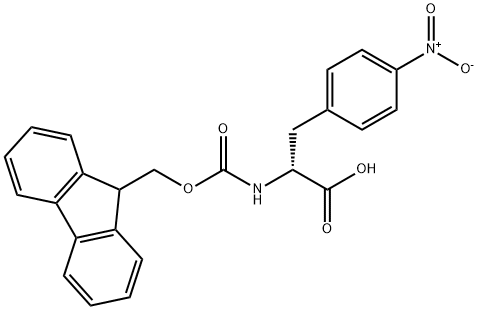
Fmoc-D-4-Nitro-Phe-OH is a high-purity Fmoc-protected D-amino acid widely utilized in peptide synthesis and drug discovery research. The D-configuration of Fmoc-D-4-Nitro-Phe-OH provides enhanced resistance to proteolytic degradation, making it particularly valuable for the development of peptide-based therapeutics with improved in vivo stability. Furthermore, Fmoc-D-4-Nitro-Phe-OH can be incorporated into fluorescent probes for bioimaging applications, enabling researchers to visualize and track peptides in complex biological systems . For medicinal chemists seeking to improve peptide stability or develop novel therapeutic candidates, Fmoc-D-4-Nitro-Phe-OH offers a well-characterized, high-purity building block supported by extensive research and development applications.
Product Parameters
|
Parameter |
Specification |
|
CAS Number |
177966-63-1 |
|
Molecular Formula |
C₂₄H₂₀N₂O₆ |
|
Molecular Weight |
432.43 g/mol |
|
Purity |
≥99% (HPLC) |
|
Appearance |
White to off-white solid / crystalline powder |
|
Melting Point |
215–225 °C |
|
Boiling Point |
692.3±55.0℃ |
|
Density |
1.371±0.06g/cm3 |
|
Storage Temperature |
Sealed in dry,2–8 ℃ |
Product Advantages
1. D-Amino Acid Configuration for Enhanced Proteolytic Stability
Fmoc-D-4-Nitro-Phe-OH incorporates the D-configuration phenylalanine, which confers exceptional resistance to proteolytic degradation compared to L-amino acid counterparts. Peptides containing D-amino acids exhibit dramatically extended half-lives in biological fluids and are protected from cleavage by most proteases—a feature widely exploited in the design of therapeutic peptides, peptidomimetics, and drug discovery libraries.
2. Electron-Withdrawing Nitro Group for Tunable Properties
The para-nitro substituent in Fmoc-D-4-Nitro-Phe-OH introduces a strong electron-withdrawing effect that influences the electronic properties of the aromatic ring and the acid-base characteristics of adjacent functional groups. This nitro group also provides a chromophore for UV detection (critical for HPLC monitoring during SPPS) and serves as a versatile synthetic handle for further transformations, including reduction to the corresponding aniline or nucleophilic aromatic substitution.
3. Fmoc Protection for Standard SPPS Compatibility
Fmoc-D-4-Nitro-Phe-OH is fully compatible with standard Fmoc SPPS protocols used in automated and manual peptide synthesizers. The Fmoc protecting group is stable under acidic conditions but rapidly and cleanly removed by piperidine, enabling efficient peptide chain assembly without risk of side-reactions or premature deprotection.
4. Versatile Applications Across Drug Discovery
Fmoc-D-4-Nitro-Phe-OH serves multiple roles in pharmaceutical research: as a protective group in solid-phase peptide synthesis, as a building block for peptide-based therapeutics targeting specific biological pathways, as a component of bioconjugates for targeted drug delivery systems, and as a scaffold for fluorescent probes in bioimaging applications.
5. High-Purity Material for Reproducible SPPS
Our Fmoc-D-4-Nitro-Phe-OH meets the rigorous quality standards required for automated Fmoc SPPS, with documented purity ≥99% (HPLC), precisely characterized melting point, and optical rotation values within validated ranges—ensuring high coupling efficiency and minimizing deletion peptides and epimerization byproducts.
Synthetic Route
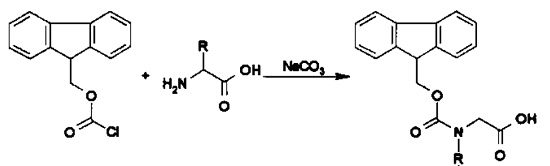
Fmoc-D-4-Nitro-Phe-OH is commercially produced via the Fmoc protection of D-4-nitrophenylalanine. The synthetic route involves:
1. Starting material: D-4-Nitrophenylalanine (the D-enantiomer of 4-nitrophenylalanine) serves as the amino acid precursor.
2. Fmoc protection: The α-amino group is protected with fluorenylmethoxycarbonyl chloride (Fmoc-Cl) or Fmoc-succinimide (Fmoc-OSu) under basic conditions (typically sodium bicarbonate or triethylamine in aqueous dioxane or DMF/water mixture).
3. Isolation and purification: The crude product is purified by crystallization or preparative HPLC to achieve the desired purity specifications (≥99% by HPLC).
FAQ
A: The key difference is the configuration at the α-carbon chiral center. Fmoc-D-4-Nitro-Phe-OH is the D-enantiomer (R-configuration), while Fmoc-L-4-Nitro-Phe-OH is the L-enantiomer (S-configuration). D-amino acids confer enhanced proteolytic stability to peptides and are widely used in therapeutic peptide design, whereas L-amino acids represent the naturally occurring configuration found in proteins.
Q2: Is Fmoc-D-4-Nitro-Phe-OH suitable for automated peptide synthesizers?
A: Yes. Fmoc-D-4-Nitro-Phe-OH is fully compatible with standard Fmoc SPPS protocols used in automated peptide synthesizers. However, D-amino acids may couple more slowly than their L-counterparts due to steric factors; extended coupling times or specialized activation conditions may be required for optimal efficiency.
Contact Us
Interested in Fmoc-D-4-Nitro-Phe-OH for your next peptide synthesis project? Reach out to Cosperpharm—we‘re ready to provide quotes, share technical data, and support your custom sourcing needs.
Address
No. 2 Yangguang 3rd Road, Duodao Chemical Cycle Industrial Park, Jingmen City, Hubei Province, China
Tel

![1-[2,3-Bis[(9Z,12Z)-octadeca-9,12-dien-1-yloxy]propyl]pyrrolidine](https://www.cosperpharma.com/upload/8820/1-2-3-bis-9z-12z-octadeca-9-12-dien-1-yloxy-propyl-pyrrolidine-349384.webp "1-[2,3-Bis[(9Z,12Z)-octadeca-9,12-dien-1-yloxy]propyl]pyrrolidine")
![1,2,4-Triazolo[4,3-a]pyridin-3(2H)-one](https://www.cosperpharma.com/upload/8820/1-2-4-triazolo-4-3-a-pyridin-3-2h-one-440735.webp "1,2,4-Triazolo[4,3-a]pyridin-3(2H)-one")