
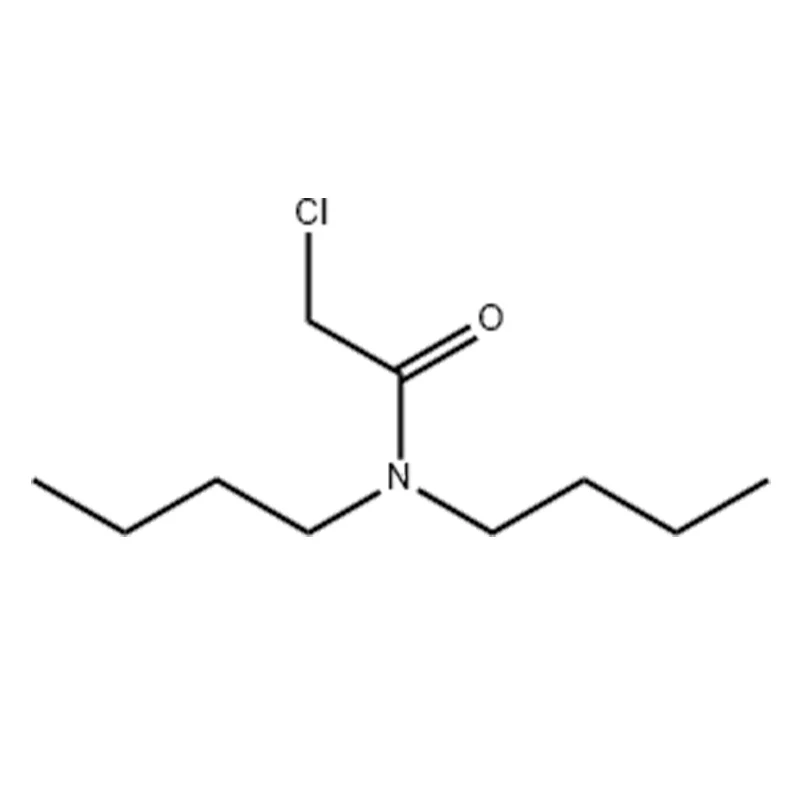
N,N-dibutyl-2-chloro-Acetamide is a high‑purity building block supplied by Cosperpharm for applications ranging from organic synthesis to antimicrobial research and enzyme inhibition studies. As a key intermediate, N,N-dibutyl-2-chloro-Acetamide serves as a platform for constructing diverse substituted acetamide libraries through nucleophilic substitution reactions, where the labile chlorine atom can be displaced by a wide array of nucleophiles. In biochemical research, N,N-dibutyl-2-chloro-Acetamide has demonstrated promising antimicrobial activity against Gram‑positive bacteria, including methicillin‑resistant Staphylococcus aureus (MRSA), attributed to its high lipophilicity that facilitates effective cell membrane penetration. Additionally, N,N-dibutyl-2-chloro-Acetamide is utilized in enzyme inhibition studies to explore protein‑ligand interactions and cellular signaling pathways. At Cosperpharm, each batch of N,N-dibutyl-2-chloro-Acetamide is manufactured under rigorous quality control protocols and supplied with full analytical documentation to support your research and development initiatives.
|
Parameter |
Specification |
|
CAS Number |
2567-59-1 |
|
Chemical Name |
N,N-dibutyl-2-chloro-Acetamide |
|
IUPAC Name |
2-Chloro-N,N-dibutylacetamide |
|
Synonyms |
2-Chloro-N,N-dibutylacetamide; N,N-Dibutylchloroacetamide; N,N-Di-n-butyl-2-chloroacetamide; α-Monochloroacetic acid di-n-butylamide |
|
Molecular Formula |
C₁₀H₂₀ClNO |
|
Molecular Weight |
205.72 g/mol |
|
Purity (GC/HPLC) |
≥95% (research grade) |
|
Appearance |
Colorless to pale yellow liquid or low-melting solid |
|
Density (Predicted) |
0.982 ± 0.06 g/cm³ |
|
Boiling Point |
279.1 ± 23.0 °C at 760 mmHg; 124–126 °C at 1 Torr |
|
Flash Point |
122.6 ± 22.6 °C |
|
Refractive Index |
1.456 |
|
Vapor Pressure |
0.00409 mmHg at 25 °C |
|
Log P (Predicted) |
2.67–3.04 |
|
SMILES |
CCCCN(CCCC)C(=O)CCl |
|
Storage Condition |
2–8 °C (refrigerated), protected from light, airtight |
1.Organic synthesis – A versatile building block for constructing more complex organic molecules, particularly in the synthesis of various substituted acetamides via nucleophilic substitution reactions where the chlorine atom is displaced by amines, thiols, alkoxides, or other nucleophiles.
2.Antimicrobial research – Used in screening studies to evaluate the antibacterial potential of α‑chloroacetamide derivatives, with demonstrated activity against Gram‑positive pathogens including MRSA.
3.Enzyme inhibition studies – Employed as a tool compound to investigate protein‑ligand interactions and enzyme inhibition mechanisms in biochemical pathways.
4.Analytical method development – Serves as a reference standard for HPLC, GC, and LC‑MS method validation in quality control laboratories.
5.Medicinal chemistry – The lipophilic di‑n‑butyl substitution pattern makes this scaffold valuable for structure‑activity relationship (SAR) studies targeting membrane‑associated proteins and receptors.
6.Chemical biology – Utilized in cellular assays to explore the effects of chloroacetamide derivatives on cell signaling pathways, gene expression, and cellular metabolism.
7.Herbicide research – α‑Chloroacetamides have historically been investigated for pre‑emergence herbicidal activity, and this compound serves as a reference for structure‑activity relationship studies in agrochemical discovery.
8.Process development – A model substrate for optimizing nucleophilic substitution reactions under flow chemistry and continuous processing conditions.
Cosperpharm manufactures N,N-dibutyl-2-chloro-Acetamide under a robust quality management system that ensures consistent product quality batch after batch. Each batch undergoes rigorous in‑process and final release testing, including GC or HPLC purity determination (≥95%), identity verification by mass spectrometry, residual solvent analysis, and comprehensive impurity profiling. The product is supplied with a Certificate of Analysis (COA) that includes purity data, identity confirmation, impurity profile, and storage recommendations. Stability studies are conducted under ICH‑aligned conditions to establish the 24‑month shelf life under recommended storage. Full traceability is maintained from raw material sourcing through final product release, with documentation available for customer audits. For customers requiring additional characterization, we can provide NMR spectra upon request. Cosperpharm is committed to delivering high‑quality research chemicals that meet your specifications, enabling reliable and reproducible research outcomes.
The synthesis of N,N-dibutyl-2-chloro-Acetamide is well‑established in the literature and proceeds via a straightforward acylation reaction. The most common laboratory and industrial method involves the reaction of 2‑chloroacetyl chloride (chloroacetyl chloride) with dibutylamine. A base such as triethylamine is typically employed to neutralize the hydrochloric acid generated during the reaction. The process is carried out under anhydrous conditions to prevent hydrolysis of the reactive acyl chloride. After completion, the product is isolated via extraction and purified by distillation. A representative distillation procedure reports collecting the product at 150–200 °C under reduced pressure (0.10 mm Hg). For large‑scale manufacturing, continuous flow reactors and advanced purification techniques such as recrystallization and fractional distillation are employed to optimize yield and purity. Detailed synthetic information, including references to patent literature (US04895951), is available upon request.
Ready to incorporate N,N-dibutyl-2-chloro-Acetamide into your research program? Contact Cosperpharm today for a competitive quotation, sample request, or technical consultation with our experienced support team.
Address
No. 2 Yangguang 3rd Road, Duodao Chemical Cycle Industrial Park, Jingmen City, Hubei Province, China
Tel

![1-[2,3-Bis[(9Z,12Z)-octadeca-9,12-dien-1-yloxy]propyl]pyrrolidine](https://www.cosperpharma.com/upload/8820/1-2-3-bis-9z-12z-octadeca-9-12-dien-1-yloxy-propyl-pyrrolidine-349384.webp "1-[2,3-Bis[(9Z,12Z)-octadeca-9,12-dien-1-yloxy]propyl]pyrrolidine")
![1,2,4-Triazolo[4,3-a]pyridin-3(2H)-one](https://www.cosperpharma.com/upload/8820/1-2-4-triazolo-4-3-a-pyridin-3-2h-one-440735.webp "1,2,4-Triazolo[4,3-a]pyridin-3(2H)-one")