
Natural peptides are excellent "molecular keys" - they have high affinity, good selectivity and low toxicity. However, they inherently have three major weaknesses: they are easily chopped up by proteases, have difficulty penetrating cell membranes, and stay in the body for too short a time. Over the past three decades, pharmaceutical professionals have systematically addressed these shortcomings with a "toolbox of special amino acids". This article uses plain language and a large number of charts to guide CMC R&D peers to disassemble and understand this toolbox from principle to implementation.
I. Why Are Natural Peptides "Insufficient"
II. Overview of Five Major Modification Strategies
III. N-methylation
IV. α-Methylation and Aib
V. D-configuration Amino Acids
VI. Non-natural Amino Acids
VII. Comprehensive Case: How Are Oral Peptides Made
VIII. A Quick Reference Page for CMC Peers
IX. Future Design Trends: AI and Display Technology
Using a natural polypeptide (composed entirely of 20 L-type amino acids) directly as medicine often doesn't last for more than a few minutes. The reason can be summed up in one sentence: The human metabolic system is inherently designed to recognize and break down this structure. It is specifically manifested as four interrelated questions.
①Protease degradation - The most lethal plasma, liver, kidneys, and gastrointestinal tract are filled with peptidases/proteases (such as DPP-4, aminopeptidase, carboxypeptidase, trypsin, etc.), which specifically recognize L-type amide bonds and hydrolyze them. The half-life of natural GLP-1 in the body is only about 1.5 to 2 minutes.
②Poor membrane permeability and difficult oral administration: The large amount of amide N-H on the polypeptide skeleton is a strong hydrogen bond donor and is tightly wrapped by water molecules, making it difficult to pass through the hydrophobic core of the cell membrane. This is the fundamental reason why the vast majority of peptides can only be administered by injection.
③With a short half-life and rapid renal clearance, small-molecular-weight polypeptides (<5 kDa) are rapidly filtered and cleared by the glomerulus. Coupled with enzymatic hydrolysis, the exposure level in the body is difficult to maintain, and frequent administration is required.
④Linear polypeptides with conformational flexibility and poor selectivity are like "soft noodles" in solution, with countless conformations rapidly flipping. When binding to the target, the entropy loss is large, the affinity is discounted, and it may also mistakenly bind to multiple related receptors, leading to off-target.
The "special amino acid" strategy is essentially a precise repair of these four weak points: without disrupting the pharmacodynamic conformation, it modifies the skeleton and side chains, allowing the molecule to "evade" enzyme recognition, "remove" excess hydrogen bonds, and "lock" the active conformation, while maintaining as much alignment with the target as possible.
First, use a table to establish an overall understanding. The following five types of modifications are the most commonly used "special amino acid" methods in contemporary peptide drug design, and they will be elaborated on one by one in the subsequent chapters.
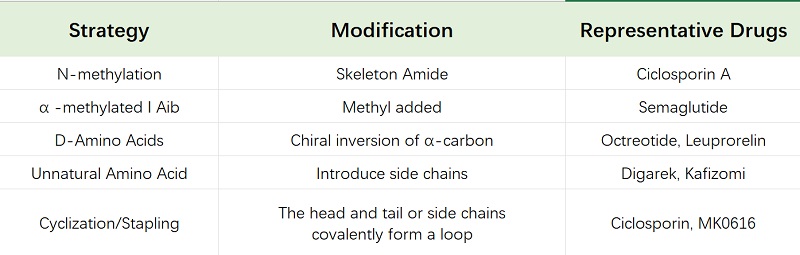
N-methylation is the process of replacing the hydrogen (n-H) on the nitrogen atom of the skeleton amide bond with a methyl group (n-CH₃). A seemingly minor change can simultaneously trigger four key parameters of pharmacokinetics. Its mechanism of action can be broken down into three levels.
Each N-H is a strong hydrogen bond donor, "pinning" the molecule in the aqueous phase. N-methylation erasing this donor reduces the polar surface area (PSA) of the molecule, allowing the molecule to "dehydrate" and enter the hydrophobic core of the membrane. The N-methylation effects at multiple sites can be superimposed - the classic Veber-Hirschmann somatostatin analogue, after N-methylation at three sites, has an oral bioavailability of approximately 10%.
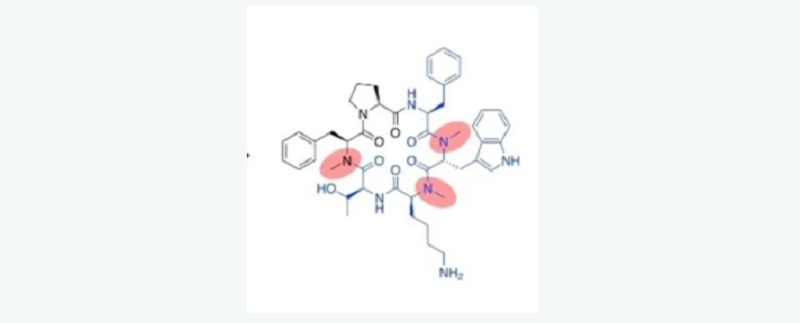
The methyl group occupies the space near the amide bond. The protease active pocket cannot correctly "bite" the cleave bond, thereby significantly enhancing metabolic stability. This is the physical basis on which N-methylation is directly linked to resistance to enzymatic hydrolysis.
Ordinary amide bonds are almost all trans (trans), while N-methylation brings the energy difference between cis (cis) closer, making it easier to switch between the cis-trans conformations. Designers can thereby "induce" molecules to fold into specific active conformations or form intramolecular hydrogen bonds to hide polar groups (further facilitating penetration).
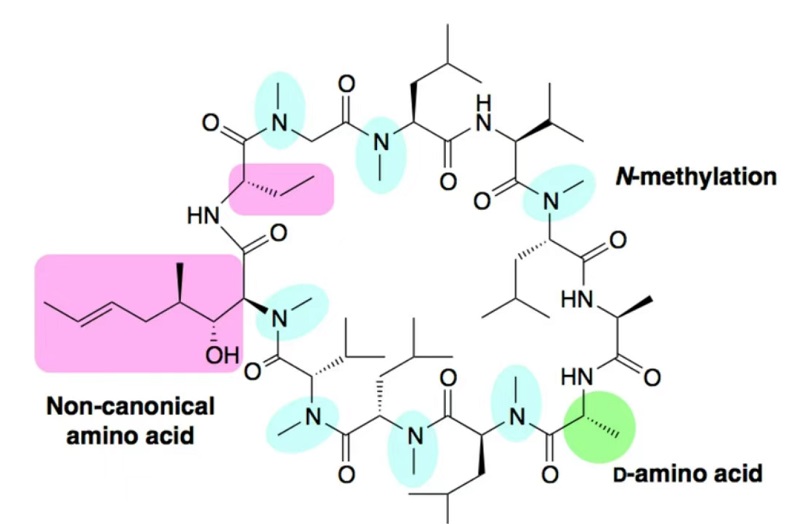
This immunosuppressant is a textbook on the "synergistic operation of special amino acids". It is an 11-residue cyclic peptide containing 7 skeletal N-methylations and one D-alanine. It is precisely this dense N-methylation and cyclization that enables it to maintain oral activity while having extremely strong metabolic stability - it can "switch clothes" between aqueous solution and membrane environment, forming intramolecular hydrogen bonds to hide the polarity and pass through the membrane, and then open to bind to the target in the aqueous phase. Cyclosporine has thus become one of the few natural sources of "beyond Rule of Five" macrocyclic peptides that can be absorbed orally.
N-methylated amino acids are steric hindrance secondary amines with low coupling efficiency, slow reaction, and are highly prone to racemization and diketopiperazine (DKP) truncation. Stronger coupling reagents (such as HATU/COMU + additives), extended coupling time or double coupling, strict temperature control, and online monitoring of each step are required. Location selection is highly sensitive: N-methylation at different sites of the same sequence may have vastly different effects on activity and penetration, and site-by-site screening is required.
N-methylation involves the hydrogen on the nitrogen atom. α-methylation involves the hydrogen on the α-carbon. When the original hydrogen on the α-carbon is replaced with a methyl group, the α-carbon changes from a "trisubstituted" to a "tetrasubstituted quaternary carbon" (the most typical example is Aib, 2-aminoisobutyric acid, which is equivalent to adding another methyl group to the α-carbon of alanine, and is symmetrical on both sides). This brings about a triple effect.
Conformational locking (most core)
Antiprotease
Eliminate chiral weaknesses
Natural GLP-1 is precisely cut from the 8th position of the N-terminal by DPP-4, with a half-life of only 1.5 to 2 minutes. The key move of semaglutide is to replace the alanine (Ala8) at the 8th position with Aib (α,α-disubstituted) - the steric hindrance of quaternary carbon makes DPP-4 "unable to bite" this site, thus blocking the main degradation pathway from the source.
Three consecutive modifications have extended the half-life from minutes to one week:
① Aib8 resids DPP-4 cutting;
② Arg34 replacement avoids degradation at another site and is conducive to the site-specific lipidation.
③ Lys26 long-chain fatty diacid (C18 diacid + linker) reversibly binds to serum albumin and evades renal clearance.
Comprehensive results: The half-life is approximately 165 hours (about 1 week), and it can be administered once a week.
Aib is also a steric hindrance amino acid, with slow coupling. Aib-aib or AIB-followed amino acids often require double coupling or strong activation. It is worth noting that the "unnatural" status of Aib poses obstacles to the recombinant fermentation route (ribosomes do not recognize it). Therefore, peptides containing Aib such as Simaglutide usually rely on solid-phase synthesis (SPPS) or solid-phase + fermentation hybrid strategies, and are combined with site-specific modification of fatty acid side chains. The complexity of process and quality control is significantly higher than that of ordinary recombinant peptides.
The active pocket of protease is a "glove" tailor-made for L-substrate. When D-amino acids are replaced near the cleavage bond, the geometric relationship between the substrate's carbonyl group and the enzyme-catalyzed triad is disrupted. The cleavage bond cannot be placed in the correct reaction position, the binding affinity drops sharply, and hydrolysis thus stops.
Reverses the entire sequence while replacing each residue with a D-shaped one. The magic lies in the fact that the relative arrangement of the side chains in space is largely retained, thus preserving the original activity. However, the skeleton is fully D, completely immune to proteases, and the immunogenicity is significantly reduced. This is a powerful tool for designing blood-brain barrier shuttle peptides and long-acting peptides.
The raw material price of D-amino acids is usually higher than that of L-type and there are fewer suppliers. Attention should be paid to the control of chiral purity (ee value) and enantiomer impurities.
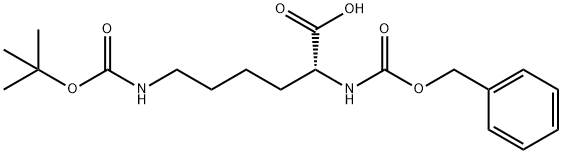
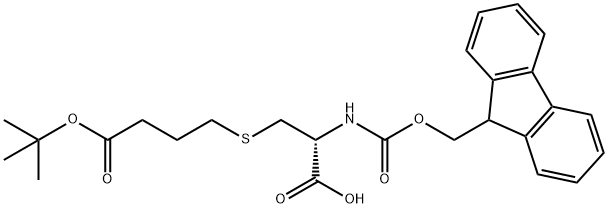
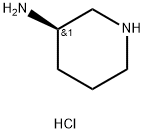
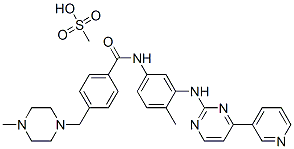
In addition to the above-mentioned skeleton-level modifications, pharmaceutical professionals also have hundreds of commercialized "well-protected and well-activated" non-natural amino acid building blocks to choose from. They are like Legos, assembled into sequences by function.
"Special amino acids" address molecular stability and conformation. To make polypeptides into oral drugs, there are actually two independent yet superimposed routes to "get in".
The first stage: Survive. Special amino acids (Aib, N-methylated, D-type) resist degradation by gastrointestinal proteases.
① Intrinsic Molecular Permeation: N-methylation reduces hydrogen bonds /PSA, cyclization + hydrophobic side chains promote intramolecular hydrogen bonds and "chameleon" folding.
② Preparation penetration promotion: SNAC, sodium decanoate, and TPE temporarily open/cross the intestinal epithelial barrier.
The third stage: Retain the fatty acid side chain binding albumin/long-acting conformation to maintain blood drug exposure.
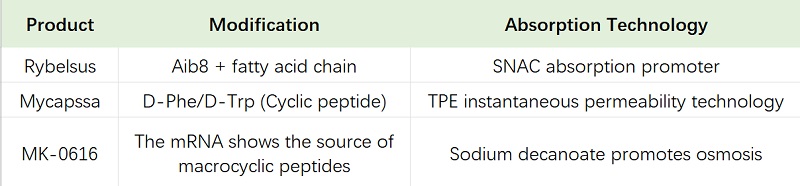
Future molecules will contain more and more "tricky" non-natural amino acids and macrocyclic structures.
mRNA display (such as the RaPID system) can screen peptide libraries at the scale of 10¹² - 10¹³ in one go.
RFdiffusion, modified AlphaFold (such as the cyclic peptide position coding of AfCycDesign), and reinforcement learning generators have been able to design large cyclic/binding peptides from scratch.
Side-chain olefin binding locking α-helix, hydrogen bond substitution, β/γ-amino acid foldamer, and atomic-level skeleton engineering are gradually solving the traditional problem of targeting intracellular protein-protein interactions (PPI).
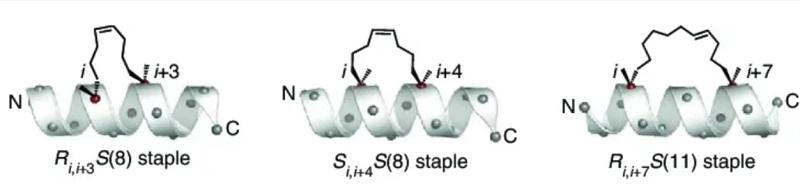
The use of site-specific conjugation sites provided by non-natural amino acids to attach toxins, nuclides, or fluorescence, constructing a "peptide version ADC". At the same time, oral penetration promotion technology is becoming increasingly mature. "Special amino acids + preparations" will enable more polypeptides that were originally only injectable to be taken orally.