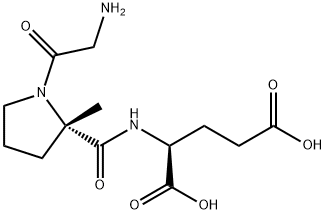
Trofinetide is a small-molecule peptide. The original patent protects its Form A crystal form (about 2~4 hydrates), and the patent is valid until July 2042. Customers need to circumvent original crystalline type patents. After research and analysis, it is somewhat feasible to circumvent these patents by developing eutectic technologies. This study requires the development of a Trofinetide cocrystal form.
I. Research Objectives:
Developed Trofinetide cocrystal form to circumvent original crystalline patents.
Solubility characterization: Screening for good and undesirable solvents of the compound to provide a basis for subsequent screening experiments.
1.2 Eutectic ligand prediction
Based on the prediction model, batch prediction is performed for APIs and pharmaceutically acceptable eutectic ligands, and subsequent eutectic screening is performed for ligands with feasibility for eutectic formation.
1.3 Eutectic Screening
Eutectic screening experiments were conducted using equipment such as the Avantium Crystal 16 parallel crystallizer and fully automatic frozen ball mill, including but not limited to:
Optimize the preparation conditions for all eutectics obtained during screening to some extent, slightly enlarging the resulting eutectic (0.1g level).
2.4 Eutectic Optimization and Characterization
By changing the molar ratio between molecules, it is possible to obtain different eutectics, and comprehensive characterization of the final eutectics (X-ray powder diffraction, thermogravimetric analysis, differential scanning calorimetry, dynamic water adsorption, polarizing microscopy, etc.) is conducted, preliminarily confirming eutectics with certain advantages.
2.5 Eutectic stability and advantages investigation
According to the 2025 edition of the Chinese Pharmacopoeia 9015 Guidelines for Drug Crystal Form Research and Quality Control of Drug Crystal Forms, the influencing factors under the stability test item must examine the stability of crystal form substance states under high temperature, high humidity, and light conditions; Observe whether the crystal form of the eutectic has undergone transcrystallization. The obtained eutectics were examined for their morphological stability over one month under conditions of high temperature (60°C), high humidity (92.5% RH), strong light (4500 lx), and accelerated (40°C, 75% RH) (samples taken at 1, 5, 10, 15, and 30 days respectively), using PXRD, Raman, and TGA characterizations to evaluate the dominant crystal forms with stability.
Crystal stability with excellent crystal stability The eutectic test simulates equilibrium solubility under human gastric and small intestine pH conditions, mainly testing equilibrium solubility in hydrochloric acid solution at pH=1 and phosphate buffer at pH=6.8 at 37°C.
2.6 Single crystal culture of eutectic crystals
According to FDA eutectic application guidelines, it is necessary to confirm that two molecules exist simultaneously in the same lattice, so single crystal culture is required to confirm the structure.
Step 1: Measure the solubility of the solvent.
Step 2: Using a Crystal 16 parallel crystallizer and similar methods, employing slow evaporation methods, slow cooling, and solvent diffusion methods, preliminary screening for conditions that may form single crystals.
Step 3: Based on your understanding of the compound, you may try more single crystal cultivation methods
Step 4: Further optimize the conditions obtained in step two (and possibly step three) to cultivate single crystals suitable for structural analysis.
3. Materials and Report Formats
Provision of phased R&D reports and final versions of R&D reports (in Chinese).
4. Project Plan
Stage
Content
Cycle
1
Comprehensive characterization of starting materials
1 week
2
Prediction of eutectic ligands
1 week
3
Eutectic screening
10 weeks
4
Eutectic optimization and characterization
4 weeks
5
Eutectic stability and advantages investigation
4 weeks
6
Cultivation and analysis of single crystals of eutectic crystals
8 weeks
In total
The total cycle is 6 months
3、Project timeline
Serial number
Research projects
Cycle
(Working days)
1
Trofinetide hydrotide eutectic screening
90
2
Single crystal cultivation and structural analysis
We use cookies to offer you a better browsing experience, analyze site traffic and personalize content. By using this site, you agree to our use of cookies. Privacy Policy