
01 R&D Background and Challenges
1.1 The drug development background of MK-0616
Enlicitide Decanoate (also known as MK-0616) is the first fully de novo designed oral macrocyclic peptide PCSK9 inhibitor intended for reducing low-density lipoprotein cholesterol (LDL-C) and treating atherosclerotic cardiovascular disease.
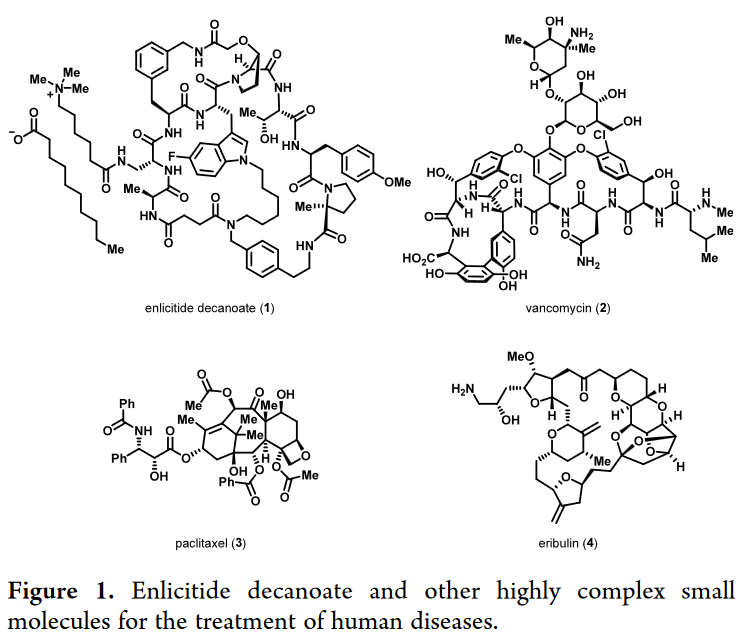
As shown in the figure above, besides MK-0616, classic examples in this field also include the antibiotic vancomycin (2), the chemotherapeutic agent paclitaxel (3), and the anticancer drug eribulin (4). The complex structures of compounds 2 and 3 mean that their actual synthesis still relies on semi-synthetic methods based on natural products; in contrast, the Eisai team achieved the total synthesis of compound 4 through more than 60 steps, marking a milestone in the synthesis of polyketide compounds.
Regarding MK-0616, its chemical structure is highly unique: it is the first molecule entirely designed from scratch (rather than derived from natural sources); furthermore, as a daily oral PCSK9 inhibitor intended for the treatment of cardiovascular diseases rather than for oncology or anti-infective applications, its global demand will far exceed that of conventional innovative drugs, necessitating production on a scale ranging from hundreds of kilograms to several tons.
1.2 Synthetic Challenges and Strategies
The molecular complexity of MK-0616 imposes stringent requirements on process development.
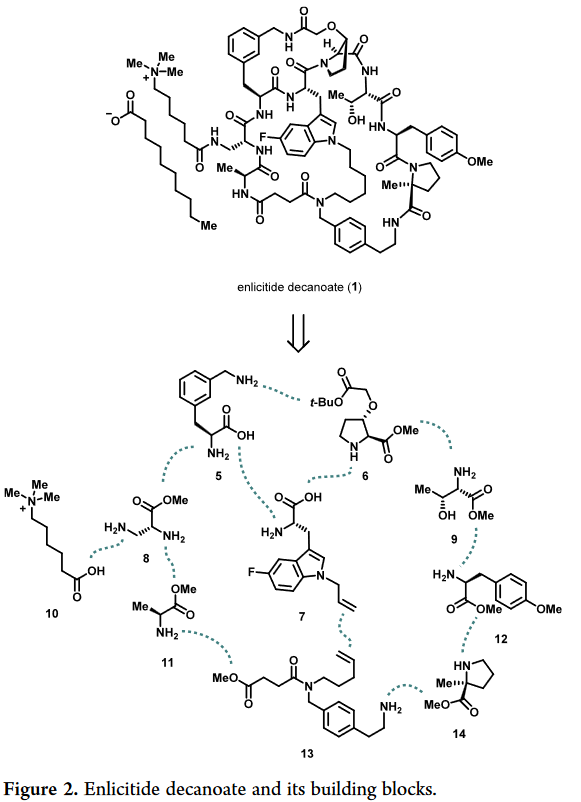
Structural characteristics: Although MK-0616 originates from a macrocyclic peptide identified through mRNA display technology screening, it contains 6 non-canonical amino acids (totaling 8 amino acid units), a 37-membered macrocycle, an ammonium salt side chain (10), and a non-peptide fragment (13), rendering conventional solid-phase peptide synthesis techniques completely ineffective, as illustrated below.
The core challenges to be addressed
1、The stability of polar intermediates (particularly for ammonium salt fragments, where the counterion must be controlled throughout the entire process);
2、The selectivity of large ring closure (requires optimization of the assembly sequence among 10 blocks);
3、Scale-up challenges (avoid chromatographic purification; ensure milligram-to-kilogram scale throughput);
Therefore, the key decision proposed by the researchers is as follows:
1、divide-and-conquer:Prioritize the construction of the "Northern fragment" (a 17-membered ring composed of non-canonical amino acids at positions 5, 6, and 7), and simplify the macrocyclic cleavage strategy through retrosynthetic analysis (e.g., by selecting the amide bond between positions 5 and 8).
2、Terminal side chain introduction:The polar ammonium salt fragment (10) shall be reserved for the final installation step to avoid challenges associated with intermediate purification.
3、The flexible application of acid–base neutralization reactions (RCM):A n-hexane-linked chain is formed at positions 7–13; this reaction exhibits excellent orthogonality and can be carried out in multiple stages.
Through this series of strategies, researchers have ultimately established a scalable synthetic route, paving the way for clinical evaluation.02
02 Synthetic Strategy and Optimization
Through analytical studies, the researchers performed multi-step, multi-generation optimization of the key macrocyclic fragment (Northern fragment) and optimized the assembly of the Southern fragment with the final product.
2.1 Multi-generational optimization of the Northern segment:
First generation – 37 iterations
The synthesis of non-canonical amino acids (e.g., 3-hydroxyproline) exhibits low efficiency, as it relies on inefficient cyclization reactions—such as the Dieckmann condensation—as well as chiral resolution; furthermore, this process requires multiple rounds of protecting group manipulation and several chromatographic purifications, as illustrated in the figure below.
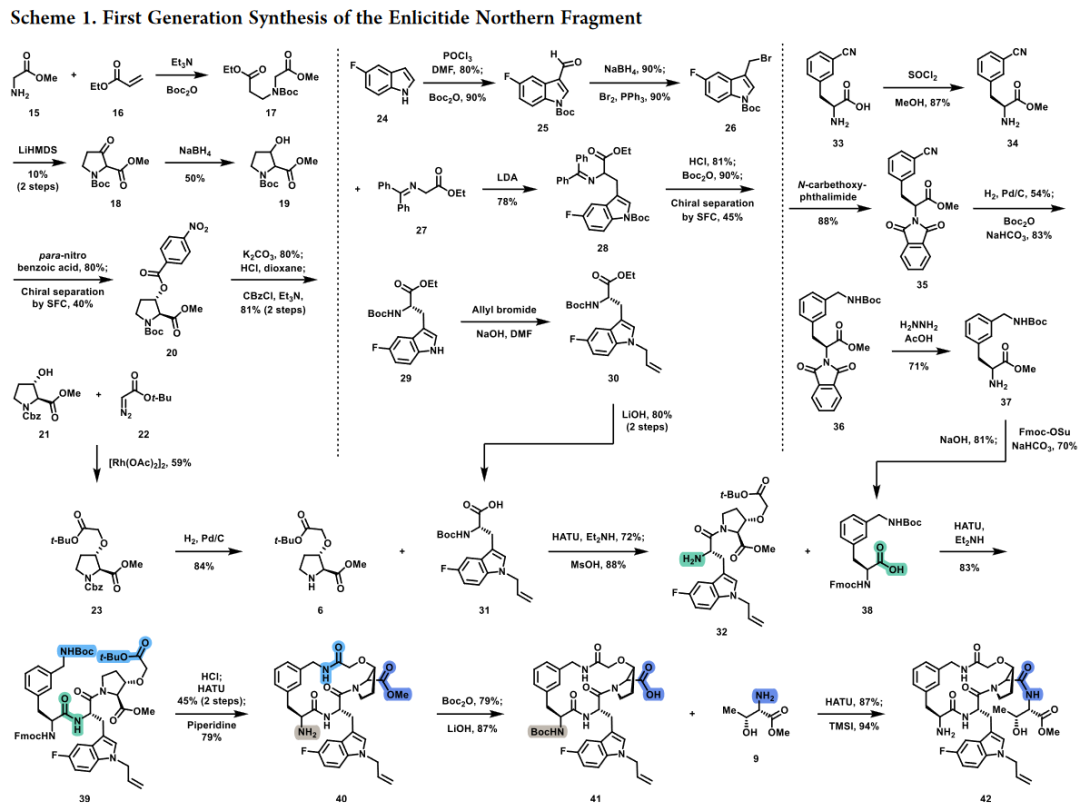
All of these factors limit the large-scale synthesis of target fragments.
Second-generation synchronous system
A breakthrough was achieved through biocatalysis: the introduction of ketone reduction (KRED) enabled the highly efficient and stereoselective reduction of β-hydroxyesters; additionally, engineered TrpB enzyme was utilized to synthesize fluorinated tryptophan, thereby eliminating the need for chiral resolution. As a result, the number of synthetic steps was reduced, and the use of protecting groups was minimized, as illustrated in the figure below.
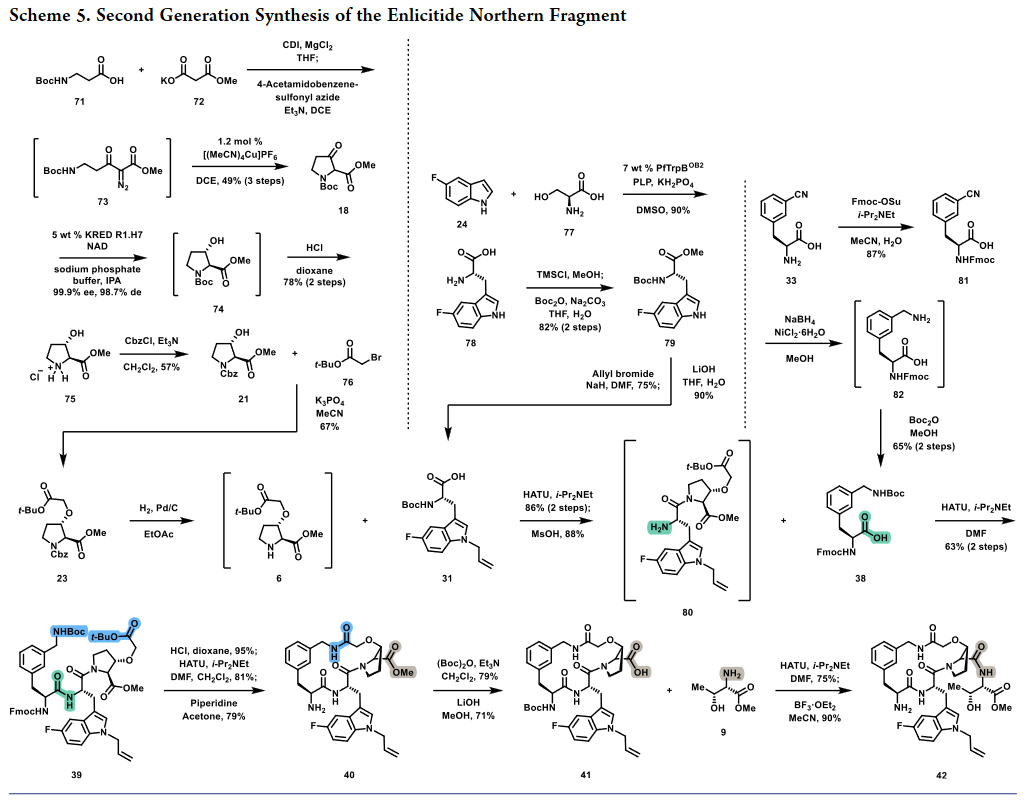
This synthetic route for the optimization of the Northern fragment has also been applied in clinical development; however, opportunities arising from the structural strategy have created a need for further optimization of the fragment synthesis pathway.
First, the key findings regarding the three late-stage crystallization intermediates provide a critical point for purity control; therefore, it is essential to modify the synthetic route to intercept these three intermediates.
Secondly, it is recommended to carry out the cyclotrimerization of olefins reaction as late as possible during the synthesis process. This approach is based on the consideration that ruthenium catalysts may increase the overall cost of benzothiuramine production; performing this reaction at the final stage of the synthetic route can thus significantly reduce costs.
Therefore, this has facilitated the optimization of the third-generation approach.
Third-generation common-stepping system
Through enzymatic hydroxylation, L-proline is directly oxidized to 3-hydroxyproline with a stereoselectivity exceeding 99:1; key intermediates were identified, such as the crystallinity of the benzenesulfonate salt, which enabled the avoidance of chromatographic purification; modular assembly was employed, along with adjustments to the amino acid coupling sequence and simplification of the protecting group strategy, as illustrated in the figure below.
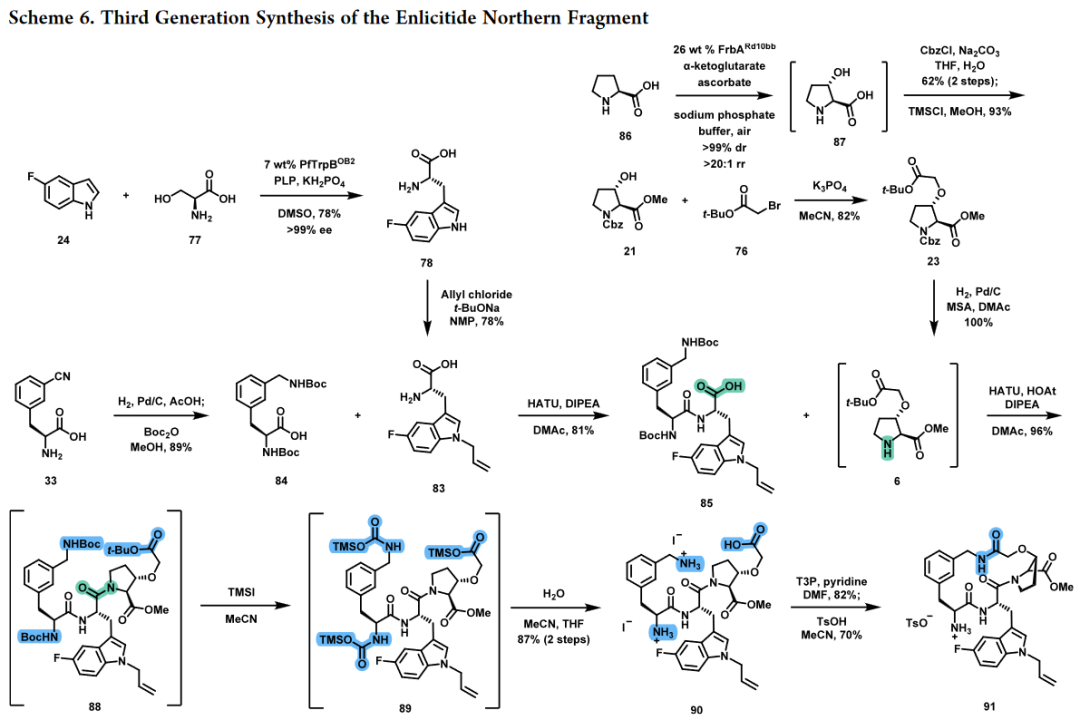
The third-generation synthetic MK-0616 Northern fragment differs from the fragments synthesized in the previous two generations. This selection was driven by the identification of crystalline pentanoate 91, which lacks the threonine amino acid residue (to be incorporated later during synthesis). This salt can be isolated with high yield and purity and provides a highly stable intermediate that can be stored as a key intermediate throughout the synthesis process.
Through optimization in the third generation, the separation of the newly designed Northern fragment (91) now requires only 14 steps—just one-third of the number of steps required for the first-generation synthesis. Furthermore, it is important to note that in the third-generation protocol, the longest linear sequence has been reduced by more than half, decreasing from 20 steps to 9 steps.
2.2 Optimization of the Southern fragment
First generation, comprising 15 steps
Starting from raw materials procured in large quantities from commercial suppliers, the 9-step process represents the longest linear sequence, as shown in the figure below.
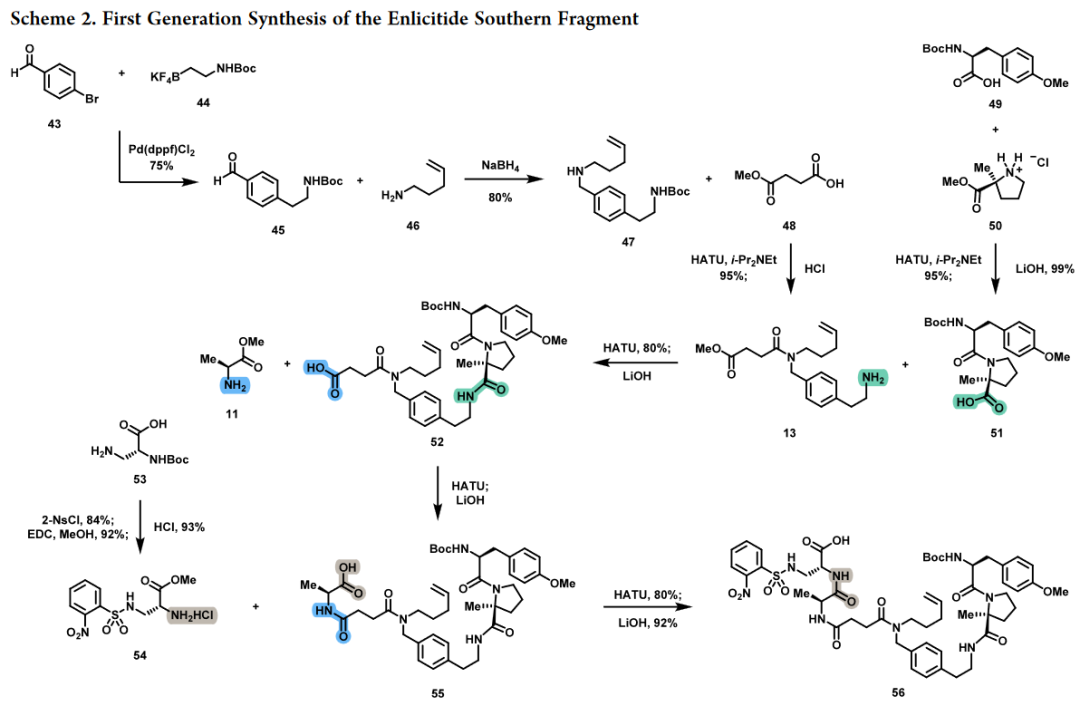
Second-generation synchronous system
In the second-generation synthesis, what was improved was not the number of steps, but rather the overall efficiency and purity control, as illustrated in the scheme below. After thousands of trials, a Southern blot fragment called leelamine salt (99) was identified.
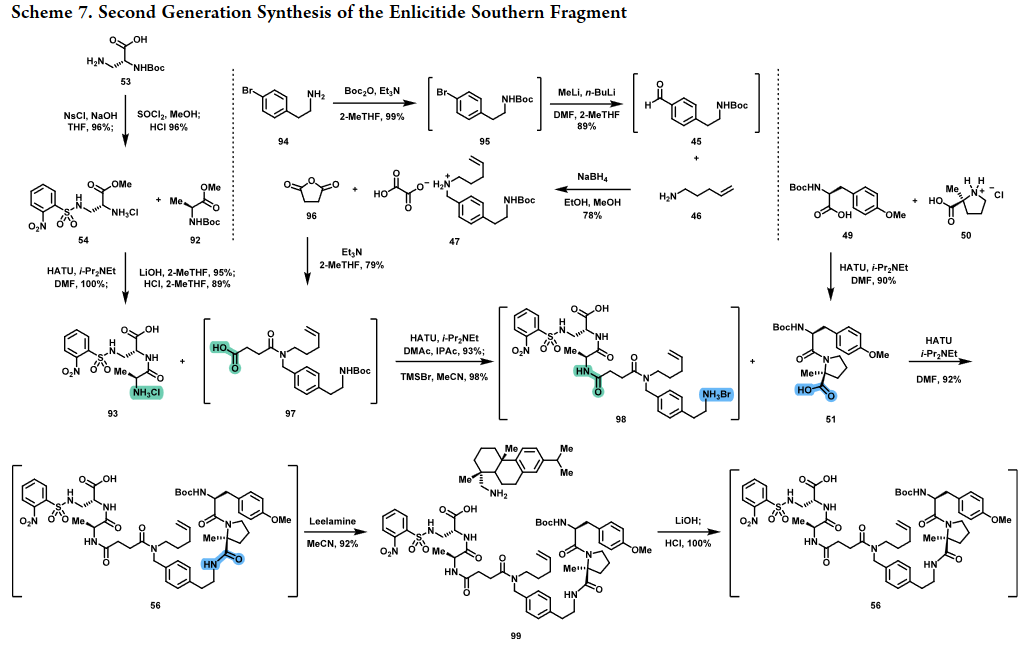
The use of these two compounds has previously been demonstrated to serve as non-chiral solvents for carboxylic acids; consequently, the crystalline salt (99) can surprisingly be obtained as a highly pure substance, thereby avoiding the extensive preparative HPLC work required in the previous generation of synthesis.
2.3 Final product assembly
Both the first-generation Northern fragment and the second intermediate of the Southern fragment can be readily protected to yield the linear precursor 61, as shown in the figure below; however, the yield of the cycloolefin metathesis product is very low.
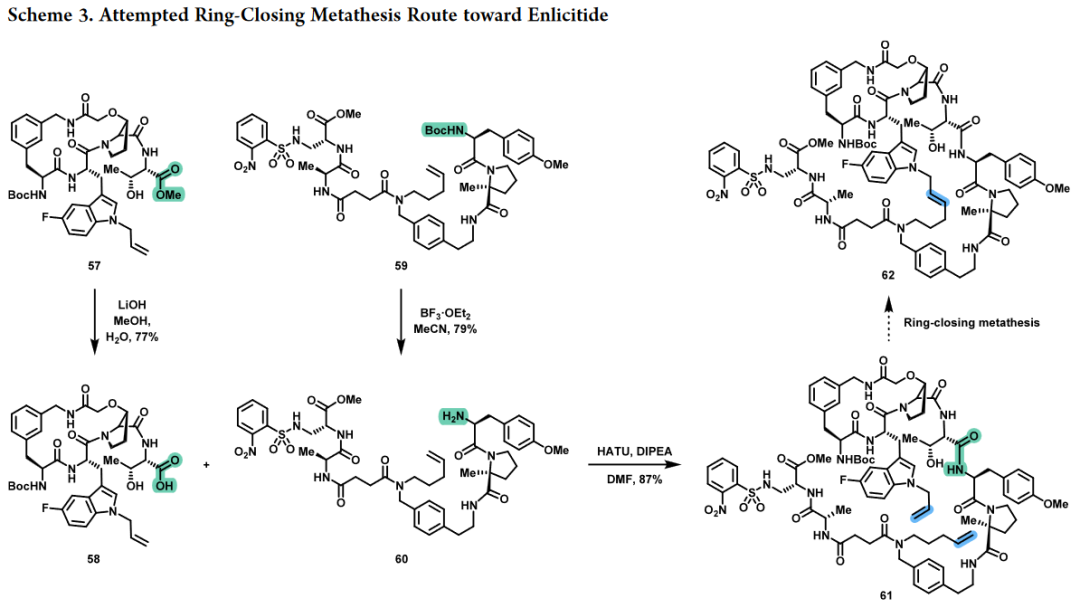
Regardless, researchers successfully employed another sequence, enabling the first scalable synthesis of MK-0616, as illustrated in the scheme below.
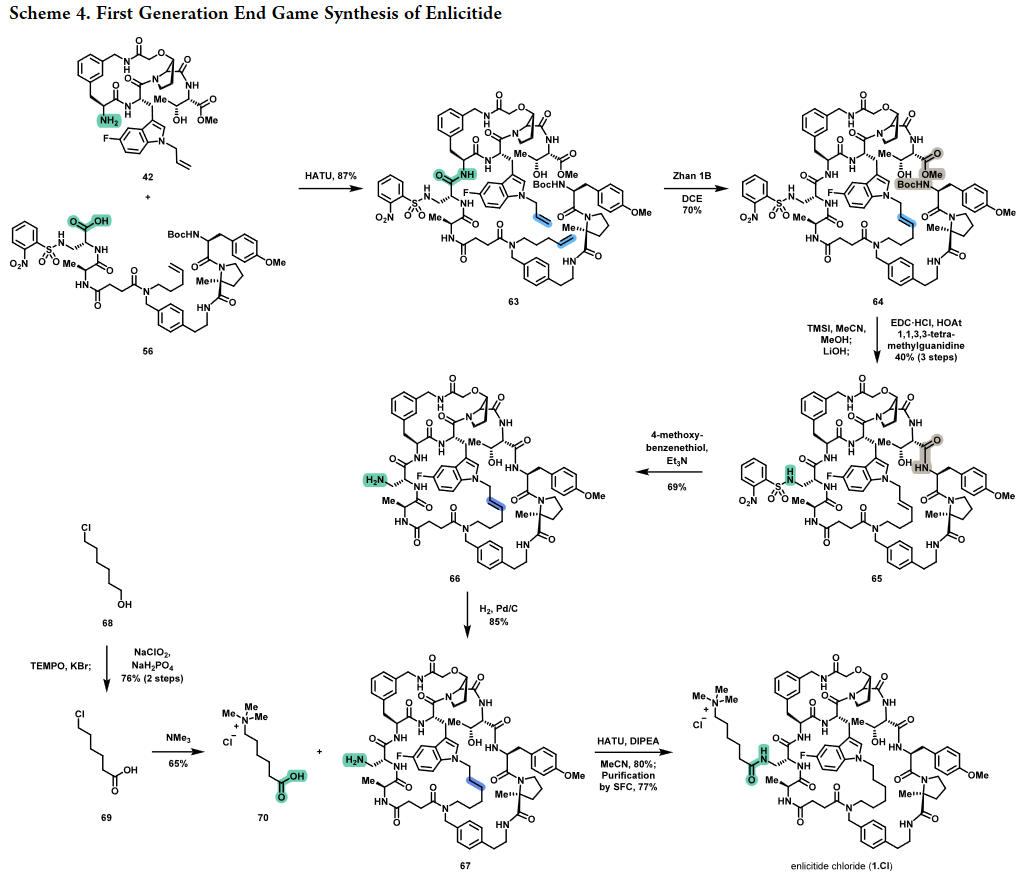
The first-generation enaldehyde salts were synthesized via a 63-step process that begins with the installation of side chains onto the molecular core through high-yield amidation followed by SFC purification; among these steps, step 28 represents the longest linear sequence.
The second-generation final product combination is shown in the figure below.
By optimizing the pathways for both Northern and Southern fragments targeting the target product, both approaches can utilize flat fragment crystalline intermediates to advance to the final stage of synthesis.
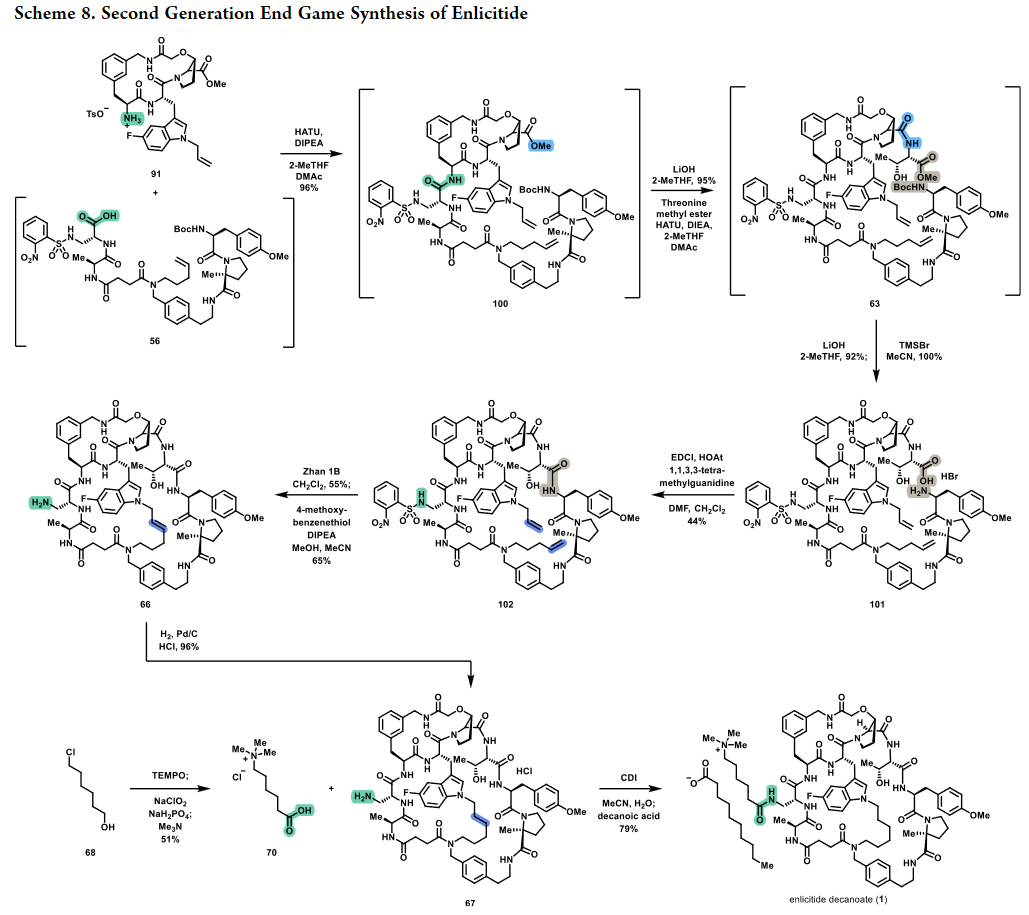
This coupling reaction is sufficiently clean to proceed directly to the next step using a crude reaction.
Overall, the second-generation synthetic route for MK-0616 requires 43 steps, among which 21 steps constitute the longest linear sequence. This sequence reduces both the total number of steps and the length of the longest linear sequence compared to the first-generation process by one-third.
03 Key Technology Innovation
An analysis of the entire optimization process reveals several innovations in key technologies, such as:
1、Biocatalysis Technology: KRED dynamic kinetic resolution; TrpB enzyme-mediated synthesis of tryptophan analogs; direct introduction of hydroxyl groups via proline hydroxylase; etc.
2. Crystallization-driven purification: Multiple intermediate steps—such as the methylsulfonate of Northern blot fragments or the leelamine salt of Southern blot fragments—are employed to achieve crystallization purification, thereby eliminating the need for chromatography columns.
3. Orthogonal protecting group strategy: flexible switching between protecting groups such as Boc and Nosyl to ensure the selectivity of multi-step reactions.
4. Green chemistry considerations: reducing the use of heavy-metal catalysts (e.g., ruthenium catalysts) and shifting the RCM reaction to a later stage to lower production costs.
04 Summary and Outlook
This paper demonstrates a flexible integration of biocatalysis and chemical synthesis, while emphasizing the pivotal role of crystallization processes and adopting a modular design approach—thereby showcasing a systematic methodology spanning from laboratory exploration to industrial-scale production. This work represents an exemplary case in the field of complex molecular synthesis: the total number of steps was reduced from 63 in the first-generation protocol to 43 in the second-generation protocol, with yields increased by nearly 1,000-fold and enabling the feasibility of ton-scale production. Throughout the entire process, strategic emphasis is placed on the crystallization step, thereby avoiding chromatographic purification—a feature that makes it highly suitable for ton-scale production. Furthermore, this study provides a technical template for the synthetic approaches to other complex macrocyclic peptides.
![Tris[2-(MethylaMino)ethyl]aMine](https://www.cosperpharma.com/upload/8820/tris-2-methylamino-ethyl-amine-485485.webp "Tris[2-(MethylaMino)ethyl]aMine")
![1,2,4-Triazolo[4,3-a]pyridin-3(2H)-one](https://www.cosperpharma.com/upload/8820/1-2-4-triazolo-4-3-a-pyridin-3-2h-one-440735.webp "1,2,4-Triazolo[4,3-a]pyridin-3(2H)-one")