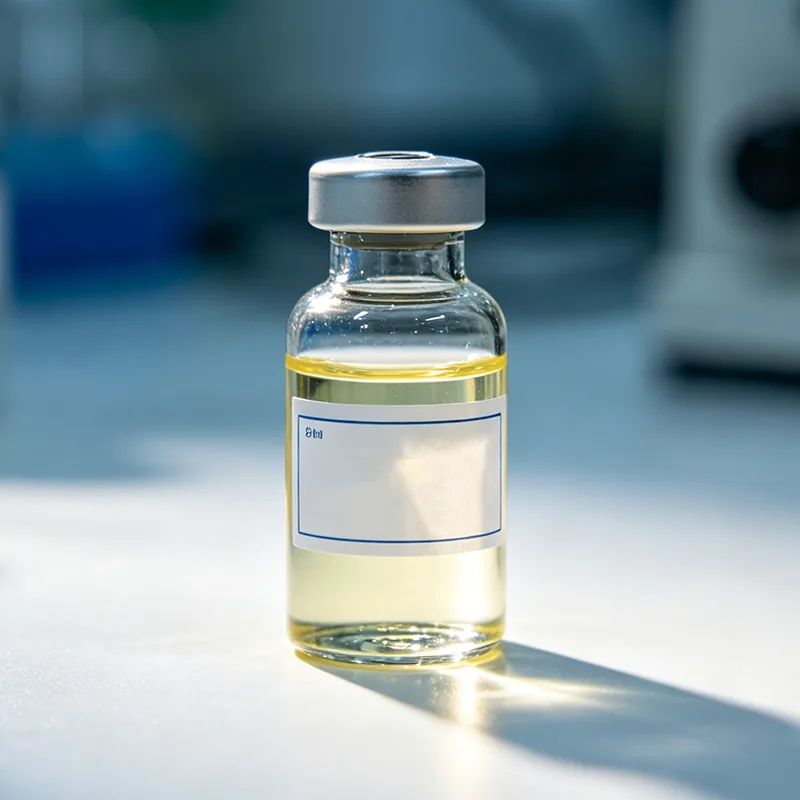
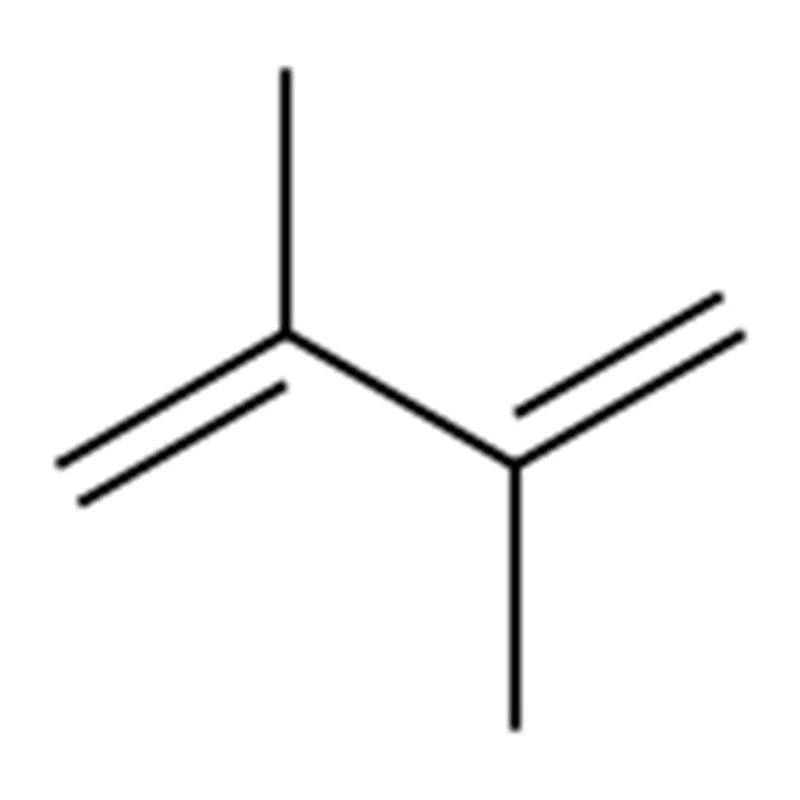
2,3-Dimethyl-1,3-butadiene (CAS 513-81-5) is a highly flammable, colorless liquid diene with a characteristic odor, widely used as a building block in organic synthesis and polymer chemistry. The compound is stabilized with 100 ppm butylated hydroxytoluene (BHT) to prevent unwanted polymerization during storage.
In polymer chemistry, 2,3-dimethyl-1,3-butadiene is a versatile monomer for the preparation of stereoregular polymers. Using titanium-based Ziegler‑Natta catalysts, it can be polymerized to either cis‑1,4‑ or trans‑1,4‑poly(2,3-dimethylbutadiene) with high stereochemical purity . The compound has also been copolymerized with butadiene using rare‑earth metal catalysts to produce novel plastic‑rubber diblock copolymers.
In organic synthesis, 2,3-dimethyl-1,3-butadiene serves as an activated diene in Diels‑Alder cycloaddition reactions, which proceed under mild conditions due to the electron‑rich nature of the methyl‑substituted diene . It participates in hetero‑Diels‑Alder reactions with aldehydes and in normal Diels‑Alder reactions with a wide range of dienophiles . The compound also participates in other pericyclic reactions and can be used as a precursor for the synthesis of various cyclic and heterocyclic compounds .
Furthermore, 2,3-dimethyl-1,3-butadiene played an important role in the early history of synthetic rubber and is now used as a specialty reagent for research purposes.
|
Parameter |
Specification |
|
CAS Number |
513-81-5 |
|
Molecular Formula |
C₆H₁₀ |
|
Molecular Weight |
82.14 g/mol |
|
Purity |
≥98.0% by GC |
|
Appearance |
Colorless transparent liquid |
|
Melting Point |
–76 °C (lit.) |
|
Boiling Point |
68–69 °C (lit.) |
|
Density |
0.726 g/mL at 25 °C (lit.) |
|
Vapor Pressure |
269 mmHg at 37.7 °C |
|
Refractive Index |
n20/D 1.438 (lit.) |
|
Flash Point |
–8 °F (≈ –22 °C) |
|
Henry‘s Law Constant |
2.0 × 10⁻⁴ mol/(m³·Pa) at 25 °C |
|
Dielectric Constant |
2.10 |
|
Canonical SMILES |
CC(=C)C(C)=C [0†L35] |
|
Storage Condition |
2–8 °C, sealed, under inert atmosphere (light-and air-sensitive) |
|
Stabilizer |
100 ppm BHT (butylated hydroxytoluene) |
|
Solubility |
Miscible with chloroform; immiscible with water |
A polymer chemistry research group aims to prepare a stereoregular poly(diene) with precisely controlled microstructure for elastomer applications. 2,3-Dimethyl-1,3-butadiene is polymerized using a triisobutylaluminum/titanium tetrachloride (Al/Ti molar ratio ≈ 2) initiator system in n‑hexane, yielding either cis‑1,4‑ or trans‑1,4‑poly(2,3-dimethylbutadiene) with high stereochemical purity. The resulting polymer exhibits unique mechanical properties distinct from polybutadiene or polyisoprene .
A synthetic organic chemist requires a diene component for a Diels‑Alder reaction to construct a bicyclic scaffold found in several natural products. 2,3-Dimethyl-1,3-butadiene serves as the electron‑rich diene, reacting with a suitable dienophile under thermal or Lewis acid‑catalyzed conditions to form the desired cyclohexene adduct. The methyl substituents provide stereochemical control and functional group handles for further elaboration.
A medicinal chemistry team is developing a library of oxygen‑containing heterocycles for screening against a therapeutic target. Using montmorillonite K10 clay as a catalyst, 2,3-dimethyl-1,3-butadiene undergoes hetero‑Diels‑Alder cycloaddition with substituted benzaldehydes to afford functionalized dihydropyrans, which can be further diversified into more complex heterocyclic scaffolds .
An industrial research group developing high‑performance elastomers for automotive applications investigates the copolymerization of 2,3-dimethyl-1,3-butadiene with butadiene using rare‑earth metal catalysts. The resulting plastic‑rubber diblock copolymers exhibit tunable mechanical properties that bridge the gap between rigid plastics and soft rubbers, enabling new applications in impact‑resistant materials .
A materials science laboratory studying radiation chemistry uses γ‑ray‑initiated polymerization of dienes at low temperature (–78 °C) to produce polymers with mixed linear and cyclic structures. 2,3-Dimethyl-1,3-butadiene serves as a model monomer to investigate the effect of methyl substitution on the polymerization mechanism under high‑energy radiation conditions .
● Temperature: 2–8 °C (refrigerated) — do not freeze
● Atmosphere: Store under inert gas (nitrogen or argon) to prevent oxidation and polymerization
● Container: Sealed, airtight, tightly closed container
● Protection: Protect from light; avoid prolonged exposure to heat or sunlight, as the compound can polymerize under these conditions [0†L35]
● Incompatibilities: Strong oxidizing agents, strong acids, strong bases, free‑radical initiators, and sources of ignition
● Stabilizer: Contains 100 ppm BHT for storage stability
● Shelf life: 12–24 months when stored as recommended
Handling recommendation: Due to the compound‘s high volatility (boiling point 68–69 °C, vapor pressure 269 mmHg at 37.7 °C), always handle in a well‑ventilated fume hood. Keep away from sources of ignition — including static discharge. Use explosion‑proof electrical equipment where required. The compound is classified as a highly flammable liquid; avoid breathing vapors and contact with skin and eyes.
The most convenient method for the preparation of 2,3-dimethyl-1,3-butadiene involves the acid‑catalyzed dehydration of pinacol (2,3-dimethyl-2,3-butanediol). Many catalysts have been used for this reaction, with hydrobromic acid being particularly effective. The overall transformation proceeds via a pinacol rearrangement/dehydration sequence involving carbocation intermediates.
Detailed Laboratory Procedure:
Step 1: Slowly heat pinacol and 48% hydrobromic acid together in a suitable reaction vessel.
Step 2: Continue heating while collecting the distillate until the temperature reaches 95 °C.
Step 3: Remove the upper organic layer from the collected distillate.
Step 4: Wash the organic layer with water containing a small amount of hydroquinone (to inhibit polymerization).
Step 5: Dry the washed product over anhydrous calcium chloride.
Step 6: Purify the crude product by fractional distillation to obtain pure 2,3-dimethyl-1,3-butadiene.
Need a reliable source for this specialty diene? Let’s talk.At Cosperpharm, we understand that working with volatile, flammable monomers requires not just quality product but also reliable technical support and safe packaging. Our team is here to help.
Address
No. 2 Yangguang 3rd Road, Duodao Chemical Cycle Industrial Park, Jingmen City, Hubei Province, China
Tel

![1-[2,3-Bis[(9Z,12Z)-octadeca-9,12-dien-1-yloxy]propyl]pyrrolidine](https://www.cosperpharma.com/upload/8820/1-2-3-bis-9z-12z-octadeca-9-12-dien-1-yloxy-propyl-pyrrolidine-349384.webp "1-[2,3-Bis[(9Z,12Z)-octadeca-9,12-dien-1-yloxy]propyl]pyrrolidine")
![1,2,4-Triazolo[4,3-a]pyridin-3(2H)-one](https://www.cosperpharma.com/upload/8820/1-2-4-triazolo-4-3-a-pyridin-3-2h-one-440735.webp "1,2,4-Triazolo[4,3-a]pyridin-3(2H)-one")