
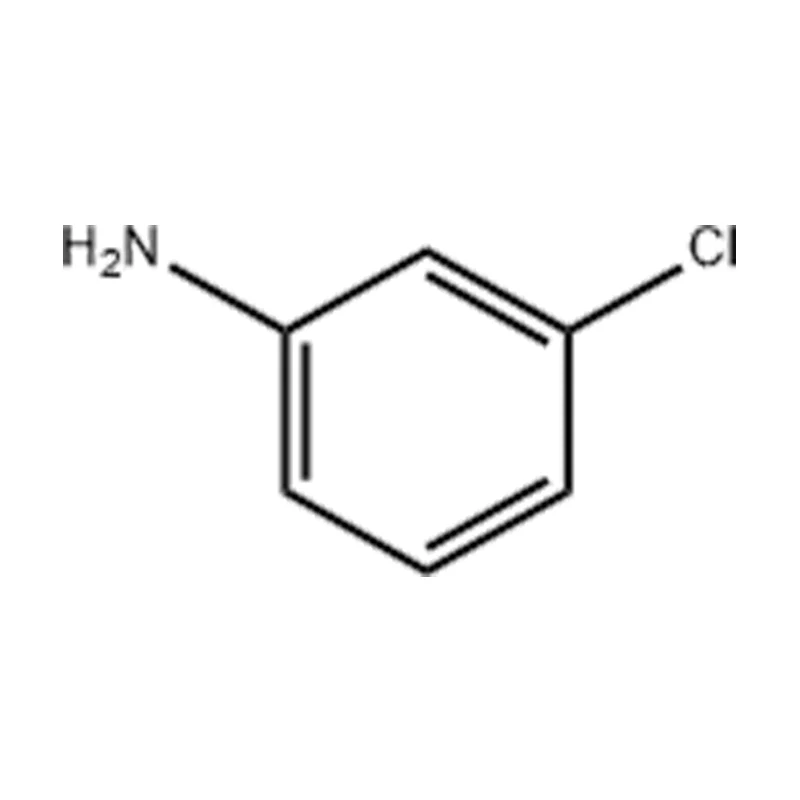
3-Chloroaniline is a cornerstone intermediate in the global fine chemical industry, enabling the synthesis of pharmaceuticals, agrochemicals, dyes, pigments and specialty organic materials. In pharmaceutical manufacturing, 3-Chloroaniline is the essential precursor for constructing the phenothiazine core of the antipsychotic drug chlorpromazine hydrochloride, the benzothiadiazine ring of the diuretic hydrochlorothiazide, and the 4-aminoquinoline scaffold of the antimalarial drug chloroquine phosphate — three distinct drug classes with completely different mechanisms of action. As an agrochemical intermediate, 3-Chloroaniline is transformed into the carbamate herbicide chlorpropham (isopropyl N-(3-chlorophenyl) carbamate), which functions as a highly selective sprout suppressant for stored potatoes and as a broad-spectrum pre‑emergence herbicide. The versatility of 3-Chloroaniline extends to dye manufacturing, where its hydrochloride salt, known as Fast Orange GC Base, serves as an ice dye base and azo coupling component for the coloration of cotton, linen and viscose fabrics.
|
Parameter |
Specification |
|
CAS Number |
108-42-9 |
|
Molecular Formula |
C₆H₆ClN |
|
Molecular Weight |
127.57 g/mol |
|
Purity |
≥98.0% (synthesis grade); ≥99.0% (analytical grade available) |
|
Appearance |
Colorless to pale yellow to light brown transparent liquid |
|
Melting Point |
−11 to −9 °C (lit.) |
|
Boiling Point |
95–96 °C at 11 mmHg (230–231 °C at atmospheric pressure) |
|
Density |
1.206 g/mL at 25 °C (lit.) |
|
Refractive Index |
n²⁰/D 1.594 (lit.) |
|
Flash Point |
123–124 °C (closed cup) |
|
Vapor Pressure |
1 mmHg at 63.5 °C |
|
Water Solubility |
6.8 g/L at 20 °C |
|
pH |
7.3 (saturated aqueous solution) |
|
pKa |
3.46 at 25 °C |
|
LogP (free base) |
0.77–2.03 (pH-dependent) |
|
Decomposition Temperature |
Approximately 190 °C |
|
Storage Condition |
Sealed, cool (<30 °C), dry, dark, under inert atmosphere |
Industrial Production via Reduction of m‑Nitrochlorobenzene
The dominant industrial synthesis of 3-Chloroaniline proceeds via the reduction of m‑nitrochlorobenzene (1‑chloro‑3‑nitrobenzene), which is itself prepared by nitration of chlorobenzene under carefully controlled conditions that favor meta substitution.
Historical method — Chemical reduction (sodium sulfide route):
1.In a reaction vessel, sodium sulfide is dissolved in water and heated to boiling.
2.m‑Nitrochlorobenzene is gradually added to the boiling sodium sulfide solution.
3.The mixture is maintained under reflux for approximately 5 hours to ensure complete reduction of the nitro group to the amino group.
4.After reaction completion, the mixture is neutralized and subjected to steam distillation.
5.The distillate is extracted, and the organic phase is further purified by fractional distillation under reduced pressure.
Typical yield: High (industrial processes achieve yields >90%). Material balance: ~960 kg of sodium sulfide per metric ton of m‑nitrochlorobenzene processed.
3-Chloroaniline should be stored in a tightly sealed container placed in a cool, dry and well‑ventilated location below 30 °C. Protect from light and direct sunlight. Keep away from strong oxidizing agents, strong acids and food‑grade materials. The compound is stable under recommended storage conditions, but prolonged exposure to light and air causes gradual darkening of the liquid from colorless to light brown; purity is not significantly affected. For long‑term storage exceeding six months, maintain under an inert atmosphere (nitrogen) and consider amber glass containers or opaque metal drums.
Handling precautions: Use only in a fume hood. Wear chemical‑resistant gloves (tested against EN 374), safety goggles and a lab coat. Avoid generating dust or mists. Do not eat, drink or smoke in work areas. After handling, wash hands thoroughly. Contaminated clothing should be removed and washed before reuse. In case of skin contact, wash immediately with plenty of soap and water. In case of eye contact, rinse cautiously with water for several minutes and seek medical advice.
Accelerated (40 °C / 75 % RH) and long‑term (25 °C ambient) stability data are available upon request.
3-Chloroaniline is the essential precursor for three major drug classes: antipsychotics (chlorpromazine), diuretics (hydrochlorothiazide) and antimalarials (chloroquine phosphate). It is also used in the synthesis of analgesics, antipyretics and other therapeutic agents.
As the key building block for the carbamate herbicide chlorpropham, 3-Chloroaniline contributes to agricultural productivity through selective sprout suppression in stored potatoes and pre‑emergence weed control in multiple crops (wheat, corn, soybean, rice, onion, pepper, sugar beet).
The hydrochloride salt of 3-Chloroaniline (CAS 141‑85‑5) is a classic ice dye base (Fast Orange GC Base) used as a diazo component for azo dyes and as a color developer in the printing of cotton, linen and viscose fabrics. Also used in the production of disperse dyes, reactive dyes and organic pigments.
3-Chloroaniline undergoes rapid and clean diazotization under standard conditions (NaNO₂ / HCl, 0–5 °C). The resulting diazonium salt is a versatile electrophile for azo coupling with activated aromatic compounds (phenols, naphthols, aromatic amines) to generate azo dyes and azo pigments — the largest class of synthetic colorants by volume.
The amino group enables amide and urea formation with carboxylic acids, acid chlorides and isocyanates. The meta‑chlorinated aromatic ring is stable under basic, acidic and reductive conditions, making 3-Chloroaniline a reliable starting material for multi‑step syntheses of heterocycles (pyrimidines, benzodiazepines, quinolines), π‑conjugated materials and specialty polymers.
Pharmaceutical and agrochemical process chemists use 3-Chloroaniline for reaction optimization, impurity profiling, route scouting and commercial manufacturing. Cosperpharm provides characterization data and process support for seamless scale‑up from R&D to production volumes.
High‑purity 3-Chloroaniline (≥99.0%) serves as an analytical reference standard for GC and HPLC method validation, residual solvent analysis and impurity identification in pharmaceutical quality control programs.
3-Chloroaniline is widely used as a model pollutant in studies of aerobic and anaerobic biodegradation, biofilm‑based treatment systems and bioaugmentation strategies for the remediation of chlorinated aniline‑contaminated industrial wastewater.
Explored as a monomer for polyimides, polyureas and other high‑performance polymers due to the meta relationship between the amino group and the chlorine substituent, which influences chain packing, thermal stability and solubility.
Securing high‑purity 3-Chloroaniline for your pharmaceutical, agrochemical or dye synthesis should be simple
Address
No. 2 Yangguang 3rd Road, Duodao Chemical Cycle Industrial Park, Jingmen City, Hubei Province, China
Tel

![1-[2,3-Bis[(9Z,12Z)-octadeca-9,12-dien-1-yloxy]propyl]pyrrolidine](https://www.cosperpharma.com/upload/8820/1-2-3-bis-9z-12z-octadeca-9-12-dien-1-yloxy-propyl-pyrrolidine-349384.webp "1-[2,3-Bis[(9Z,12Z)-octadeca-9,12-dien-1-yloxy]propyl]pyrrolidine")
![1,2,4-Triazolo[4,3-a]pyridin-3(2H)-one](https://www.cosperpharma.com/upload/8820/1-2-4-triazolo-4-3-a-pyridin-3-2h-one-440735.webp "1,2,4-Triazolo[4,3-a]pyridin-3(2H)-one")