This 5-Benzothiazolecarboxylicacid,2-methyl-(8CI,9CI) is built around a benzothiazole core – a bicyclic ring system where a benzene ring fuses with a thiazole (a five‑membered ring containing both sulfur and nitrogen). At the 2‑position of the thiazole ring sits a methyl group (–CH₃), and at the 6‑position of the benzene ring a carboxylic acid (–COOH). The result is a rigid, nearly planar structure with a molecular weight of just 193.22. The compound appears as an off‑white to yellow solid (color can vary depending on purity and crystal form) with a sharp melting point of 202 °C – indicating good crystallinity and thermal stability. Its predicted pKa is 3.61±0.30, typical for an aromatic carboxylic acid, and the predicted density is 1.430±0.06 g/cm³. The boiling point is high (385.2 °C at atmospheric pressure, extrapolated), as expected for a polar, low‑volatility solid.
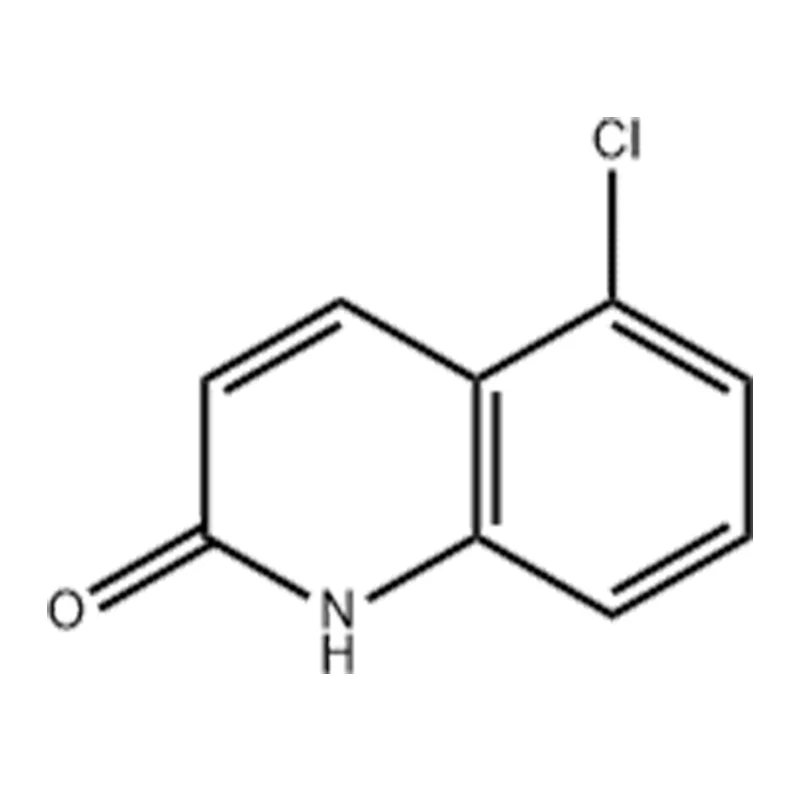
5-Chloro-quinolin-2-ol (5‑Chloro‑2‑hydroxyquinoline) is a heterocyclic compound with the molecular formula C₉H₆ClNO and a molecular weight of 179.60 g/mol. The structure consists of a quinoline fused ring system with a chlorine substituent at the 5‑position and a carbonyl/hydroxyl group at the 2‑position — existing predominantly in the 2(1H)‑quinolinone tautomeric form. The compound appears as a white to light‑yellow to light‑orange powder with a melting point of 288–289 °C (when recrystallized from methanol). The high melting point reflects strong intermolecular hydrogen bonding in the crystal lattice, characteristic of 2‑quinolinones.
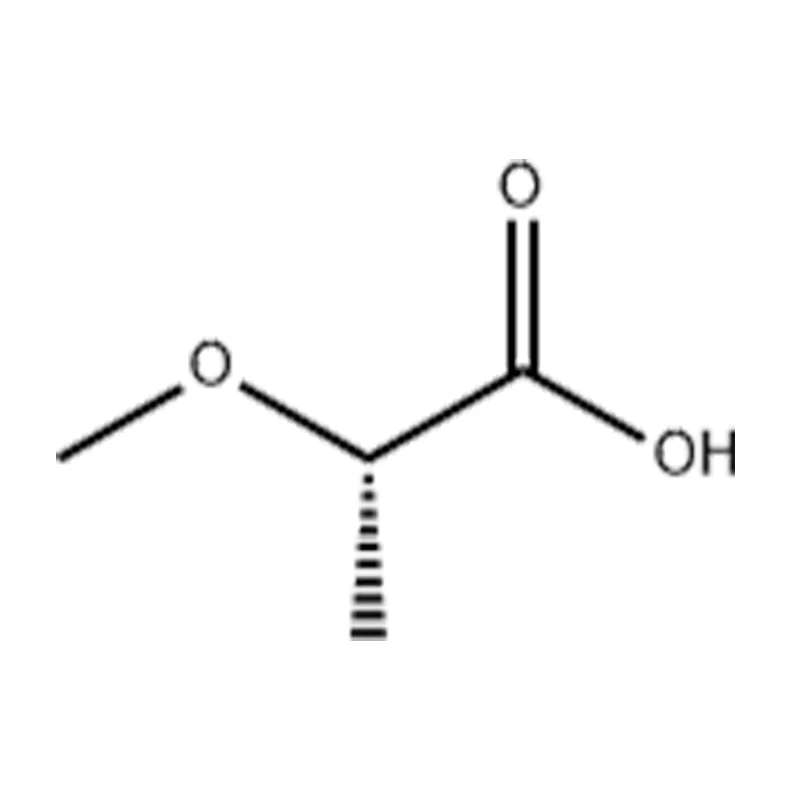
This molecule looks simple: C₄H₈O₃, molecular weight just 104.1. But don’t let its size fool you. (S)-(-)-2-Methoxypropionic acid carries a single chiral center at the α‑carbon (the carbon bearing both the methoxy and the carboxylic acid groups). The specific rotation is negative, and its enantiopurity is what gives this compound value as a chiral reagent in asymmetric transformations. The structure consists of a propionic acid backbone with a methoxy substituent at the 2‑position, locked into the S configuration. It appears as a transparent, slightly yellow liquid, with a boiling point of 99 °C at 20 mmHg and a refractive index range of 1.4132–1.4152. While most simple carboxylic acids are solids or liquids at room temperature, this one is a low‑viscosity liquid that is freely soluble in common organic solvents such as chloroform, ethyl acetate, and methanol.
If (S)-(-)-2-methoxypropionic acid is the left hand, then (R)-(+)-2-methoxypropionic acid is the right hand. These two enantiomers share the same molecular formula (C₄H₈O₃, MW 104.1), the same boiling point (108–110 °C at 30 mmHg), the same density (~1.11), and the same refractive index range (1.4132–1.4152). They dissolve in the same solvents (chloroform, ethyl acetate, methanol – each slightly), and both have a predicted pKa of 3.59±0.10. But at the chiral center, they differ – one rotates plane‑polarized light to the left, the other to the right. This one is (R)-(+) , and it appears as a transparent colorless liquid when pure.
Cosperpharm supplies (R)-(+)-2-methoxypropionic acid with documented enantiopurity and full safety documentation. Whether you need a few grams for method development or larger quantities for process chemistry, we deliver in secure, inert‑purged containers.
At the heart of this molecule lies a pyrrole ring (a five-membered aromatic heterocycle containing nitrogen) connected directly to a 4-(1-Pyrrolyl)benzoic acid at the 4-position. The nitrogen atom of the pyrrole forms the link to the benzene ring, creating a conjugated system that extends across the N-aryl bond. The molecular formula is C₁₁H₉NO₂, with a molecular weight of 187.19 g/mol. The compound appears as a white powder (sensitivity to moisture — store dry), with a high melting point of 286–289 °C (literature), reflecting strong intermolecular hydrogen bonding and π-stacking in the crystal lattice. The predicted pKa of the carboxylic acid is 3.83±0.10, typical for an aromatic benzoic acid derivative.
Pipoxolan, known systematically as 5,5-diphenyl-2-[2-(piperidin-1-yl)ethyl]-1,3-dioxolan-4-one hydrochloride, carries the molecular formula C₂₂H₂₆ClNO₃ and a molecular weight of 387.90 g/mol. It crystallizes from isopropyl alcohol as a white solid with a sharp melting point of 207–209 °C, and is stable to mild attack by acids or bases.Cosperpharm supplies pipoxolan hydrochloride (pipoxolan HCl) as a pharmaceutical intermediate and research chemical with purity ≥98% by HPLC. The product is available in research to pilot‑scale quantities, backed by comprehensive analytical documentation and a validated quality system.
Cosper is a professional Intermediate manufacturer and supplier in China. We have an experienced sales team, professional technicians, and an after-sales service team.
We use cookies to offer you a better browsing experience, analyze site traffic and personalize content. By using this site, you agree to our use of cookies. Privacy Policy