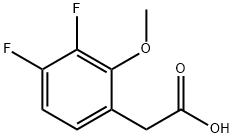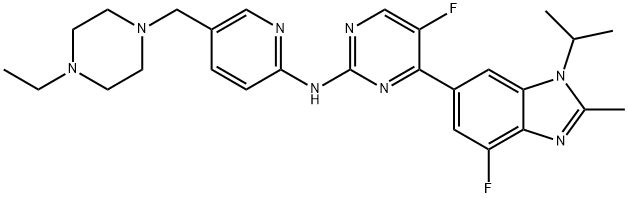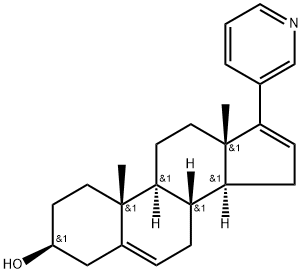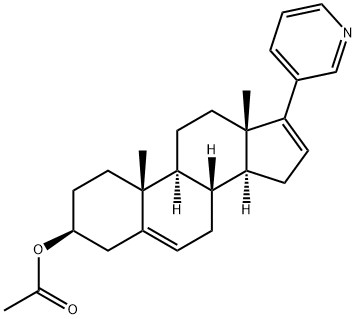

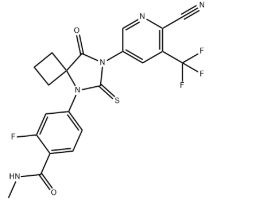
Apalutamide is a pivotal active pharmaceutical ingredient and certified reference standard for quality control of this androgen receptor inhibitor. The thiohydantoin core of Apalutamide is constructed through a multi-step synthetic sequence. In quality control contexts, Apalutamide and its related impurities—including N-desmethyl apalutamide (active metabolite)—are essential analytical reference standards for impurity profiling and analytical method development. As an orally administered AR inhibitor, Apalutamide represents a significant therapeutic advance for prostate cancer.
|
Parameter |
Specification |
|
Product Name |
Apalutamide |
|
CAS Number |
956104-40-8 |
|
Molecular Formula |
C₂₁H₁₅F₄N₅O₂S |
|
Molecular Weight |
477.43 g/mol |
|
Appearance |
White to off-white solid |
|
Solubility |
DMSO: 50 mg/mL |
|
Storage Condition |
–20°C (3 years); 4°C (2 years) |
Apalutamide (ARN-509) is a selective, competitive androgen receptor inhibitor with an IC50 of 16 nM in cell-free assays, and is effective in the treatment of prostate cancer. Phase 3.
In the LNCaP/AR prostate cancer cell line, ARN-509 (<10μM) inhibits the androgen-mediated induction or suppression of the mRNA expression levels of 13 endogenous genes, including PSA and TMPRSS2. ARN-509 (<10μM) inhibits the proliferation effect of R1881 (30pM) in the LNCaP/AR prostate cancer cell line. In LNCaP cells expressing AR-EYFP, ARN-509 (10μM) disrupts the nuclear localization of AR, thereby reducing the concentration of AR bound to androgen response elements. 10μM ARN-509 can effectively compete with 1nM R1881, thereby preventing AR from binding to the promoter region. In Hep-G2 cells expressing the VP16-AR fusion protein and the ARE-driven luciferase reporter gene system, ARN-509 inhibits R1881-induced VP16-AR-mediated transcription, with an IC50 of 0.2μM
In a mouse model of castrated male immunodeficient mice bearing LNCaP/AR-luc xenograft tumors, ARN-509 (10 mg/kg/day, oral administration) inhibits tumor growth, which is manifested as a decreased proliferation rate and an increased apoptosis rate. For castrated male immunodeficient mice bearing LNCaP/AR-luc xenograft tumors, ARN-509 exerts the optimal inhibitory effect on tumor growth at a dose of 30 mg/kg/day, and the inhibitory effect is dose-dependent. Treatment with ARN-509 at a dose of 10 mg/kg/day for 28 days can reduce the weight of the prostate lacking glandular secretory activity by 3-fold and reduce the testicular weight of adult male dogs by 1.7-fold. ARN-509 (10 mg/kg/day, oral administration) inhibits cell proliferation in the prostate tissue of adult male dogs. Among 24 patients with metastatic CRPC who had received prior treatment, ARN-509 is safe and well tolerated, with the peak plasma concentration occurring 2 to 3 hours after administration. In patients with metastatic CRPC, ARN-509 induces a sustained decrease in PSA within the dose range of 30 to 300 mg. In a mouse model of castration-resistant prostate cancer, ARN-509 has strong anti-cancer activity and can induce long-term symptomatic remission after the completion of treatment.
For Apalutamide inquiries related to your prostate cancer therapeutic development or analytical program, Cosperpharm is ready to assist with reliable supply and technical support.
Address
No. 2 Yangguang 3rd Road, Duodao Chemical Cycle Industrial Park, Jingmen City, Hubei Province, China
Tel