
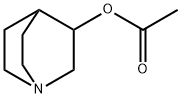
Aceclidine is an agent that is used for treating glaucoma by reducing intraocular pressure. Aceclidine is a modulator of M3 muscarinic acetylcholine receptor, making it relevant to research on disorders such as refractive errors of the eye, xerostomia, Sjogren's syndrome, glaucoma, conjunctivitis, lacrimal gland disease, and esotropia. Aceclidine exhibits 28-fold iris-over-ciliary muscle selectivity and a 270% outflow facility increase with only 5D accommodation (vs. 19D with pilocarpine), making it the optimal reference for presbyopia R&D and IOP-lowering agent development. Aceclidine is also classified as a cycloplegic agent, a surfactant, a tonicity adjustor, and optionally a viscosity enhancer and an antioxidant.
Product Parameters
Synthetic Route
 →
→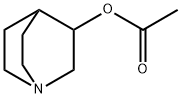
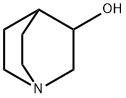
The synthesis of the (RS)-3-acetoxyquinine ring was carried out by dissolving (RS)-3-quinine ring alcohol (25 g, 0.2 mol) in pyridine (100 ml) and slowly adding acetic anhydride (100 ml). The reaction mixture was stirred at 50 °C for 4 hours, followed by incubation at room temperature for 15 hours. Upon completion, pyridine and excess acetic anhydride were removed by vacuum distillation. The resulting light brown oily product was dissolved in water (25 ml) and adjusted to a weak alkaline solution with saturated potassium carbonate. The mixture was then extracted with chloroform (5 × 50 ml); the organic phases were combined and dried with anhydrous potassium carbonate. The organic phase was concentrated under reduced pressure, and the residue was purified by distillation to yield 20.6 g of (RS)-3-acetoxyquinine ring (yield: 62%).
Application
Why Cosperpharm?
Proven pharmacological profile. Aceclidine exhibits 28-fold iris-over-ciliary muscle selectivity and a 270% outflow facility increase, making it the optimal reference for presbyopia R&D and IOP-lowering agent development. Our rigorous quality control ensures batch-to-batch consistency.
Documentation for your research. Every shipment of Aceclidine includes a Certificate of Analysis (COA) with batch-specific purity and identity data.
Flexible supply for all needs. Cosperpharm supplies Aceclidine from research quantities for in vitro studies to larger quantities for formulation development.
Technical support when you need it. Our team can advise on solubility, stability, and application-specific considerations.
Contact Us
Address
No. 2 Yangguang 3rd Road, Duodao Chemical Cycle Industrial Park, Jingmen City, Hubei Province, China
Tel