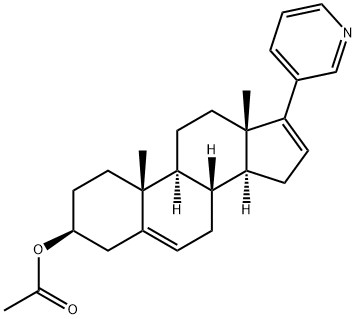

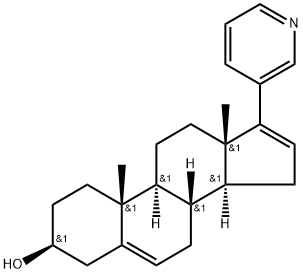
Abiraterone (CAS 154229-19-3) is a 3β-sterol that is androsta-5,16-dien-3β-ol substituted at position 17 by a 3-pyridyl group. Chemically, Abiraterone is 17-(pyridin-3-yl)androsta-5,16-dien-3β-ol (as per USP). As a steroidal compound, Abiraterone is a potent, irreversible, and selective inhibitor of 17α-hydroxylase/C17,20-lyase (CYP17), an enzyme expressed in testicular, adrenal, and prostatic tumour tissues that regulates androgen biosynthesis.
Abiraterone is the active pharmaceutical metabolite and analytical reference standard derived from the prodrug abiraterone acetate, functioning as a potent and selective inhibitor of cytochrome P450 17A1 (CYP17A1). As the active metabolite, Abiraterone inhibits both the 17α-hydroxylase and 17,20-lyase activities of CYP17A1 with IC₅₀ values of 0.004 and 0.0029 µM, respectively, effectively blocking androgen biosynthesis in testicular, adrenal, and prostatic tumour tissues. Abiraterone has a role as an antineoplastic agent and an EC 1.14.99.9 (steroid 17α-monooxygenase) inhibitor, and is used to treat metastatic castration-resistant prostate cancer and hormone-sensitive high-risk metastatic prostate cancer. As abiraterone has poor oral bioavailability and is susceptible to hydrolysis by esterases, Abiraterone is administered as the O-acetate prodrug (abiraterone acetate). Abiraterone was first approved by the FDA and EMA in April, July, and September 2011, respectively.
Product Parameters
Parameter
Specification
Product Name
Abiraterone
CAS Number
154229-19-3
Molecular Formula
C₂₄H₃₁NO
Molecular Weight
349.5 g/mol
Appearance
Solid
Melting Point
227–228°C
Boiling Point
500.2±50.0 °C
Storage Condition
2-8°C
Application
Abiraterone is approved solely for the treatment of chemotherapy-resistant castration-resistant prostate cancer (CPRC) refractory to multiple cycles of paclitaxel therapy; however, a deeper understanding of its mechanisms of action and adverse tolerability profiles is essential for its broader clinical application. Interim analysis data from the COUAA-302 study by Ryan et al. demonstrated that this trial evaluated abiraterone acetate combined with high-dose prednisone in 1,088 metastatic, previously untreated CPRC patients, with primary endpoints being overall survival and imaging outcomes. The results confirmed that, over an average period of 8 months, this regimen significantly slowed cancer progression compared to the control group receiving abiraterone plus prednisone, extending the median duration of chemotherapy from 16.8 months to 25 months.
Bioactivity
Abiraterone (CB-7598) is an effective CYP17 inhibitor with an IC50 of 2 nM in cell-free assays. It serves as an inhibitor of androgen biosynthesis.
In Vitro Study
Abiraterone binds to both wild-type and mutant androgen receptors (AR). In vitro, Abiraterone inhibits gene expression in androgen receptor-positive prostate cancer cells that exhibit proliferative activity and are regulated by androgen receptors, a mechanism explained by its effects on steroid and anti-androgen receptor pathways. Indeed, mutant androgen receptors activated by eplerenone can be inhibited by higher concentrations of Abiraterone. Abiraterone displaces ligands from WT-AR and T877A AR with EC50 values of 13.4 μM and 7.9 μM, respectively. When acting on rat testicular microsomes, Abiraterone suppresses lytic enzyme activity with an IC50 of 5.8 nM. The acetate salt of Abiraterone significantly inhibits testosterone secretion by 48% and consequently increases luteinizing hormone (LH) levels by 192%.
Contact Us
Need Abiraterone for your prostate cancer research, analytical method development, or reference standard program? Cosperpharm is ready to support your project. Get in touch with our team today for pricing, technical documentation, or to discuss your specific requirements.
Hot Tags: Abiraterone, China, Manufacturer, Supplier, Factory
We use cookies to offer you a better browsing experience, analyze site traffic and personalize content. By using this site, you agree to our use of cookies.Privacy Policy