
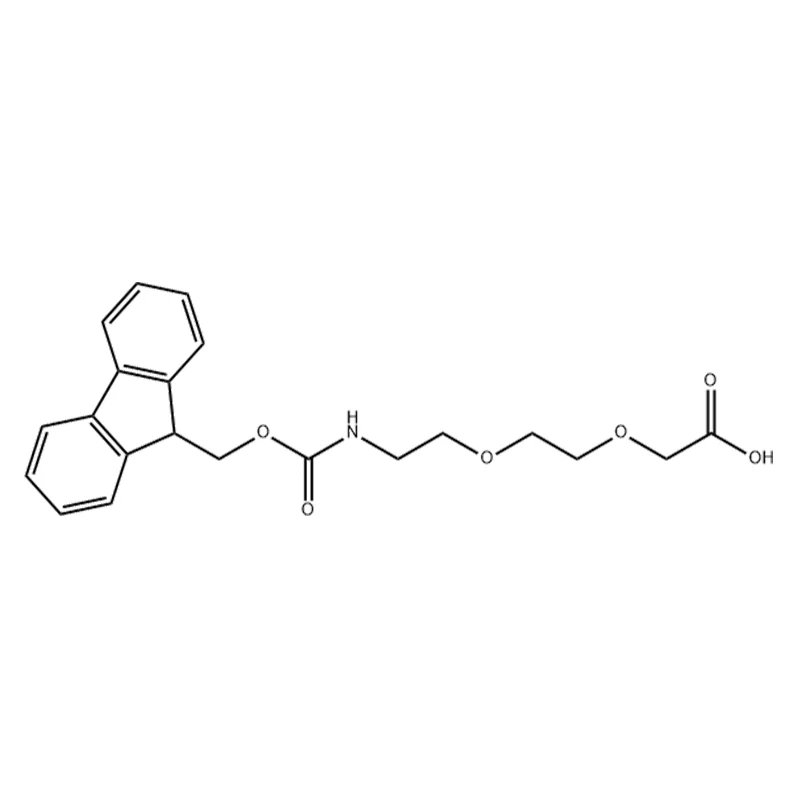
In the field of antibody‑drug conjugates (ADCs) and PROTACs, linker design dictates stability, solubility, and drug release kinetics. Fmoc-Aeea offers a cleavable‑type PEG spacer (the Fmoc group is removed before conjugation, leaving a primary amine for further functionalization). Fmoc-Aeea features a short, hydrophilic PEG2 chain (two ethylene glycol units) that improves aqueous solubility without introducing excessive length, making it ideal for attaching small‑molecule toxins to antibodies or connecting E3 ligase ligands to target protein binders. Furthermore, Fmoc-Aeea serves as a key intermediate in the synthesis of antiretroviral drugs (e.g., Elvitegravir) and the diabetes therapeutic Semaglutide. Cosperpharm supplies Fmoc-Aeea with high purity (≥98% by HPLC) and full documentation, supporting your research from gram to kilogram scales.
|
Parameter |
Specification |
|
CAS Number |
166108-71-0 |
|
IUPAC Name |
2-[2-[2-(9H-fluoren-9-ylmethoxycarbonylamino)ethoxy]ethoxy]acetic acid |
|
Synonyms |
Fmoc-NH-PEG2-CH₂COOH; Fmoc-8-amino-3,6-dioxaoctanoic acid; [2-[2-(Fmoc-amino)ethoxy]ethoxy]acetic acid |
|
Molecular Formula |
C₂₁H₂₃NO₆ |
|
Molecular Weight |
385.41 g/mol |
|
Melting Point |
90–92 °C |
|
Boiling Point (Predicted) |
631.4±45.0 °C |
|
Density (Predicted) |
1.265±0.06 g/cm³ |
|
pKa (Predicted) |
3.40±0.10 (carboxylic acid) |
|
Purity (HPLC) |
≥98.0% (area %) |
|
Any single impurity |
≤0.5% |
|
Total impurities |
≤1.5% |
|
Appearance |
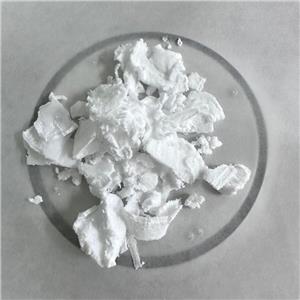
White crystalline powder |
|
Solubility |
Soluble in chloroform (slightly), DMSO (slightly), methanol (slightly) |
|
Storage |
Inert atmosphere, 2–8 °C, sealed, dry, protect from light |
● Orthogonal protection strategy – The Fmoc group is removed under mild basic conditions (e.g., 20% piperidine/DMF) without affecting the carboxylic acid, allowing stepwise assembly.
● Short PEG spacer (PEG2) – Two ethylene glycol units provide just enough hydrophilicity to reduce aggregation without compromising membrane permeability; ideal for small‑molecule conjugates.
● Crystalline solid – Sharp melting point (90–92 °C) confirms high purity and facilitates handling, unlike waxy PEGs.
● Proven utility – This compound is a documented intermediate for Semaglutide (a GLP‑1 analog for diabetes) and the HIV drug Elvitegravir. It is also widely used as a cleavable ADC linker and a PROTAC building block.
● Fmoc UV‑active tag – The Fmoc group absorbs at 265 nm, enabling easy monitoring of coupling/deprotection by HPLC or TLC.
Fmoc‑NH‑PEG2‑CH₂COOH acts as a cleavable PEG linker in ADC synthesis. After Fmoc removal, the exposed primary amine can be converted to a maleimide (using SMCC or NHS‑maleimide) for cysteine conjugation, or reacted with a bifunctional crosslinker. The carboxylic acid is then activated and coupled to the payload (e.g., MMAE, DM1, camptothecin derivatives). The PEG2 spacer reduces immunogenicity and improves solubility of the final ADC.
PROTACs require linkers that balance flexibility and rigidity. This PEG2‑based linker has been successfully used to connect E3 ligase ligands (e.g., VHL, CRBN) with target protein binders. The short chain length (approximately 8–10 atoms) is particularly suitable for small‑molecule PROTACs where excessive linker length would reduce ternary complex stability.
In the industrial synthesis of Semaglutide (Ozempic®/Rybelsus®), this linker is attached to the lysine side chain of the GLP‑1 analog, followed by conjugation with a C18 fatty diacid via a glutamic acid spacer. Cosperpharm’s high‑purity product meets the quality requirements for peptide conjugation.
The carboxylic acid can be coupled to lysine residues of proteins or to amine‑containing lipids, while the Fmoc group is later removed to introduce additional functionalities (e.g., targeting ligands, fluorophores). This allows creation of multi‑functional PEGylated biologics.
The compound is synthesized via a well‑established route:
1.Schiff base formation – Benzaldehyde reacts with diglycolamine (2‑(2‑aminoethoxy)ethanol) to protect the amine as an imine.
2.Etherification – The imine‑protected intermediate is reacted with tert‑butyl bromoacetate to form the ether linkage.
3.One‑pot deprotection & hydrolysis – The imine and tert‑butyl ester are removed simultaneously by stirring the product in acidic water overnight.
4.Fmoc protection – The free amine is finally protected with Fmoc‑Cl or Fmoc‑OSu to give the title compound.
5.Cosperpharm follows this synthetic route with strict in‑process control (TLC, HPLC) and purifies the final product by recrystallization, achieving ≥98% purity.
Ready to use CAS 166108‑71‑0 in your next ADC, PROTAC, or peptide conjugation project? Request a sample or a quote from Cosperpharm today. We are a reliable supplier of high‑purity PEG linkers and pharmaceutical intermediates.
Address
No. 2 Yangguang 3rd Road, Duodao Chemical Cycle Industrial Park, Jingmen City, Hubei Province, China
Tel

![1-[2,3-Bis[(9Z,12Z)-octadeca-9,12-dien-1-yloxy]propyl]pyrrolidine](https://www.cosperpharma.com/upload/8820/1-2-3-bis-9z-12z-octadeca-9-12-dien-1-yloxy-propyl-pyrrolidine-349384.webp "1-[2,3-Bis[(9Z,12Z)-octadeca-9,12-dien-1-yloxy]propyl]pyrrolidine")
![1,2,4-Triazolo[4,3-a]pyridin-3(2H)-one](https://www.cosperpharma.com/upload/8820/1-2-4-triazolo-4-3-a-pyridin-3-2h-one-440735.webp "1,2,4-Triazolo[4,3-a]pyridin-3(2H)-one")