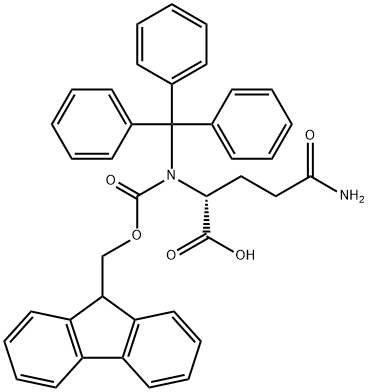
Fmoc-D-Gln(Trt)-OH (N-α-Fmoc-N-γ-trityl-D-glutamine) is a D-configured glutamine derivative bearing two orthogonal protecting groups: a base-labile 9-fluorenylmethoxycarbonyl (Fmoc) group protecting the Nα-amino functionality, and an acid-labile triphenylmethyl (trityl, Trt) group protecting the side-chain carboxamide. Structurally, the molecule incorporates the D-enantiomer of glutamine (the non-natural, mirror-image configuration of the L-glutamine found in proteins), enabling the synthesis of D-amino acid-containing peptides and peptidomimetics with enhanced proteolytic stability and altered biological properties.
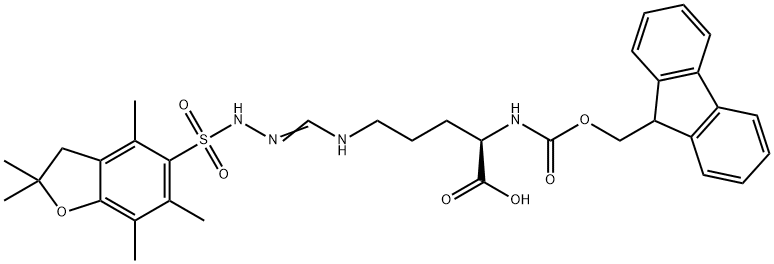
Fmoc-D-Arg(Pbf)-OH (N-α-Fmoc-Nω-(2,2,4,6,7-pentamethyldihydrobenzofuran-5-sulfonyl)-D-arginine) is a D-configured arginine derivative featuring a Pbf (2,2,4,6,7-pentamethyldihydrobenzofuran-5-sulfonyl) side‑chain protecting group. Structurally, the molecule contains a guanidinium side chain essential for arginine‘s biological function — mediating hydrogen bonding and electrostatic interactions critical for protein‑protein and protein‑nucleic acid recognition — rendered inert during peptide assembly by the bulky, electron‑rich Pbf group.
Fmoc-D-4-Nitro-Phe-OH (N-α-fluorenylmethoxycarbonyl-4-nitro-D-phenylalanine) is a D-configuration, Fmoc-protected phenylalanine derivative featuring an electron-withdrawing nitro group at the para position of the aromatic ring. The D-amino acid configuration is particularly significant, as D-amino acids incorporated into peptides confer enhanced proteolytic stability and distinct conformational properties compared to their L-counterparts—features widely exploited in the design of therapeutic peptides, peptidomimetics, and drug discovery libraries.
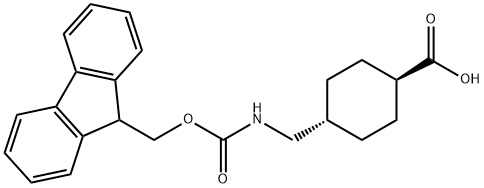
Fmoc-Tranexamic acid (trans-4-(Fmoc-aminomethyl)cyclohexane-1-carboxylic acid) is a specialized Fmoc-protected synthetic amino acid derivative incorporating the trans-4-aminomethylcyclohexane-1-carboxylic acid scaffold—the core structure of the clinically approved antifibrinolytic agent tranexamic acid. The rigid, conformationally constrained cyclohexane ring in Fmoc-Tranexamic acid adopts the trans configuration, positioning the aminomethyl and carboxylic acid functionalities on opposite sides of the cyclohexane ring.
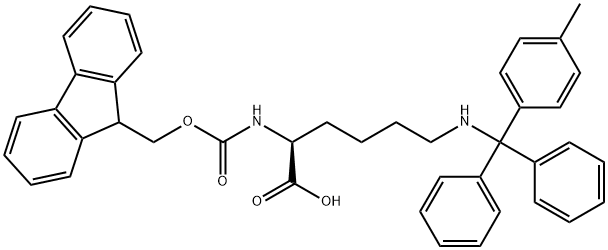
The product Fmoc-Lys(Mtt)-OH (Nα-Fmoc-Nε-4-methyltrityl-L-lysine, CAS 167393-62-6) is a specialized lysine derivative incorporating two orthogonal protecting groups. The molecule features the standard amino acid lysine backbone, with the α-amine protected by the base-labile 9-fluorenylmethyloxycarbonyl (Fmoc) group, and the side-chain ε-amine protected by the very acid-sensitive 4-methyltrityl (Mtt) group. This orthogonal protection strategy creates a powerful synthetic tool: the Fmoc group is cleaved under mild piperidine conditions (standard in Fmoc SPPS), while the Mtt group can be selectively removed under extremely mild acidic conditions (as low as 1% TFA in DCM) without affecting the Fmoc group or other standard protecting groups such as tBu or Boc.
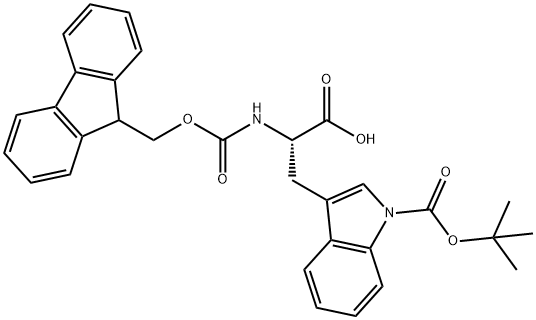
Fmoc-Trp(Boc)-OH (N-α-Fmoc-N(in)-Boc-L-tryptophan) is a dual-protected tryptophan derivative featuring Fmoc protection of the α-amino group and a tert-butyloxycarbonyl (Boc) group on the indole side-chain nitrogen. Tryptophan residues present a well-documented challenge in Fmoc SPPS: the unprotected indole NH is susceptible to alkylation, oxidation, and the formation of unwanted colored by-products during coupling and deprotection steps.
Cosper is a professional Intermediate manufacturer and supplier in China. We have an experienced sales team, professional technicians, and an after-sales service team.
We use cookies to offer you a better browsing experience, analyze site traffic and personalize content. By using this site, you agree to our use of cookies. Privacy Policy