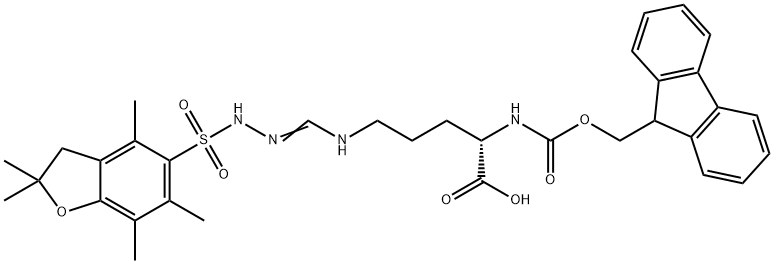
Fmoc-Arg(Pbf)-OH (Nα-Fmoc-Nω-(2,2,4,6,7-pentamethyldihydrobenzofuran-5-sulfonyl)-L-arginine, molecular formula C₃₄H₄₀N₄O₇S) is an N‑Fmoc‑protected and side‑chain‑protected derivative of the basic amino acid arginine, specifically designed for use in Fmoc solid‑phase peptide synthesis (Fmoc SPPS). Structurally, the molecule consists of a 9‑fluorenylmethyloxycarbonyl (Fmoc) group attached to the α‑amino nitrogen, and the guanidino side chain protected by the Pbf (2,2,4,6,7-pentamethyldihydrobenzofuran-5-sulfonyl) group.
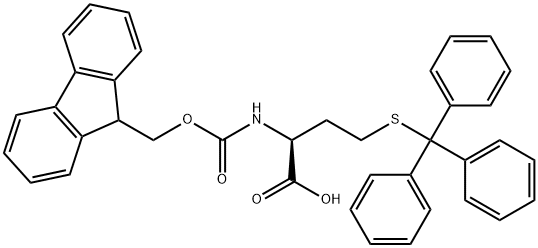
The product Fmoc-Hcys(Trt)-OH (Fmoc-L-homocysteine(Trt)-OH, CAS 167015-23-8) is a specialized Fmoc-protected amino acid derivative of the uncommon amino acid L-homocysteine (Hcy). Structurally, the molecule consists of a standard amino acid backbone with a four-carbon chain terminating in a thiol group, but unlike cysteine, the side chain is extended by one additional methylene group. The thiol group of homocysteine is protected by the very acid-labile trityl (Trt) group, while the α-amine is protected by the standard base-labile 9-fluorenylmethyloxycarbonyl (Fmoc) group.
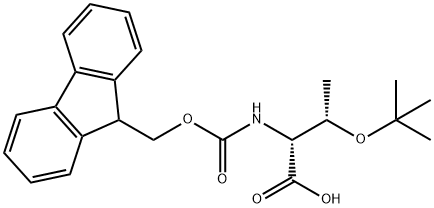
Fmoc-D-Thr(tBu)-OH (N-[(9H-Fluoren-9-ylmethoxy)carbonyl]-O-tert-butyl-D-threonine, molecular formula C₂₃H₂₇NO₅) is an N‑Fmoc‑protected and side‑chain‑protected derivative of the non‑natural D‑enantiomer of the polar amino acid threonine. Structurally, the molecule features the 9‑fluorenylmethyloxycarbonyl (Fmoc) group attached to the α‑amino nitrogen via a carbamate linkage, with the hydroxyl group of the threonine side chain protected as a tert‑butyl ether (tBu). The Fmoc group provides orthogonal N‑terminal protection for Fmoc solid‑phase peptide synthesis (Fmoc SPPS) and is cleaved under mild basic conditions (20% piperidine in DMF) without affecting the acid‑labile tBu side‑chain protecting group.
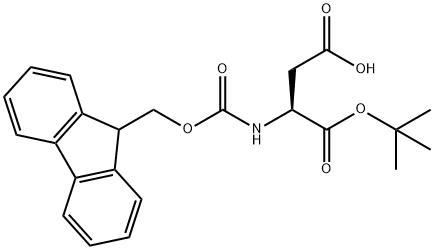
Fmoc-Asp-OtBu (Nα-Fmoc-L-aspartic acid α-tert-butyl ester) is an orthogonally protected derivative of L‑aspartic acid, widely regarded as a fundamental building block in Fmoc solid‑phase peptide synthesis (SPPS). Structurally, the molecule features a central L‑aspartic acid scaffold: the Nα‑amino group is protected by the base‑labile 9‑fluorenylmethoxycarbonyl (Fmoc) group, while the α‑carboxylic acid is selectively esterified as a tert‑butyl (OtBu) ester. This orthogonal protection strategy leaves the side‑chain β‑carboxylic acid free, enabling it to serve as the point of attachment to the solid support or the C‑terminal residue of the growing peptide chain during SPPS.
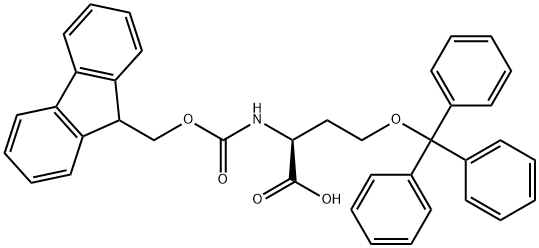
Fmoc-Hser(Trt)-OH (N-α-fluorenylmethoxycarbonyl-O-trityl-L-homoserine) is a specialized Fmoc-protected amino acid derivative featuring a trityl (triphenylmethyl) protecting group on the side-chain hydroxyl of homoserine. The homoserine backbone presents an additional methylene unit compared to serine, extending the side-chain length by one carbon atom, which offers unique conformational flexibility when incorporated into synthetic peptides. The trityl protecting group exhibits exceptional acid-lability—cleavable under mild acidic conditions such as 1% TFA in DCM containing 5% TIS—thereby enabling the side-chain hydroxyl group to be selectively modified while the derivative remains attached to the solid support during solid-phase peptide synthesis (SPPS).
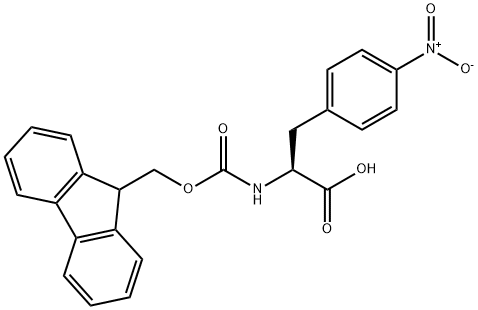
Fmoc-L-4-Nitro-Phe-OH (N-α-fluorenylmethoxycarbonyl-4-nitro-L-phenylalanine) is a high-purity L-configuration, Fmoc-protected phenylalanine derivative featuring an electron-withdrawing nitro group at the para position of the aromatic ring. As the naturally occurring enantiomer of phenylalanine, the L-configuration maintains the stereochemical orientation found in proteins and native peptides, making Fmoc-L-4-Nitro-Phe-OH the preferred building block for the synthesis of bioactive peptides that retain native conformational and functional properties.
Cosper is a professional Intermediate manufacturer and supplier in China. We have an experienced sales team, professional technicians, and an after-sales service team.
We use cookies to offer you a better browsing experience, analyze site traffic and personalize content. By using this site, you agree to our use of cookies. Privacy Policy