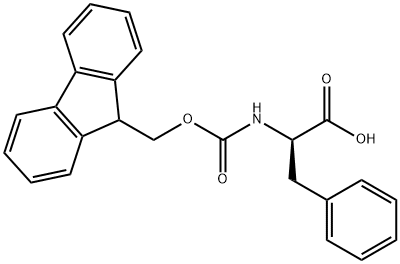
Fmoc-D-Phe-OH (N-[(9H-Fluoren-9-ylmethoxy)carbonyl]-D-phenylalanine, molecular formula C₂₄H₂₁NO₄) is an N‑Fmoc‑protected form of the non‑natural D‑enantiomer of the aromatic amino acid phenylalanine. Structurally, the molecule consists of a 9‑fluorenylmethyloxycarbonyl (Fmoc) group attached to the α‑amino nitrogen of D‑phenylalanine via a carbamate linkage, with a free carboxylic acid at the C‑terminus. The Fmoc group is orthogonal to acid‑labile side‑chain protecting groups and is rapidly cleaved under mild basic conditions (typically 20% piperidine in DMF), without affecting the integrity of growing peptide chains or the Wang/Trt resin linkage.
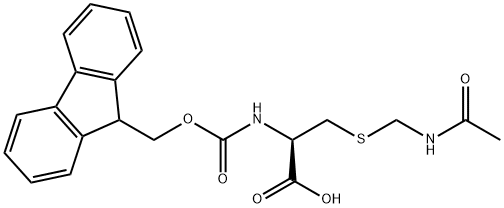
Fmoc-Cys(Acm)-OH (N-α-Fmoc-S-acetamidomethyl-L-cysteine) is an orthogonally protected cysteine derivative where the thiol group is masked by the acetamidomethyl (Acm) protecting group and the α-amino function is protected by the 9-fluorenylmethyloxycarbonyl (Fmoc) group. The Acm protection is stable to trifluoroacetic acid (TFA), enabling the selective deprotection of cysteine thiols during Fmoc solid-phase peptide synthesis without exposing the peptide to the acidic cleavage conditions required for standard side-chain protecting groups.
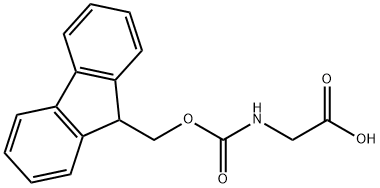
Fmoc-Gly-OH (N-9-fluorenylmethoxycarbonylglycine) is the simplest Fmoc-protected amino acid building block. The Fmoc group protects the α-amino function of glycine, allowing its incorporation into peptide chains in Fmoc SPPS. As the smallest and most conformationally flexible amino acid, glycine introduces no side-chain steric hindrance, allowing Fmoc-Gly-OH to be efficiently coupled in all positions of a peptide sequence with minimal risk of racemization.
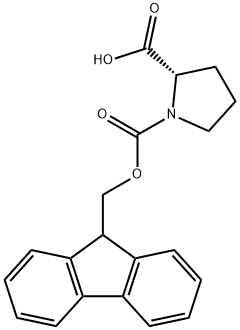
The product is Fmoc-Pro-OH (N-[(9H-Fluoren-9-ylmethoxy)carbonyl]-L-proline, also known as Fmoc-L-proline), a cornerstone building block in modern peptide synthesis. Structurally, the molecule features a bicyclic proline residue — uniquely incorporating a secondary amine as part of a rigid pyrrolidine ring — protected at its N-terminal by the base-labile 9-fluorenylmethyloxycarbonyl (Fmoc) group, which serves as the gold-standard amine protecting group in solid-phase peptide synthesis.
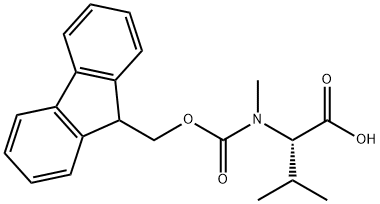
The product Fmoc-N-Methyl-L-Val-OH (IUPAC: N-[(9H-fluoren-9-ylmethoxy)carbonyl]-N-methyl-L-valine, also known as Fmoc-N-Me-Val-OH) is a specialized N-α-Fmoc protected derivative of N-methyl-L-valine. The molecule is built upon the branched aliphatic side chain of valine, but the defining structural modification is the substitution of the backbone amide hydrogen with a methyl group at the nitrogen atom.
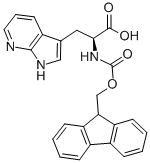
Fmoc-AzaTrp-OH (Fmoc-L-7-azatryptophan, also known as (S)-2-((((9H-fluoren-9-yl)methoxy)carbonyl)amino)-3-(1H-pyrrolo[2,3-b]pyridin-3-yl)propanoic acid) is a specialized Fmoc‑protected amino acid building block that incorporates an aza‑indole ring system in place of the standard indole side chain of tryptophan. The Fmoc protecting group at the N‑terminus enables seamless integration into standard Fmoc SPPS workflows, while the 7‑azatryptophan moiety introduces a nitrogen atom into the indole ring that significantly alters the electronic and hydrogen‑bonding properties of the side chain.
Cosper is a professional Intermediate manufacturer and supplier in China. We have an experienced sales team, professional technicians, and an after-sales service team.
We use cookies to offer you a better browsing experience, analyze site traffic and personalize content. By using this site, you agree to our use of cookies. Privacy Policy