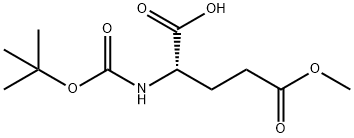
Boc-Glu(OMe)-OH (N-Boc-L-glutamic acid 5-methyl ester, CAS 45214-91-3) is a protected derivative of L-glutamic acid featuring a tert-butoxycarbonyl (Boc) group protecting the α-amino functionality and a methyl ester protecting the γ-carboxylic acid side chain. The molecular formula is C₁₁H₁₉NO₆ with a molecular weight of 261.27 g/mol. This orthogonal protection strategy — employing an acid-labile Boc group for the amine and a base-labile methyl ester for the side-chain carboxylate — enables selective deprotection and coupling reactions during solid-phase and solution-phase peptide synthesis.
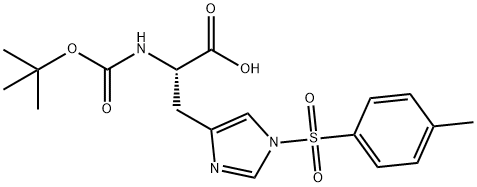
Boc-His(Tos)-OH (Nα-Boc-N(im)-tosyl-L-histidine, CAS 35899-43-5) is a doubly protected derivative of the amino acid L-histidine, featuring a Boc (tert-butoxycarbonyl) protecting group on the α-amino group and a tosyl (p-toluenesulfonyl) protecting group on the imidazole side chain.
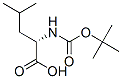
Boc-Leu-OH·H₂O (N-(tert-Butoxycarbonyl)-L-leucine monohydrate, CAS 200936-87-4) is the monohydrate crystalline form of Boc-protected L-leucine, a standard building block for introducing leucine residues in Boc-strategy solid-phase peptide synthesis (SPPS).
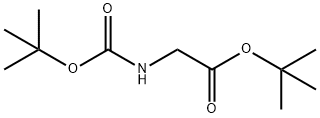
Boc-Gly-OtBu (N-(tert-Butoxycarbonyl)glycine tert-butyl ester, CAS 111652-20-1) is a doubly protected derivative of glycine featuring both a Boc (tert-butoxycarbonyl) protecting group on the amino group and a tert-butyl ester protecting group on the carboxyl terminus.
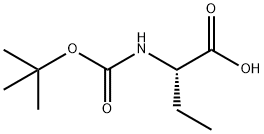
Boc-L-2-aminobutyric acid (also known as Boc-L-Abu-OH or (S)-2-(Boc-amino)butyric acid) is a Boc-protected unnatural amino acid featuring a tert-butyloxycarbonyl (Boc) group protecting the α-amino functionality and an ethyl side chain at the α-carbon. The molecular formula is C₉H₁₇NO₄ with a molecular weight of 203.30 g/mol.
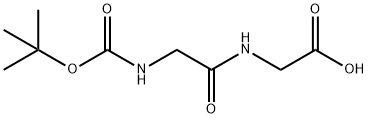
Boc-Gly-Gly-OH (N-(tert-butoxycarbonyl)glycylglycine) is a Boc-protected dipeptide consisting of two glycine residues linked by an amide bond, with a tert-butyloxycarbonyl (Boc) group protecting the N-terminal amino functionality. The molecular formula is C₉H₁₆N₂O₅ with a molecular weight of 232.23 g/mol. The structure features a tert-butyloxycarbonyl group that serves to shield the glycine residues during complex peptide assembly processes.
We use cookies to offer you a better browsing experience, analyze site traffic and personalize content. By using this site, you agree to our use of cookies. Privacy Policy