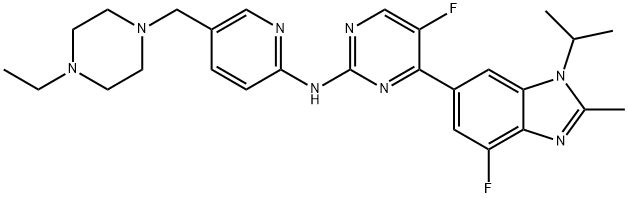

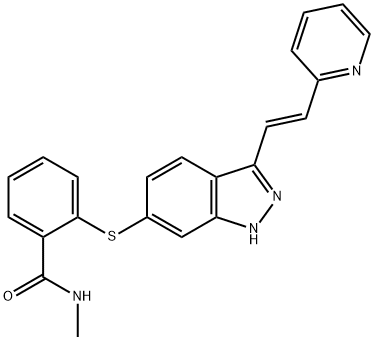
Axitinib is a clinically approved multi-target tyrosine kinase inhibitor used as a second-line treatment for advanced renal cell carcinoma . The therapeutic mechanism of Axitinib involves potent and selective inhibition of vascular endothelial growth factor receptors 1, 2, and 3, which are key mediators of angiogenesis—the process of new blood vessel formation that tumors require for growth and metastasis. By blocking these receptors, Axitinib effectively disrupts VEGF-mediated endothelial cell survival, proliferation, migration, and tube formation, thereby inhibiting tumor angiogenesis and limiting tumor progression. Additionally, Axitinib inhibits PDGFR-β and c-KIT, further contributing to its anti-tumor activity. The high selectivity of Axitinib for VEGFRs over other kinases translates to a favorable efficacy and tolerability profile, making it a valuable therapeutic option for patients with advanced renal cell carcinoma who have failed prior cytokine therapy or other targeted agents.
|
Parameter |
Specification |
|
Product Name |
Axitinib |
|
CAS Number |
|
|
Molecular Formula |
|
|
Molecular Weight |
|
|
Appearance |
|
|
Storage Condition |
Room temperature |
Axitinib is a multi-targeted tyrosine kinase inhibitor developed by Pfizer, which can inhibit vascular endothelial growth factor receptors VEGFR1, VEGFR2, VEGFR3, platelet-derived growth factor receptor and c-KIT. Axitinib is an antineoplastic drug, and it is clinically mainly used for adult patients with advanced renal cell carcinoma (RCC) who have failed previous treatment with one tyrosine kinase inhibitor or cytokine.
At therapeutic doses, axitinib can inhibit tyrosine kinase receptors, including vascular endothelial growth factor receptors (VEGFR-1, VEGFR-2 and VEGFR-3). These receptors are associated with pathological angiogenesis, tumor growth and cancer progression. In vitro assays and in vivo mouse model experiments have shown that axitinib can inhibit VEGF-mediated endothelial cell proliferation and survival; in tumor-bearing mouse models, axitinib can inhibit tumor growth and the phosphorylation of VEGFR-2.
The most common (≥20%) adverse reactions of axitinib are diarrhea, hypertension, fatigue, decreased appetite, nausea, dysphonia, palmoplantar erythrodysesthesia (hand-foot) syndrome, weight loss, vomiting, asthenia, and constipation.
Looking for Axitinib to advance your oncology research or drug development program? Cosperpharm is your trusted partner for high-purity kinase inhibitors. Contact us today to discuss your requirements and request a quote.
Address
No. 2 Yangguang 3rd Road, Duodao Chemical Cycle Industrial Park, Jingmen City, Hubei Province, China
Tel