
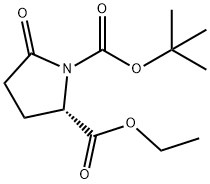
Boc-pGlu-OEt is a versatile protected amino acid building block designed for the introduction of pyroglutamic acid residues into peptide sequences. The Boc protecting group in Boc-pGlu-OEt safeguards the ring nitrogen during peptide chain assembly, while the ethyl ester protects the carboxylic acid. As a conformationally constrained pyroglutamate derivative, Boc-pGlu-OEt is particularly valuable for synthesizing peptides where structural rigidity is desired. Whether used for N-terminal pyroglutamylation in Boc-strategy SPPS or as a chiral building block in asymmetric synthesis, Boc-pGlu-OEt delivers the purity and consistency that demanding synthetic applications require.
Product Parameters
|
Parameter |
Specification |
|
Product Name |
Boc-pGlu-OEt |
|
CAS Number |
|
|
Molecular Formula |
|
|
Molecular Weight |
|
|
Physical Form |
|
|
Melting Point |
|
|
Boiling Point |
375.0±35.0℃ |
|
Density |
1.182±0.06g/cm3 |
|
pKa |
-4.15±0.40 |
|
Storage Temperature |
2–8 °C (long-term); room temperature (<15 °C, cool and dark) |
Synthetic Route
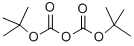 +
+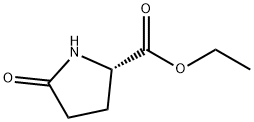 →
→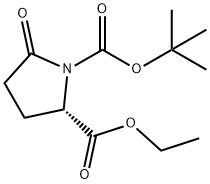
Synthesis of Boc-D-Ethyl p-Aspartate: The title compound was prepared using conventional methods or the following optimized procedure. First, L-ethyl p-aspartate was subjected to N-protection in dichloromethane with diisobutyl carbonate (Boc₂O) in the presence of a catalytic amount of DMAP, yielding N-Boc-L-ethyl p-aspartate. This compound was then dissolved in toluene and treated with lithium triethyl borohydride (LiEt₃BH) at –78°C for carbonyl reduction. After completion of the reaction, 2,6-dimethylpyridine (lutidine) and a catalytic amount of DMAP were added, followed by gradual addition of trifluoroacetic anhydride (TFAA) for dehydration to obtain 4,5-dehydroproline ethyl ester. Finally, the target product, Boc-D-ethyl p-aspartate, was obtained via cyclopropanation using Et₂Zn and ClCH₂I in 1,2-dichloroethane at –15°C. Detailed steps for synthesizing 4,5-dehydro-L-proline ethyl ester are as follows: L-ethyl p-aspartate (200 g, 1.27 mol) was dissolved in 1.2 L of dichloromethane, followed by sequential addition of diisobutyl carbonate (297 g, 1.36 mol) and a catalytic amount of DMAP (1.55 g, 0.013 mol). The mixture was allowed to react at room temperature for 6 hours. Upon completion, the reaction mixture was quenched with saturated saline solution; the organic phase was dried with anhydrous Na₂SO₄ and filtered through a short silica gel column, yielding 323 g (100%) of N-Boc-L-ethyl p-aspartate. Dissolve N-Boc-L-glutaryl ethyl ester (160 g, 0.62 mol) in 1 L of toluene, cool to –78 °C, and slowly add lithium triethyl borohydride (666 mL, 1.0 M THF solution) over a period exceeding 90 minutes. After 3 hours of reaction, add 2,6-dimethylpyridine (423 mL, 3.73 mol) and DMAP (0.2 g, 0.0016 mol), followed by TFAA (157 g, 0.74 mol); the reaction mixture is allowed to reach room temperature within 2 hours. Dilute the mixture with EtOAc and water, then wash the organic phase successively with 3 NHCl, water, saturated NaHCO₃ solution, and saline solution. Dry the mixture with anhydrous Na₂SO₄ and filter through a silica gel stopper to obtain 165 g of crude product. Purify the crude product by rapid silica gel column chromatography using an eluent of ethyl acetate:hexane (1:5), yielding 120 g (75%) of 4,5-dehydroproline ethyl ester.
FAQ
A: pGlu stands for pyroglutamic acid (also known as 5-oxopyrrolidine-2-carboxylic acid) — a cyclic amino acid formed by intramolecular cyclization of glutamic acid. The pyroglutamate ring is a conformationally constrained scaffold commonly found in biologically active peptides.
Q2: What are the primary applications of Boc-pGlu-OEt?
A: Boc-pGlu-OEt is primarily used as a building block for introducing N-terminal pyroglutamic acid residues into peptides via Boc-strategy SPPS. It is also used as a chiral ligand in asymmetric synthesis.
Quality Assurance at Cosperpharm
Gas chromatography (GC) – purity ≥97.0%
Non‑aqueous titration – purity ≥97.0%
Refractive index – confirmatory analysis
¹H NMR – structural verification
Appearance – colorless to light yellow to light orange clear liquid
A comprehensive COA, MSDS (with full GHS information), and certificate of origin accompany every shipment.
Contact Us
Looking for Boc-pGlu-OEt with verified purity and reliable supply for your peptide synthesis or asymmetric synthesis project? Cosperpharm delivers protected amino acids with the quality and service that researchers and manufacturers trust. Contact us today — we're ready to support your next synthesis campaign.
Address
No. 2 Yangguang 3rd Road, Duodao Chemical Cycle Industrial Park, Jingmen City, Hubei Province, China
Tel

![1-[2,3-Bis[(9Z,12Z)-octadeca-9,12-dien-1-yloxy]propyl]pyrrolidine](https://www.cosperpharma.com/upload/8820/1-2-3-bis-9z-12z-octadeca-9-12-dien-1-yloxy-propyl-pyrrolidine-349384.webp "1-[2,3-Bis[(9Z,12Z)-octadeca-9,12-dien-1-yloxy]propyl]pyrrolidine")
![1,2,4-Triazolo[4,3-a]pyridin-3(2H)-one](https://www.cosperpharma.com/upload/8820/1-2-4-triazolo-4-3-a-pyridin-3-2h-one-440735.webp "1,2,4-Triazolo[4,3-a]pyridin-3(2H)-one")