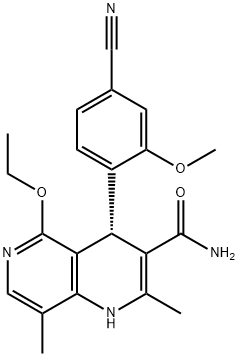

Drugs for Obesity Treatment: Weight-loss medications are primarily classified into the following categories:
Appetite-suppressing agents: Belviq (Chlorocresaline): Works by acting on 5-HT2C receptors in the brain to reduce appetite;
Phentermine: Primarily inhibits appetite by modulating neurotransmitters.
Fat absorption inhibitors:Orlistat: Inhibits lipase activity in the intestines to reduce fat absorption and is currently the only weight-loss drug approved by the FDA for long-term use.
Metabolic enhancers:Liraglutide: A GLP-1 receptor agonist originally developed for diabetes treatment, which also promotes satiety and reduces food intake;
Cetilistat: Similar to orlistat, it prevents fat absorption with fewer side effects.

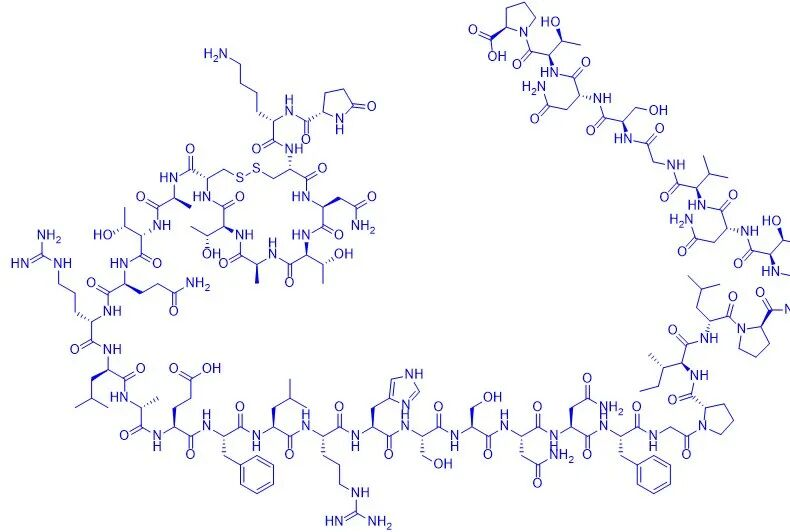
A white to off-white powder, readily soluble in water. Liraglutide is a GLP-1 (glucagon-like peptide-1) analog comprising a polypeptide chain with multiple amino acids. Its molecule contains a long-chain fatty acid (palmitic acid) linked to a lysine residue via a spacer, resulting in a prolonged half-life in vivo.
Liraglutide is expressed in yeast using recombinant DNA technology and purified. In vivo, liraglutide is primarily metabolized through proteolytic degradation, with its metabolites excreted mainly via urine and feces.
Liraglutide is a long-acting GLP-1 receptor agonist that enhances insulin secretion, inhibits glucagon secretion, delays gastric emptying, and increases satiety by binding to the GLP-1 receptor, thereby reducing blood glucose levels and body weight. It is indicated for the treatment of type 2 diabetes mellitus and also exhibits weight-loss effects. Common adverse reactions include nausea, vomiting, and diarrhea; severe cases may lead to pancreatitis.。
Liraglutide is a GLP-1 (glucagon-like peptide-1) receptor agonist developed by Novo Nordisk for the treatment of type 2 diabetes and weight management. GLP-1 is a hormone secreted in the intestine that promotes insulin secretion and inhibits glucagon secretion after meals, thereby helping regulate blood glucose levels. However, natural GLP-1 has a short half-life in vivo, necessitating exogenous supplementation to prolong its duration of action. The development of liraglutide began in the 1990s, when Novo Nordisk discovered that modifying the GLP-1 molecular structure by attaching a long-chain fatty acid could significantly extend its half-life in vivo. This modified molecule was named liraglutide. The clinical research series Liraglutide Effect and Action in Diabetes (LEAD) was conducted globally involving thousands of patients, demonstrating the efficacy and safety of liraglutide in lowering blood glucose and managing body weight. In 2009, liraglutide was first approved for marketing in the European Union, followed by approvals in the United States and other countries. Novo Nordisk is a Danish pharmaceutical company specializing in the treatment of diabetes and other chronic diseases. The development of liraglutide involved significant innovation and challenges. Scientists had to address not only issues related to molecular stability but also ensure its long-term efficacy and safety in vivo. Through continuous experimentation and optimization, the team ultimately succeeded in developing liraglutide with a unique mechanism of action. In terms of market promotion, Novo Nordisk has invested substantial resources in patient education and physician training to ensure the proper use of liraglutide and achieve optimal therapeutic outcomes. Additionally, the company has conducted extensive market research to understand the needs of patients and physicians, continuously improving its products and services. Liraglutide is currently widely used globally under brand names such as Victoza (for diabetes treatment) and Saxenda (for weight management). It is widely recognized as an effective treatment option for patients with type 2 diabetes, particularly those who struggle to control blood glucose levels through diet and exercise alone. Liraglutide has also achieved significant success in the field of weight management, being employed to treat complications associated with obesity and overweight. Market data indicate sustained growth in liraglutide sales across multiple countries and regions; according to 2022 figures, global sales have exceeded several billion US dollars. Its success is attributed to its remarkable efficacy, safety profile, and Novo Nordisk's robust marketing strategy.
Liraglutide is an organic compound with the chemical formula C17H265N43O51, appearing as a white to off-white powder and readily soluble in water. It is a GLP-1 (glucagon-like peptide-1) analog containing multiple amino acid residues in its structure, linked to a long-chain fatty acid (palmitic acid) to enhance its stability and half-life in vivo.
Liraglutide is a GLP-1 receptor agonist that mimics the effects of natural GLP-1 by enhancing insulin secretion, inhibiting glucagon secretion, delaying gastric emptying, and increasing satiety, thereby reducing blood glucose levels and body weight. Liraglutide exhibits high selectivity for GLP-1 receptors: it acts on pancreatic β-cells to enhance glucose-dependent insulin secretion while simultaneously acting on pancreatic α-cells to inhibit glucagon secretion.
Liraglutide is absorbed following subcutaneous administration, with a bioavailability of approximately 55%. Its metabolism primarily occurs via conventional proteolytic degradation, yielding small peptides and amino acids as metabolites, which are ultimately excreted from the body. The half-life of liraglutide is approximately 13 hours, supporting a once-daily dosing regimen.
Liraglutide is currently primarily available in injectable form, with common dosage forms including pre-filled injection pens. Each pen typically contains 18 mg of liraglutide, and the dose per injection can be adjusted as needed.
Adverse Drug Reactions and Contraindications
Common adverse reactions to liraglutide include nausea, vomiting, diarrhea, and decreased appetite. Serious adverse reactions may include the risk of pancreatitis and thyroid tumors. Other potential adverse effects include hypoglycemia, particularly when used in combination with other hypoglycemic agents, and local injection site reactions. Liraglutide is contraindicated in patients with allergies to its components or those with a history of medullary thyroid carcinoma (MTC) or multiple endocrine neoplasia type 2 (MEN 2).
Liraglutide is primarily indicated for the treatment of patients with type 2 diabetes mellitus, particularly those who exhibit poor glycemic control despite dietary and exercise interventions. It is also used for weight management in diabetic patients with obesity. Liraglutide may be administered alone or in combination with other hypoglycemic agents (e.g., metformin, sulfonylureas) to enhance glycemic efficacy and reduce adverse effects.
Liraglutide is a long-acting GLP-1 (glucagon-like peptide-1) receptor agonist. It works by binding to the GLP-1 receptor, enhancing insulin secretion, inhibiting glucagon secretion, delaying gastric emptying, and increasing satiety, thereby achieving glycemic and weight-lowering effects. Liraglutide is a drug produced using recombinant DNA technology that exerts its therapeutic effect by prolonging the half-life of GLP-1 in vivo. Its hypoglycemic mechanism involves mimicking the actions of natural GLP-1 by boosting postprandial insulin secretion, suppressing glucagon secretion, delaying gastric emptying, and reducing postprandial blood glucose fluctuations. Additionally, it enhances satiety and reduces food intake, contributing to weight management. Common adverse reactions of liraglutide include gastrointestinal symptoms such as nausea, vomiting, and diarrhea. Severe adverse reactions may include pancreatitis and thyroid tumors. Other potential adverse effects include hypoglycemia, particularly when used in combination with other hypoglycemic agents. Liraglutide may interact with other hypoglycemic drugs, antihypertensive medications, and certain antibiotics, potentially enhancing or diminishing their efficacy. Notably, concomitant use with insulin or other oral hypoglycemic agents may increase the risk of hypoglycemia. Liraglutide is primarily indicated for the treatment of type 2 diabetes mellitus, especially in patients with poor dietary and exercise control. It is also employed in weight loss therapy due to its significant weight-reducing effects. Liraglutide is often combined with other hypoglycemic agents such as metformin and sulfonylureas to enhance therapeutic efficacy and reduce adverse reactions. Liraglutide is also one of the medications approved by the U.S. FDA for weight management, indicated for diabetic patients with obesity.
Need Liraglutide for GLP‑1 receptor agonist development, peptide API manufacturing, or biosimilar programs? Cosperpharm delivers high‑purity Liraglutide (CAS 204656‑20‑2) with complete HPLC, LC‑MS characterization, and impurity profiling. We support flexible supply from R&D milligrams to commercial kilograms, with GMP‑compliant production and custom synthesis options, including impurity reference standards. Contact us via our website or email – expect a tailored quote and realistic lead times within 24 hours. Let Cosperpharm accelerate your Liraglutide project from discovery to market.
Phone: +86-18986204913
Tel: +86-027-83338163
E-Mail: info@cosperpharma.com
![benzo[1,2-b:4,5-b']difuran-2,6(3H,7H)-dione](https://www.cosperpharma.com/upload/8820/benzo-1-2-b-4-5-b-difuran-2-6-3h-7h-dione-204233.png "benzo[1,2-b:4,5-b']difuran-2,6(3H,7H)-dione")