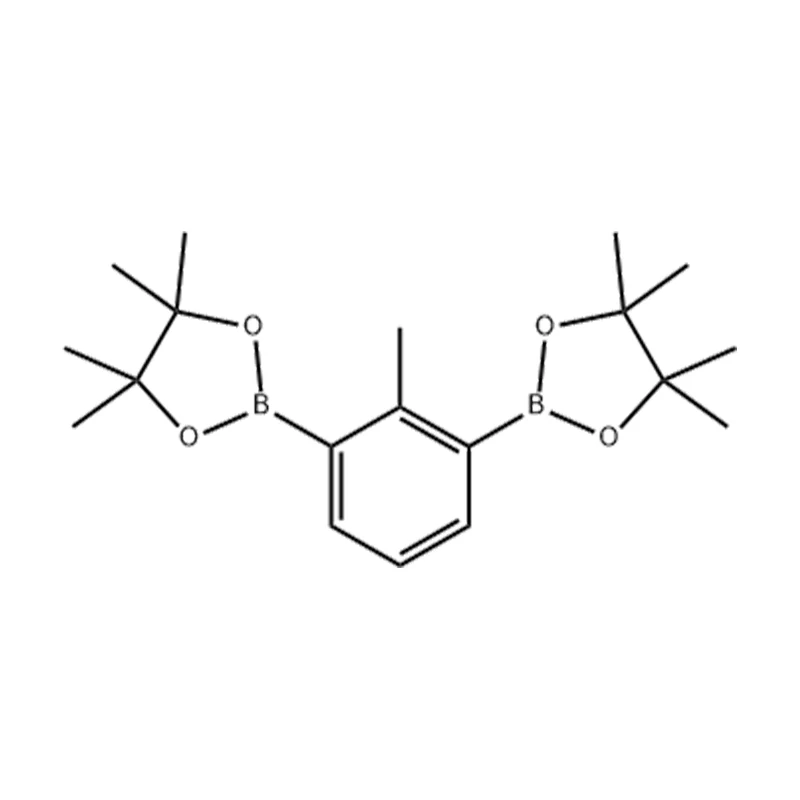
The product is 1,3,2-Dioxaborolane, 2,2'-(2-methyl-1,3-phenylene)bis[4,4,5,5-tetramethyl-, a symmetrical bis‑boronate ester featuring a 2‑methyl‑1,3‑phenylene core with two pinacol boronate groups at the 1‑ and 3‑positions. This arrangement provides two nucleophilic carbon–boron bonds that can undergo sequential or simultaneous palladium‑catalyzed cross‑couplings to construct extended linear or branched polyaryl architectures. The central methyl group introduces steric differentiation that can control the order of coupling or induce helical chirality in the final product.
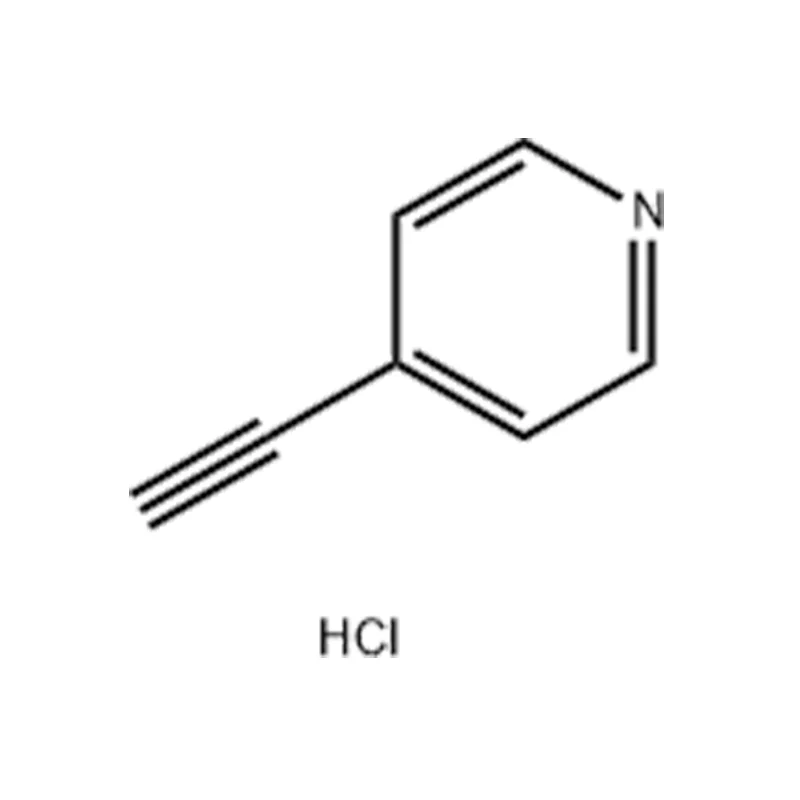
4-Ethynylpyridine hydrochloride (C₇H₆ClN, MW 139.58 g/mol) is the hydrochloride salt of 4-ethynylpyridine, featuring a terminal alkyne group at the para position of a pyridine ring stabilized by the chloride counterion. Structurally, 4-Ethynylpyridine hydrochloride comprises a pyridine nitrogen capable of metal coordination, paired with an ethynyl group that serves as a versatile handle for cross‑coupling and click chemistry transformations. The para substitution geometry is critical for constructing linear rigid‑rod bidentate ligands (e.g., 1,4‑bis(pyridin‑4‑ylethynyl)benzene) used in metal‑organic frameworks (MOFs) and metallosupramolecular architectures — properties that 2‑ or 3‑ethynyl isomers cannot replicate due to their different spatial arrangements. The hydrochloride salt form of 4-Ethynylpyridine hydrochloride enhances stability and water solubility compared to the free base (CAS 2510‑22‑7), making it the preferred form for synthetic and materials science applications.
2-[(3-Methylbenzyl)oxy]benzaldehyde (C₁₅H₁₄O₂, MW 226.27 g/mol) is an aromatic aldehyde featuring a benzaldehyde core connected via an ether linkage to a 3-methylbenzyl (meta-methylbenzyl) substituent. Structurally, the molecule comprises a salicylaldehyde-derived aromatic ring substituted at the ortho position with a 3-methylbenzyloxy (–O–CH₂–C₆H₄–CH₃) group. The presence of both an electrophilic aldehyde carbonyl and an electron-donating ether oxygen creates a polarized electronic environment that enables diverse chemical transformations. The meta‑methyl group on the pendant benzyl ring introduces additional steric and electronic modulation, making 2-[(3-Methylbenzyl)oxy]benzaldehyde a finely tuned synthetic building block for medicinal chemistry and organic synthesis research. The molecular scaffold is recognized in the literature for its role as a molecular probe targeting glutamine transporter proteins, a property that positions 2-[(3-Methylbenzyl)oxy]benzaldehyde at the interface of chemical synthesis and cancer biology research.
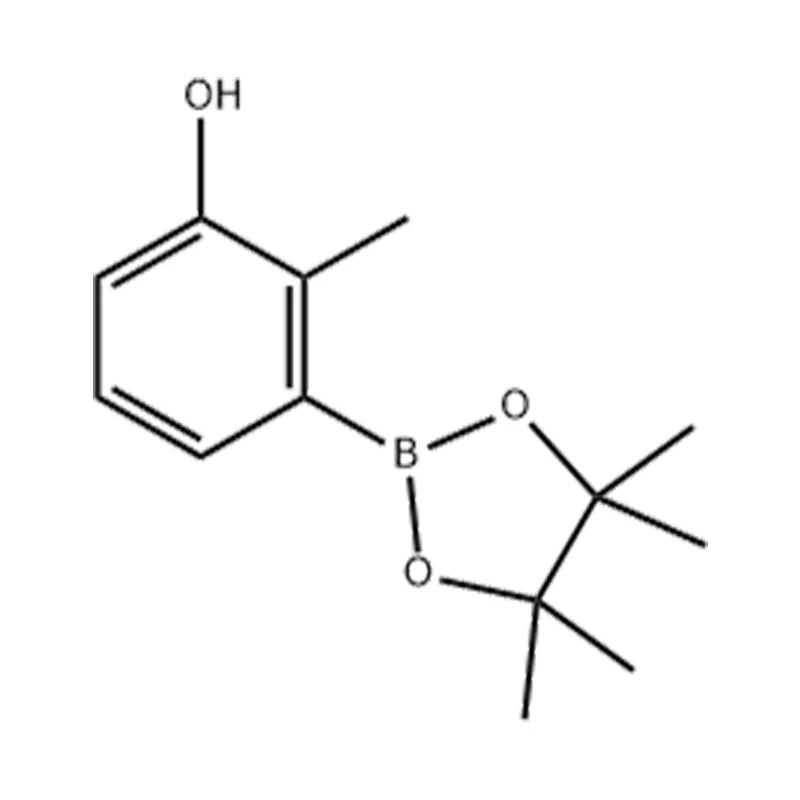
The product is 2-Methyl-3-(4,4,5,5-tetramethyl-1,3,2-dioxaborolan-2-yl)phenol, a bifunctional aromatic building block that combines a free phenolic hydroxyl group with a pinacol boronate ester on the same ring. The phenol is located meta to the boronate and ortho to a methyl group, creating a sterically and electronically differentiated scaffold. The pinacol ester provides a robust Suzuki handle, while the unprotected phenol can participate in O‑alkylation, Mitsunobu reactions, or serve as a hydrogen‑bond donor. This dual functionality allows the construction of complex biaryl architectures with a phenol anchor point for further elaboration.
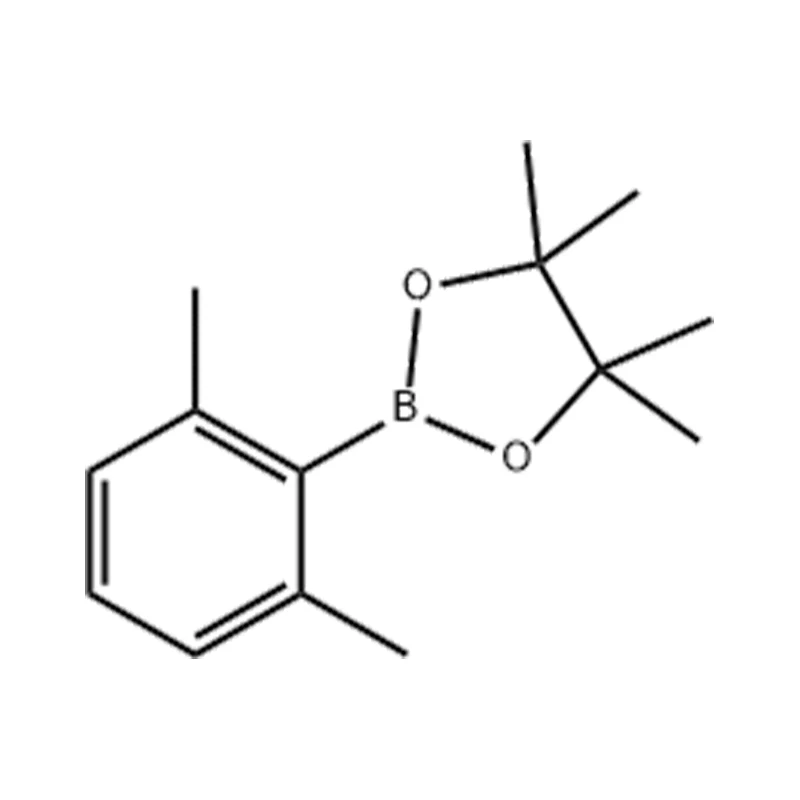
The product is 2-(2,6-dimethylphenyl)-4,4,5,5-tetramethyl-1,3,2-dioxaborolane, a sterically hindered arylboronic pinacol ester in which a 2,6‑dimethylphenyl group is directly attached to boron. The two ortho‑methyl substituents create significant steric bulk around the carbon–boron bond, retarding protodeboronation and imposing a specific orientation after cross‑coupling. This reagent is the preferred partner for introducing the 2,6‑dimethylphenyl motif — a lipophilic, metabolically stable aromatic ring — into biaryl drug candidates, agrochemicals, and organic materials.
The product is 3-Azaspiro[5.5]undec-7-ene-3-carboxylic acid, 9-oxo-, phenylMethyl ester, a spirocyclic building block that combines a piperidine‑fused cyclohexenone framework with a benzyl carbamate (Cbz) protecting group on the piperidine nitrogen. The spiro[5.5]undec‑7‑ene core provides a rigid, three‑dimensional structure with a Michael‑acceptor enone and a protected secondary amine. This arrangement makes it a versatile intermediate for constructing complex alkaloid‑like scaffolds where the enone can undergo nucleophilic attack, cycloaddition, or reduction, and the Cbz group can be cleanly removed to reveal a free amine.
Cosper is a professional Intermediate manufacturer and supplier in China. We have an experienced sales team, professional technicians, and an after-sales service team.
We use cookies to offer you a better browsing experience, analyze site traffic and personalize content. By using this site, you agree to our use of cookies. Privacy Policy


![2-[(3-methylbenzyl)oxy]benzaldehyde](https://www.cosperpharma.com/upload/8820/2-3-methylbenzyl-oxy-benzaldehyde-373704.webp "2-[(3-methylbenzyl)oxy]benzaldehyde")
![3-Azaspiro[5.5]undec-7-ene-3-carboxylic acid, 9-oxo-, phenylMethyl ester](https://www.cosperpharma.com/upload/8820/3-azaspiro-5-5-undec-7-ene-3-carboxylic-acid-9-oxo-phenylmethyl-ester-4438.webp "3-Azaspiro[5.5]undec-7-ene-3-carboxylic acid, 9-oxo-, phenylMethyl ester")