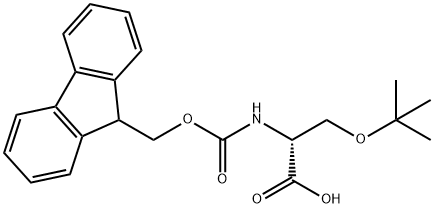
Fmoc-D-Ser(tBu)-OH (N-[(9H-fluoren-9-ylmethoxy)carbonyl]-O-tert-butyl-D-serine) is an N-Fmoc protected, O-tert-butyl protected derivative of the non‑natural amino acid D‑serine. The structure comprises a 9‑fluorenylmethyloxycarbonyl (Fmoc) group attached to the α‑amino group, and an acid‑labile tert‑butyl ether (tBu) group protecting the side‑chain hydroxyl. This orthogonal protection scheme—base‑labile Fmoc on the amine, acid‑labile tBu on the side‑chain—is fundamental to its role in Fmoc solid‑phase peptide synthesis (SPPS).
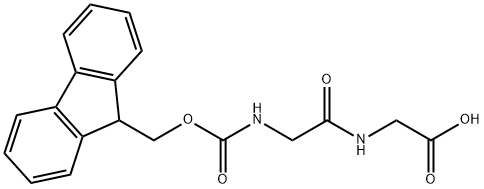
Fmoc-Gly-Gly-OH is a dipeptide derivative featuring an Fmoc-protected glycine residue coupled to a second glycine via an amide bond, resulting in the structural formula Fmoc-NH-CH₂-CO-NH-CH₂-COOH. The molecule contains no chiral centers, as glycine is achiral. The dipeptide backbone is highly flexible, making Fmoc-Gly-Gly-OH an ideal building block for constructing peptide‑based linkers.
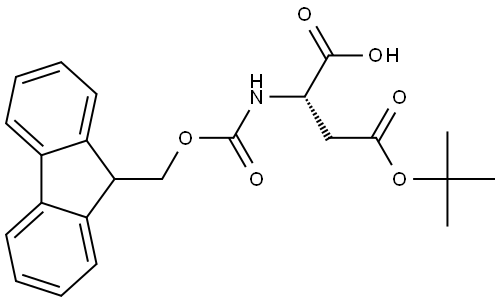
Fmoc-Asp(OtBu)-OH is an Fmoc-protected L-aspartic acid derivative featuring a tert-butyl (OtBu) protecting group on the side chain β‑carboxyl group. Structurally, the molecule consists of an L-aspartic acid core with the primary amine protected by a 9-fluorenylmethoxycarbonyl (Fmoc) group — the standard base-labile protecting group for solid-phase peptide synthesis (SPPS) — and the side chain carboxylic acid protected as a tert-butyl ester.
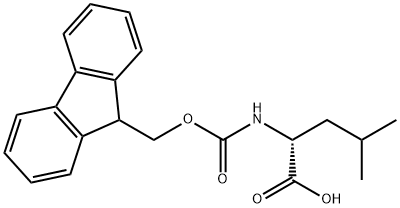
Fmoc-D-Leu-OH (N-[(9H-fluoren-9-ylmethoxy)carbonyl]-D-leucine) is an N-Fmoc protected form of D-leucine, the non-natural enantiomer of the essential branched-chain amino acid L-leucine. The molecular structure features a 9-fluorenylmethyloxycarbonyl (Fmoc) group attached to the α-amino group of D-leucine, while the carboxylic acid remains free for peptide bond formation.
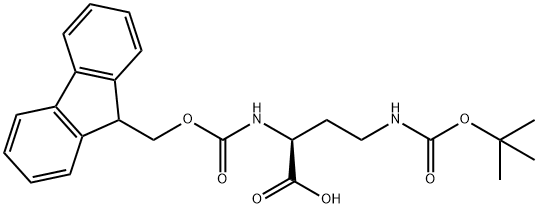
Fmoc-Dab(Boc)-OH (N-[(9H-fluoren-9-ylmethoxy)carbonyl]-N‘-tert-butoxycarbonyl-L-2,4-diaminobutyric acid) is an orthogonally protected derivative of the non‑proteinogenic amino acid L‑2,4-diaminobutyric acid (Dab). The structure comprises a base‑labile 9‑fluorenylmethyloxycarbonyl (Fmoc) group protecting the α‑amine, and an acid‑labile tert‑butoxycarbonyl (Boc) group protecting the γ‑amine side chain. This orthogonal protection scheme—Fmoc on the α‑amine and Boc on the γ‑amine—enables selective, sequential deprotection and functionalization of two distinct amine positions within a single amino acid building block.
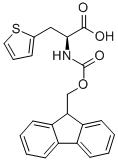
Fmoc-Thi-OH is an Fmoc-protected unnatural amino acid featuring a thiophene heterocycle as the side chain. Structurally, the molecule comprises a fluorenylmethyloxycarbonyl (Fmoc) group protecting the α-amino functionality, a central alanine-derived chiral center, and a 2-thienyl group at the β-position. The thiophene ring serves as a sulfur-containing aromatic bioisostere of the phenylalanine benzene ring, offering similar electronic properties but with distinct polarizability and hydrogen-bonding characteristics.
Cosper is a professional Intermediate manufacturer and supplier in China. We have an experienced sales team, professional technicians, and an after-sales service team.
We use cookies to offer you a better browsing experience, analyze site traffic and personalize content. By using this site, you agree to our use of cookies. Privacy Policy