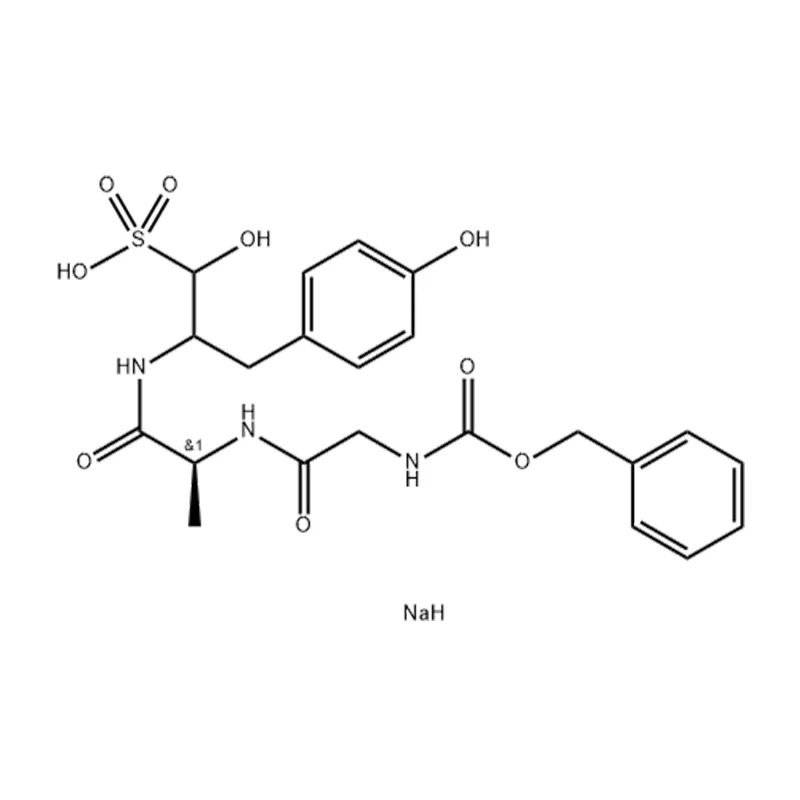
Z-Gly-Ala-Tyr-Bert (CAS 1417334‑25‑8), also known as GALAT or DSAA, is a complex synthetic tripeptide featuring three amino acid residues: glycine (Gly), alanine (Ala), and tyrosine (Tyr). The molecule incorporates a benzyloxycarbonyl (Z or Cbz) protecting group attached to the N‑terminus of the glycine residue, which provides stability and prevents unwanted side reactions during peptide synthesis. The C‑terminus is modified as a tert‑butyl ester (Bert — likely denoting a tert‑butyl ester protecting group), providing orthogonal protection orthogonal to Fmoc/tBu SPPS strategies. This three‑amino acid backbone — the shortest peptide chain capable of forming defined secondary structural elements — makes Z-Gly-Ala-Tyr-Bert a valuable model system for studying peptide folding, hydrogen bonding patterns, and protease recognition motifs. The tyrosine residue within the sequence introduces an aromatic side chain capable of participating in π‑π stacking interactions and serving as a spectroscopic probe due to its intrinsic UV absorbance at 280 nm. The combination of orthogonal protecting groups (Z at N‑terminus, tert‑butyl ester at C‑terminus) positions Z-Gly-Ala-Tyr-Bert as a versatile building block for fragment condensation strategies in both solid‑phase and solution‑phase peptide synthesis.
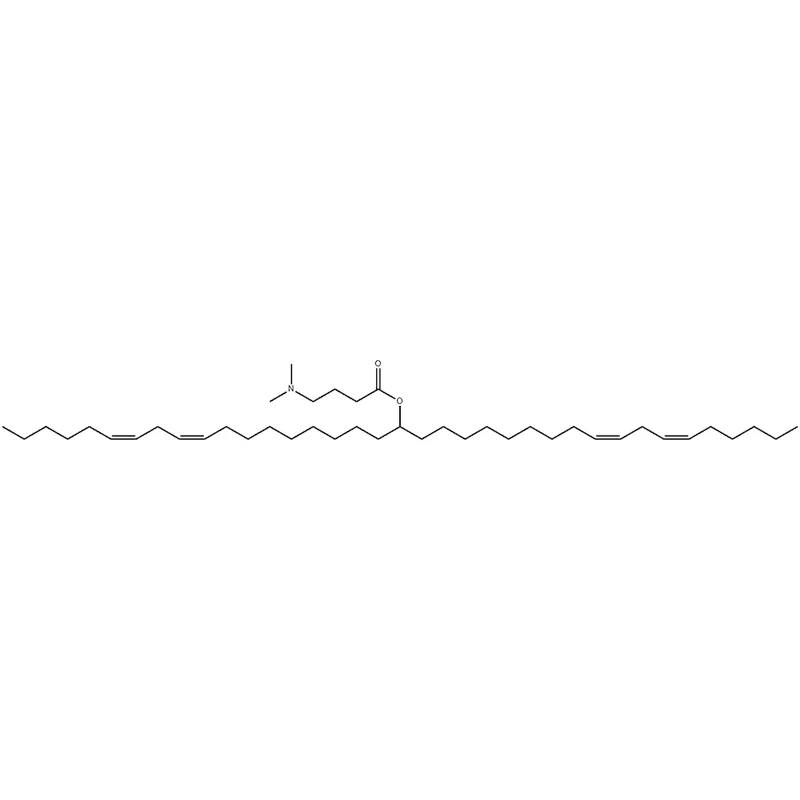
DLin-M-C3-DMA (Dilinoleylmethyl-4-dimethylaminobutyrate; MC3) is an ionizable cationic lipid featuring a central tertiary amine headgroup (dimethylaminobutyrate) esterified to a dilinoleylmethanol backbone. The molecule incorporates two polyunsaturated C18:2 (linoleyl) alkyl chains, each containing two cis double bonds (9Z,12Z), which contribute to its cone‑shaped geometry and pH‑dependent membrane destabilizing activity. The C3 spacer between the dimethylamino group and the ester carbonyl provides optimal charge distribution and endosomal escape kinetics. With an apparent pKa of 6.44, DLin-M-C3-DMA is neutrally charged at physiological pH but becomes positively charged in the acidic endosomal environment, enabling efficient siRNA and mRNA encapsulation, cellular uptake, and cytosolic release. DLin-M-C3-DMA is widely regarded as the gold standard ionizable lipid for siRNA delivery and has been clinically validated in Onpattro® (patisiran), the first FDA‑approved siRNA therapeutic for hereditary transthyretin‑mediated amyloidosis.
Cholest-5-en-3-ol (3β)-, 3-[4-[[2-(4-morpholinyl)ethyl]amino]-4-oxobutanoate] — commonly referred to as Mochol or MoChol — is a synthetically derived cationic cholesterol analogue in which the cholesterol 3β‑hydroxyl group is esterified with a succinate linker that terminates in a morpholinoethylamide moiety. The molecular structure retains the rigid steroidal backbone of cholesterol while incorporating a tertiary amino group within the morpholino ring and an amide linkage that imparts cationic character under physiological conditions. The presence of two nitrogen atoms within the morpholinoethyl side chain confers pH‑dependent cationic behavior, enabling Cholest-5-en-3-ol (3β)-, 3-[4-[[2-(4-morpholinyl)ethyl]amino]-4-oxobutanoate] to interact electrostatically with negatively charged nucleic acid payloads, making it a functional lipid component for Lipid Nanoparticle (LNP) formulations in gene delivery applications.
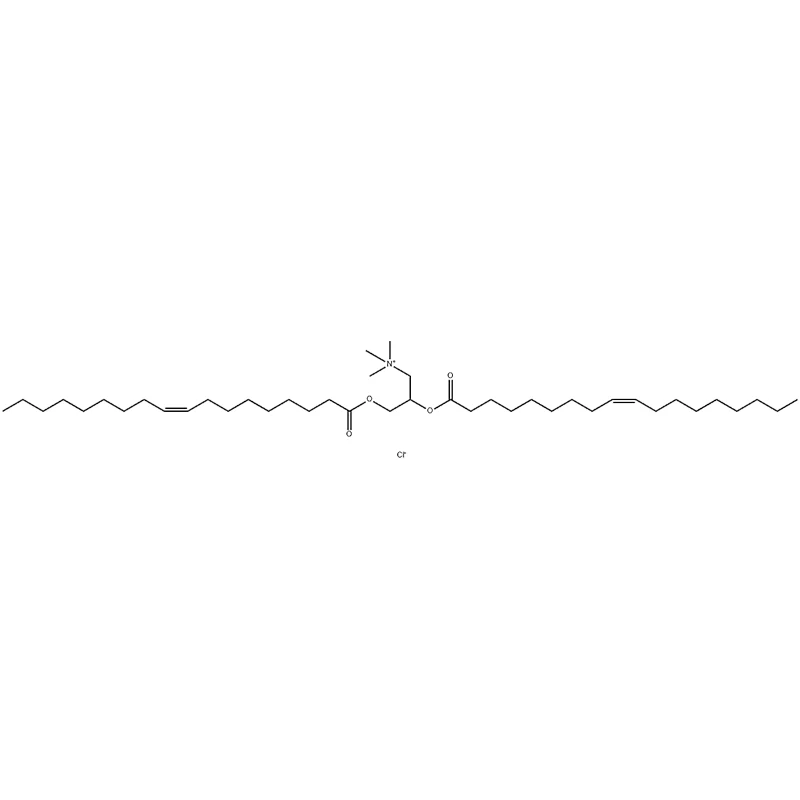
DOTAP (chloride salt) — (2,3‑dioleoyloxypropyl)trimethylammonium chloride, also known as 1,2‑dioleoyl‑3‑trimethylammonium‑propane chloride — is a synthetic cationic lipid featuring a quaternary ammonium headgroup permanently bearing a positive charge, linked via a glycerol backbone to two unsaturated oleoyl (C18:1) fatty acid chains. The molecular structure of DOTAP (chloride salt) positions the trimethylammonium moiety at the sn‑3 position of the glycerol backbone, creating a permanently cationic headgroup that does not rely on pH for charge generation. The two oleoyl chains provide hydrophobic anchoring within lipid bilayers while introducing cis‑double bonds (Δ9) that confer fluidity and facilitate the lamellar‑to‑inverted hexagonal (HII) phase transition upon membrane fusion. This unique combination of a permanently charged cationic headgroup and fluidizing unsaturated acyl chains enables DOTAP (chloride salt) to spontaneously form cationic liposomes that electrostatically complex with negatively charged nucleic acids, producing lipoplexes that efficiently transfect a wide range of eukaryotic cell types with minimal cytotoxicity.
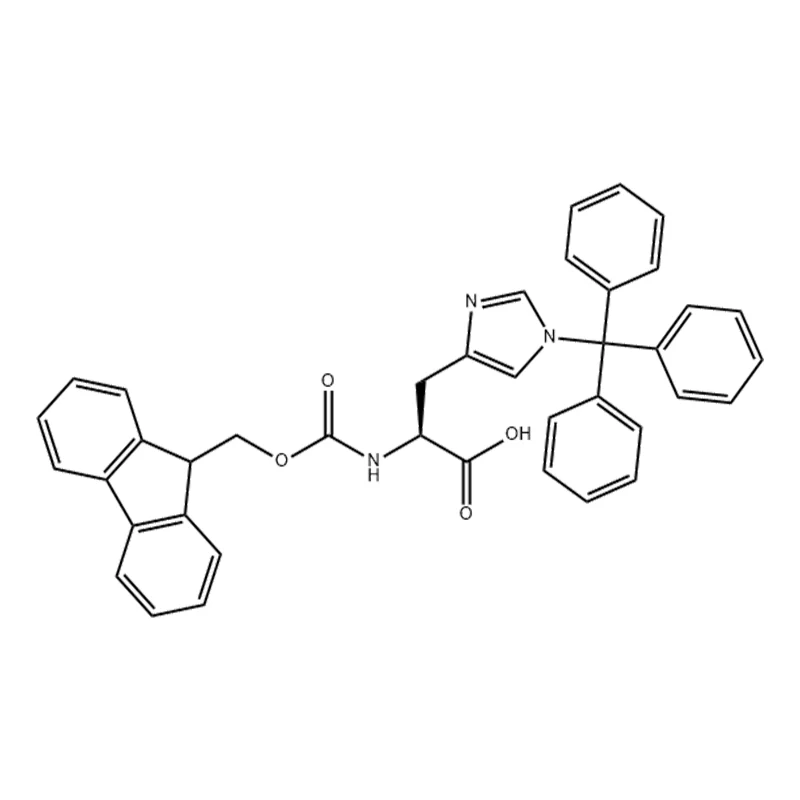
Fmoc-His(Trt)-OH (CAS 109425‑51‑6), systematically named N‑α‑(9‑fluorenylmethoxycarbonyl)‑Nᵢₘ‑trityl‑L‑histidine, is a N‑α‑Fmoc/Nᵢₘ‑trityl‑protected histidine derivative widely utilized as a standard building block in Fmoc solid‑phase peptide synthesis (SPPS). The molecule consists of an L‑histidine residue with the N‑terminal α‑amino group protected by the base‑labile Fmoc group and the nucleophilic imidazole side chain protected by the acid‑labile trityl (triphenylmethyl, Trt) group. The Trt group is a bulky, electron‑rich protecting group that effectively suppresses side reactions during peptide synthesis, particularly the notorious racemization and Nπ–Nτ tautomerization of the histidine imidazole ring. The orthogonal Fmoc/Trt protection scheme of Fmoc-His(Trt)-OH — Fmoc removed by piperidine, Trt removed by mild TFA cleavage — makes it an ideal choice for both manual and automated SPPS.
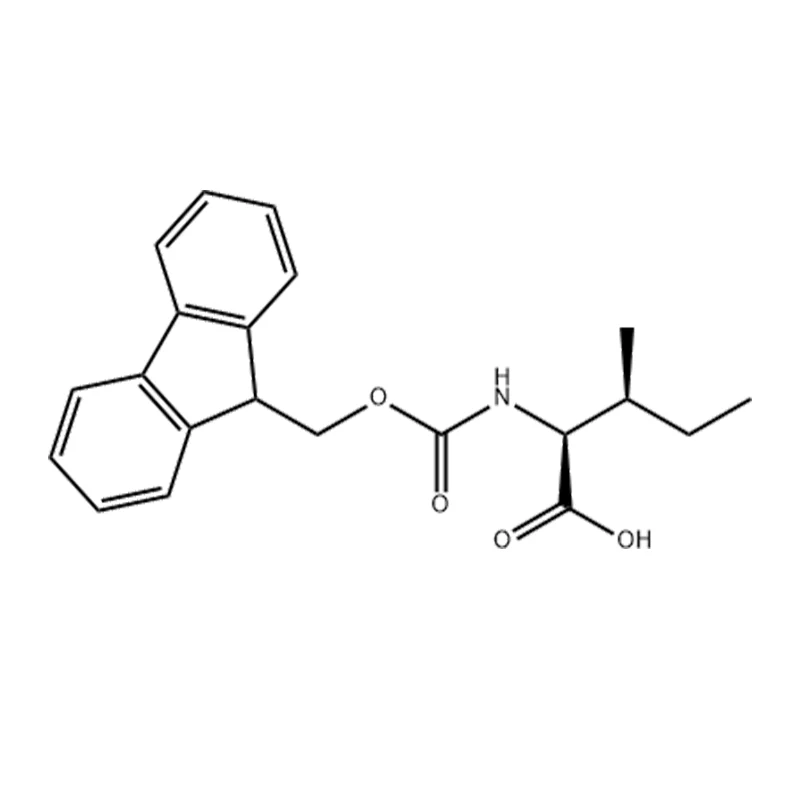
Fmoc-Ile-OH (CAS 71989‑23‑6), systematically named N‑α‑(9‑fluorenylmethoxycarbonyl)‑L‑isoleucine, is a standard building block for Fmoc solid‑phase peptide synthesis (SPPS). The molecule comprises an isoleucine (Ile) amino acid residue with the N‑terminal α‑amino group protected by the base‑labile 9‑fluorenylmethoxycarbonyl (Fmoc) group. Isoleucine is an essential, hydrophobic, branched‑chain aliphatic amino acid featuring a chiral center at the β‑carbon in addition to the α‑carbon, giving rise to two diastereomeric configurations (L‑ and D‑allo‑isoleucine) that must be rigorously controlled during synthesis. The Fmoc protecting group is rapidly removed under mild basic conditions (typically 20% piperidine in DMF), enabling stepwise peptide chain elongation without exposing acid‑sensitive side chains or linkages. Fmoc-Ile-OH is supplied as a high‑purity, white to off‑white crystalline powder, and serves as the indispensable building block for incorporating L‑isoleucine into synthetic peptides.
Cosper is a professional Intermediate manufacturer and supplier in China. We have an experienced sales team, professional technicians, and an after-sales service team.
We use cookies to offer you a better browsing experience, analyze site traffic and personalize content. By using this site, you agree to our use of cookies. Privacy Policy


![Cholest-5-en-3-ol (3β)-, 3-[4-[[2-(4-morpholinyl)ethyl]amino]-4-oxobutanoate]](https://www.cosperpharma.com/upload/8820/cholest-5-en-3-ol-3-3-4-2-4-morpholinyl-ethyl-amino-4-oxobutanoate--116614.webp "Cholest-5-en-3-ol (3β)-, 3-[4-[[2-(4-morpholinyl)ethyl]amino]-4-oxobutanoate]")