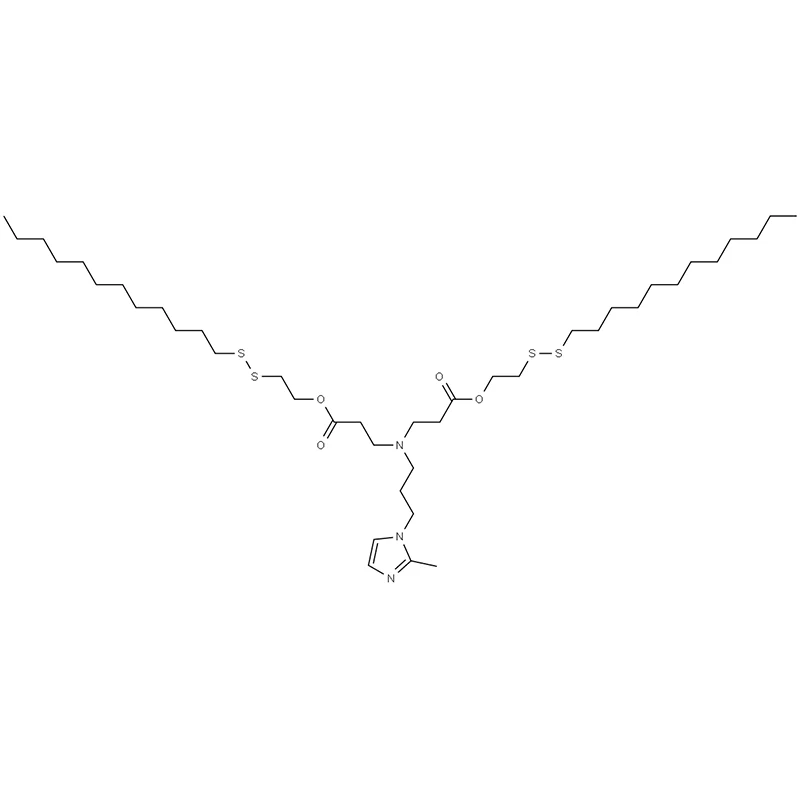
9322-O16B (CAS 2909427-23-0) is an ionizable cationic lipid specifically designed for the generation of lipid nanoparticles (LNPs). The molecule features a complex architecture incorporating multiple disulfide linkages, amide functionalities, and an imidazole‑containing headgroup that collectively enable pH‑dependent charge modulation. This unique structural design allows 9322-O16B to remain charge‑neutral at physiological pH (reducing systemic toxicity), while becoming protonated in the acidic endosomal environment — a property critical for endosomal escape and efficient cytosolic delivery of nucleic acid cargo. The presence of disulfide bonds within the lipid tails also offers potential for redox‑responsive cargo release in the reducing environment of the cytosol.
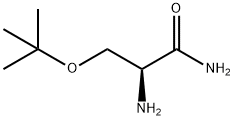
(R)-3-tert-Butoxy-2-aminopropanamide (CAS 211755-73-6) is a chiral, enantiomerically pure amino amide derivative featuring a tert-butoxy protecting group at the C3 position and a primary amide functionality at the terminus of the propanamide backbone. Structurally, the molecule consists of a three-carbon propanamide chain with an amino group at the C2 position (the stereogenic center bearing the (R)-configuration) and a bulky tert-butoxy group (-O-C(CH₃)₃) attached to the C3 position.
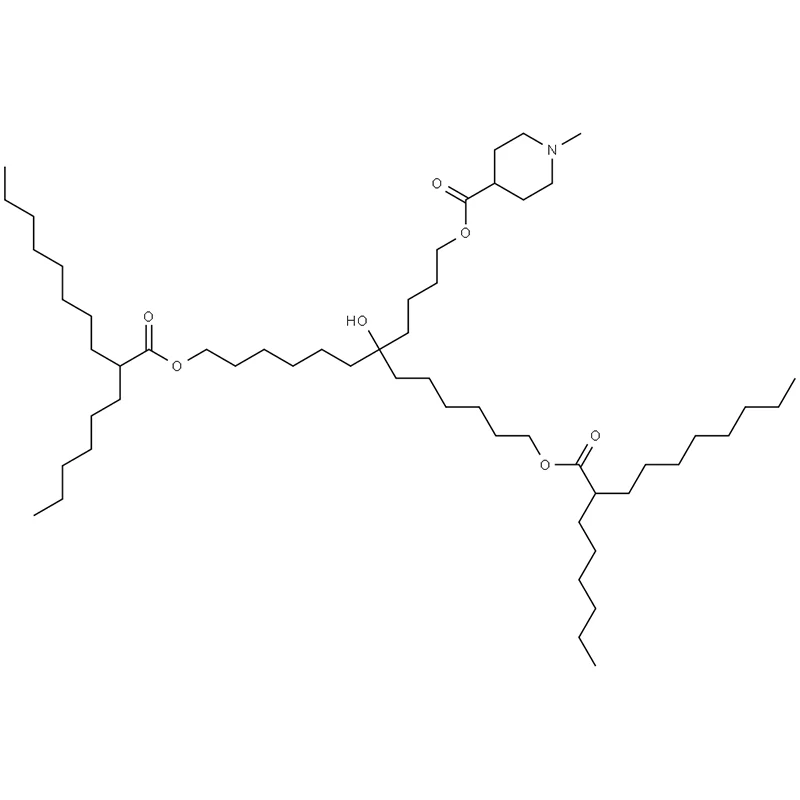
7-hydroxy-7-(4-((1-methylpiperidine-4-carbonyl)oxy)butyl)tridecane-1,11-diyl bis(2-hexyldecanoate) — also known as CL15F6 — is an ionizable cationic lipid engineered for the precise delivery of nucleic acid therapeutics. Structurally, the molecule features a central tertiary alcohol (the “7-hydroxy” group) on a C13 alkyl spacer, which serves as the branching point for the two hydrophobic tails. Each of these tails is a 2‑hexyldecanoate ester — a branched, saturated C16 fatty acid chain (a 2-hexyldecanoate is a 16‑carbon chain with a hexyl side chain at the second carbon, commonly used to increase fluidity and reduce crystallinity). At the opposite end, a flexible four‑carbon butyl linker connects the core scaffold to a 1‑methylpiperidine‑4‑carboxylate headgroup.
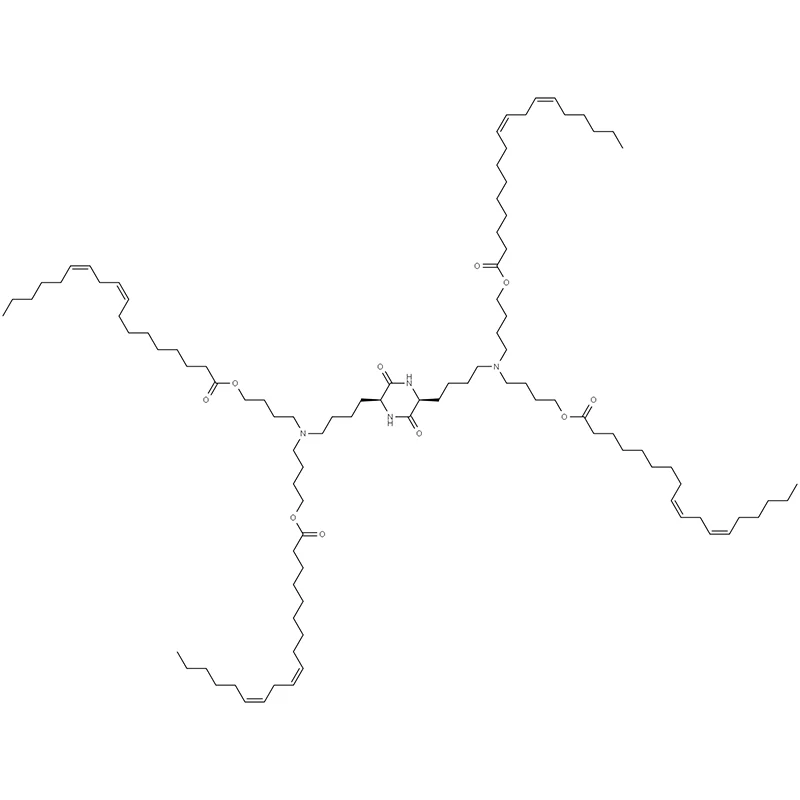
OF-C4-Deg-Lin is a cutting‑edge, highly customizable ionizable lipid designed specifically for next‑generation lipid nanoparticle (LNP) formulations. Structurally, OF-C4-Deg-Lin features a complex, multi‑arm architecture built around a central piperazine‑2,5‑dione (diketopiperazine) core. Flanking this core are two identical branched amine units, each bearing two linoleic acid‑derived tails (C18:2). The molecule incorporates flexible linker segments of defined length, which modulate the overall hydrophobicity and ionization behavior. This symmetrical, multi‑tailed design—containing a total of four unsaturated fatty acid chains—allows OF-C4-Deg-Lin to adopt a cone‑shaped geometry critical for the formation of stable, ionizable LNP systems. The central diketopiperazine ring provides a rigid yet functionalizable scaffold, while the branched tertiary amine headgroup confers pH‑dependent ionizability. The extensive hydrophobic domain, built from four linoleoyl chains, ensures strong lipid bilayer packing and efficient encapsulation of large nucleic acid payloads such as mRNA and siRNA.
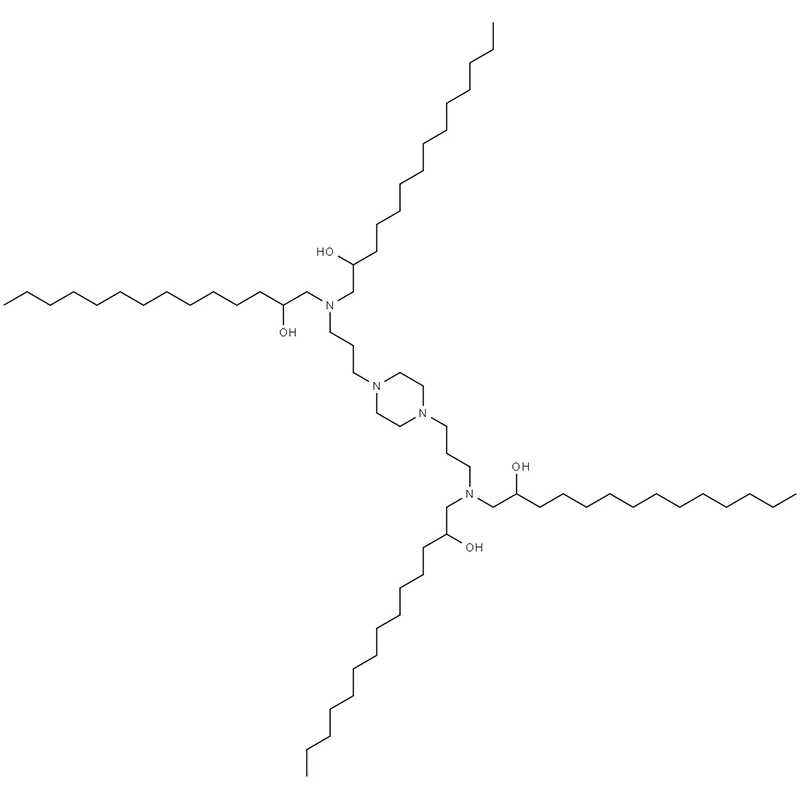
IC8 (CAS 2349307-32-8) is an ionizable cationic lipid featuring a complex multi‑amine polyether structure with multiple long alkyl chains. The molecular architecture incorporates a central piperazine scaffold linked to four polyether tails terminated with hydroxyl groups, enabling pH‑dependent charge modulation — unprotonated at physiological pH to reduce toxicity, and protonated in the acidic endosomal environment to facilitate endosomal escape. This unique ionizable property, combined with the molecule‘s high molecular weight (approximately 1050 g/mol) and amphiphilic character, makes IC8 exceptionally effective as a formulation component for lipid nanoparticles (LNPs) in nucleic acid delivery applications.
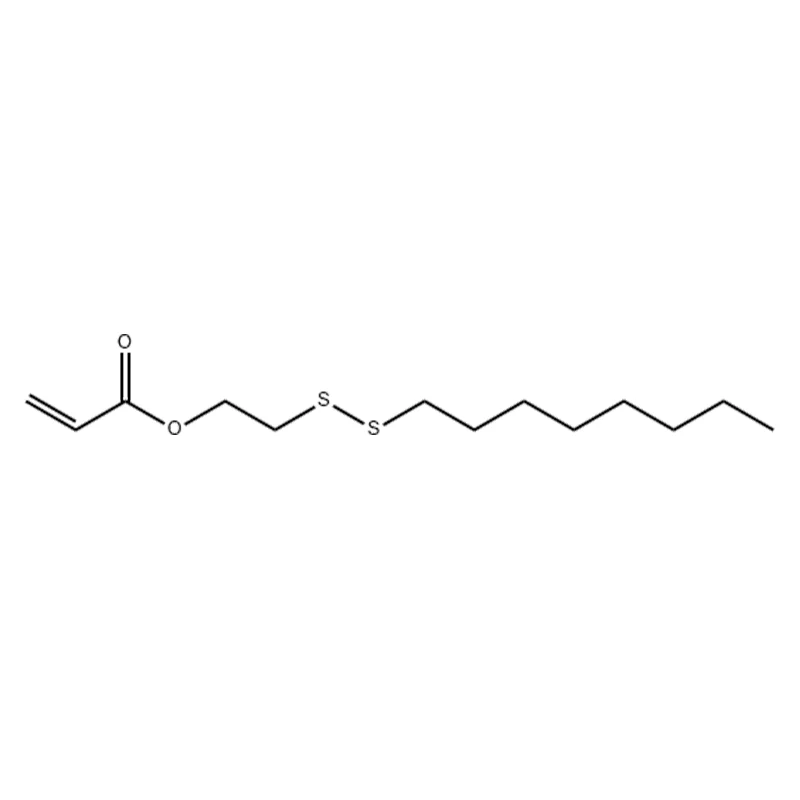
2-Propenoic Acid, 2‑(Octyldithio)ethyl Ester (CAS 2130960‑87‑9), also known as 2‑(octyldisulfanyl)ethyl acrylate or acrylic acid 2‑(octyldithio)ethyl ester, is a short‑chain disulfide‑containing acrylate monomer. The molecule consists of a polymerizable acrylic ester head group that readily undergoes free‑radical addition polymerization, coupled with an octyldithio segment (C₈H₁₇S–S–) featuring a reducible disulfide bond and a moderately lipophilic octyl tail. Compared to its decyl and dodecyl homologs, the C₈ alkyl chain of 2-Propenoic Acid, 2‑(Octyldithio)ethyl Ester offers reduced hydrophobicity, enabling formulation of lipid nanoparticles with faster disassembly kinetics and potentially different biodistribution profiles. The disulfide bond provides redox‑responsiveness — stable under oxidizing extracellular conditions but rapidly cleaved in the reducing intracellular environment — making 2-Propenoic Acid, 2‑(Octyldithio)ethyl Ester an ideal building block for bioreducible polymers and cationic lipids that require efficient nucleic acid release upon cellular entry.
Cosper is a professional Intermediate manufacturer and supplier in China. We have an experienced sales team, professional technicians, and an after-sales service team.
We use cookies to offer you a better browsing experience, analyze site traffic and personalize content. By using this site, you agree to our use of cookies. Privacy Policy