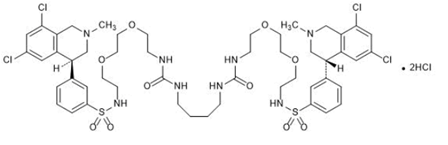

On March 19, 2026, Linerixibat was approved by the FDA for the treatment of cholestatic pruritus in adult patients with PBC. It is the first drug specifically targeting PBC-related pruritus, with a mechanism of action as an ileal bile acid transporter (IBAT) inhibitor.
1、Pharmaceutical synthesis route
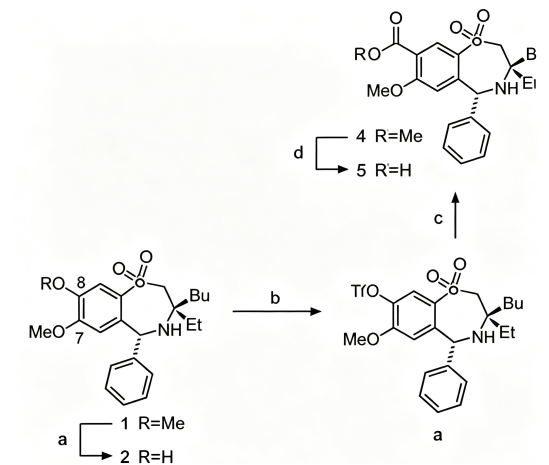
In 2013, GSK reported a medicinal chemistry route in J. Med. Chem. Starting from compound 1, selective removal of the methyl group yields compound 2. The phenolic hydroxyl group is converted to OTf, followed by carbonylation to obtain compound 4. Reduction of the ester group and subsequent bromination gives benzyl bromide 4a, which then undergoes substitution to afford the target product Linerixibat.
The structure of Compound 1 is too close to that of the API, making it unsuitable to be used as a registered starting material. Moreover, the demethylation process has no selectivity, and compounds with 7/8 phenolic hydroxyl groups (47:53) can be obtained, which require separation via chiral preparation. The subsequent steps are relatively conventional, and whether substitution or reductive amination is adopted, it has little impact on the control of the entire process. Therefore, the focus of process optimization lies in how to prepare Compound 2.
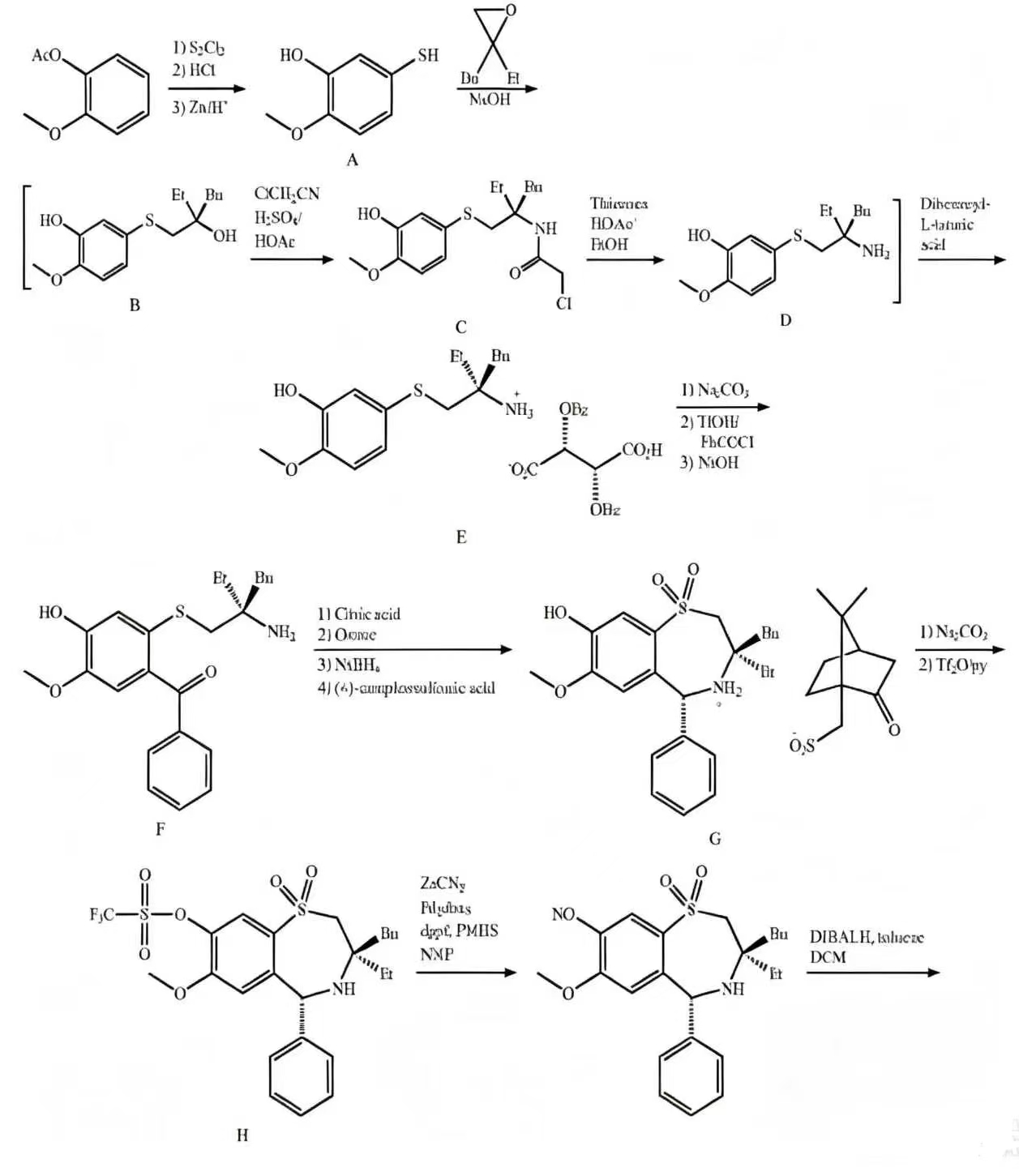
2、Patent US2017210717A1 discloses two synthesis methods. Scheme 1 adopts the classical resolution method to construct two chiral centers: phenyl 2-methoxyacetate is treated with sulfur monochloride, followed by ester hydrolysis and reduction with zinc, to obtain thiophenol (A). Thiophenol (A) is used for the epoxide ring opening of (±)-2-butyl-ethyl oxirane, and then tertiary alcohol (B) is treated with chloroacetonitrile under acidic conditions to obtain chloroacetamide (C), which is then converted to intermediate (E) by cleaving the chloroacetamide with thiourea and subsequent classical resolution with dibenzoyl-L-tartaric acid. Intermediate (E) is benzoylated with trifluoromethanesulfonic acid and benzoyl chloride to obtain intermediate (H). Intermediate (H) is cyclized, followed by oxidation of the sulfide to the sulfone, subsequent imine reduction and classical resolution with (+)-camphorsulfonic acid, to obtain intermediate (G), which is then converted to intermediate (H). Intermediate (H) is converted to the target compound using the method disclosed in patent publication WO 2011/137,135
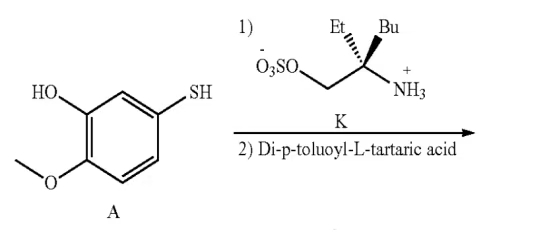
3、The Scheme 2 disclosed in Patent US2017210717A1 adopts chiral materials and an asymmetric hydrogenation method to construct chiral centers, which boasts higher efficiency. Intermediate L is prepared from Intermediate A and chiral raw material K. Since the enantiomeric excess (ee) of chiral raw material K may be insufficient, a tartaric acid derivative needs to be added to improve chiral purity, and the imine is reduced via asymmetric hydrogenation. No example is provided in the patent, indicating that this process may require further optimization. In summary, for the synthesis of Linerixibat, Compound L or E can be selected as the starting material, and Compound G is obtained through intramolecular asymmetric reductive amination, followed by a series of reactions to prepare the active pharmaceutical ingredient (API). Summary: Currently, the first-line drug for the treatment of primary biliary cholangitis (PBC) is ursodeoxycholic acid (UDCA), and the second-line drug obeticholic acid (OCA) has been withdrawn from the market due to efficacy issues. In 2024, the U.S. Food and Drug Administration (FDA) approved the peroxisome proliferator-activated receptor (PPAR) α/δ dual agonist elafibranor and the selective PPARδ agonist seladelpar. Linerixibat is the first and currently the only drug specifically approved for PBC-related pruritus, while other drugs mainly target disease progression or biochemical indicators, providing more options for patients with PBC.
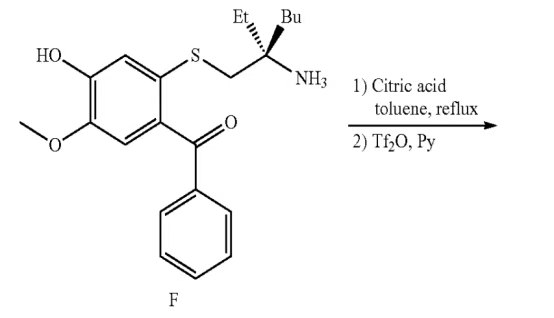
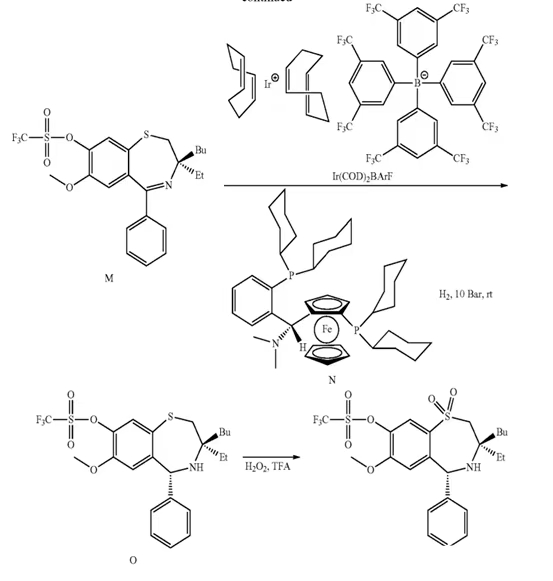
In summary, for the synthesis of Linerixibat, compound L or E can be selected as the starting material, compound G is obtained through intramolecular asymmetric reductive amination, and the API is prepared through a series of reactions.
Contact Us
Secure your Linerixibat intermediate supply chain with Cosperpharm. We offer the critical starting materials that form the foundation of the Linerixibat synthetic route:
5-Mercapto-2-methoxyphenol (CAS 69845-06-3) – The core aromatic sulfur source that establishes the fundamental scaffold of the Linerixibat molecular skeleton.
(±)-2-Butyl-2-ethyloxirane (CAS 22385-79-1) – The key tertiary epoxide building block for constructing the alkyl side chain, with documented use in the Linerixibat (GSK2330672) synthesis pathway.
Dimethyl 3-aminopentanedioate (CAS 77313-09-8) – The essential amine side-chain building block that connects to the core via reductive amination.
Cosperpharm supplies Linerixibat API ( COA and MOA available) and its key intermediates .Contact us today to discuss your requirements, request samples, or receive a quotation—we're here to support your Linerixibat API and intermediates sourcing needs.