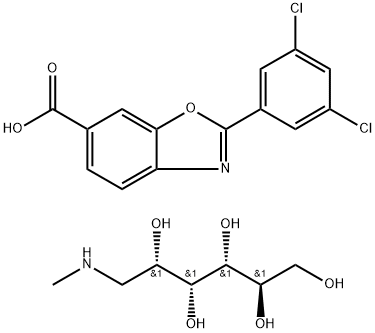
Tafamidis Meglumine (CAS 951395-08-7) is the meglumine salt form of tafamidis, a small molecule pharmacological chaperone targeting transthyretin (TTR). Chemically, Tafamidis Meglumine is a 1:1 salt composed of the active benzoxazole carboxylate anion (2-(3,5-dichlorophenyl)-6-benzoxazolecarboxylate) and the meglumine cation (1-deoxy-1-(methylamino)-D-glucitol) .
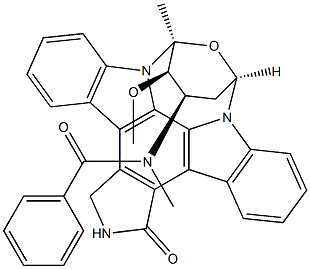
Midostaurin (CAS 120685-11-2) is a synthetic indolocarbazole multikinase inhibitor and a derivative of the natural product staurosporine . Chemically, Midostaurin is N-benzoyl-staurosporine, featuring a complex polycyclic indolocarbazole aglycone with a benzoyl substituent at the nitrogen position of the sugar moiety .
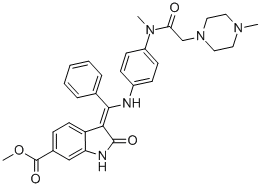
Nintedanib Ester (CAS 928326-83-4) is the active pharmaceutical ingredient nintedanib, a potent triple angiokinase inhibitor developed for the treatment of idiopathic pulmonary fibrosis (IPF) and certain cancers . Chemically, Nintedanib Ester is methyl (3Z)-3-{(4-{methyl[(4-methylpiperazin-1-yl)acetyl]amino}phenyl)aminomethylidene}-2-oxo-2,3-dihydro-1H-indole-6-carboxylate, featuring an oxindole core with a methyl ester group at the 6-position .
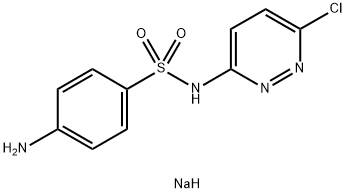
Sulfachloropyridazine Sodium is the sodium salt form of the sulfonamide antibiotic sulfachloropyridazine, featuring a pyridazine ring with a chlorine substituent attached via a sulfonamide bridge to a para-aminobenzenesulfonyl group. With the molecular formula C₁₀H₈ClN₄NaO₂S and a molecular weight of 306.70 g/mol, Sulfachloropyridazine Sodium belongs to the sulfonamide class of antimicrobial agents.
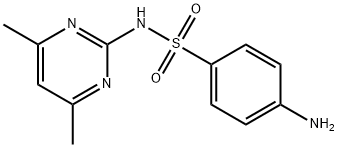
Sulfadimidine (also known as sulfamethazine) is a sulfonamide antibiotic featuring a pyrimidine ring with two methyl groups at the 4- and 6-positions, attached via a sulfonamide bridge to a para-aminobenzenesulfonyl group. With the molecular formula C₁₂H₁₄N₄O₂S and a molecular weight of 278.33 g/mol, Sulfadimidine belongs to the sulfonamide class of antimicrobial agents.
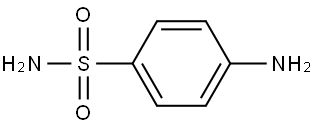
Sulfanilamide (4-aminobenzenesulfonamide) is the foundational compound of the sulfonamide antibiotic class, featuring a benzene ring with an amino group (-NH₂) at the para position and a sulfonamide group (-SO₂NH₂) at the opposite position.
We use cookies to offer you a better browsing experience, analyze site traffic and personalize content. By using this site, you agree to our use of cookies. Privacy Policy