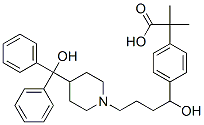
Fexofenadine is a pivotal active pharmaceutical ingredient (API) in the antihistamine market, widely prescribed for the symptomatic relief of seasonal allergic rhinitis and chronic idiopathic urticaria. As the active metabolite of terfenadine, Fexofenadine offers the therapeutic benefits of H₁ receptor antagonism without the cardiotoxicity concerns associated with its parent compound, making it a safer alternative for long-term allergy management. Fexofenadine is commercially available in multiple dosage forms including tablets, oral suspensions, and orally disintegrating tablets, providing flexible administration options for patients of all ages. Fexofenadine is also recognized as an essential medicine by the World Health Organization, underscoring its global public health significance. The zwitterionic nature of Fexofenadine, conferred by its carboxylic acid and tertiary amine groups, ensures high aqueous solubility and favorable oral bioavailability while maintaining peripheral selectivity. Fexofenadine continues to be a subject of extensive pharmaceutical research, with ongoing investigations into novel formulations, fixed-dose combinations, and pediatric applications that expand its therapeutic utility.
Product Parameters
|
Parameter |
Specification |
|
Product Name |
Fexofenadine |
|
CAS Number |
83799-24-0 |
|
Molecular Formula |
C₃₂H₃₉NO₄ |
|
Molecular Weight |
501.66 g/mol |
|
Appearance |
White to off-white solid |
|
Melting Point |
218–220 °C (lit.) |
|
Boiling Point |
697.3 °C at 760 mmHg |
|
Density |
1.171 g/cm³ |
|
Storage Condition |
Sealed in dry,Store in freezer, under -20°C |
Application
2. Respiratory and anti-allergic medications, indicated for the treatment of seasonal allergic rhinitis, chronic paroxysmal urticaria, etc.
Synthetic Route
Compound (II) (21.3 g, 93.0 mmol) was dissolved in 100 mL of dry tetrahydrofuran. Under stirring, it was added to a solution of sodium hydride (8.37 g, 80% suspension, 0.279 mol) in 350 mL of dry tetrahydrofuran. Methyldiazide (13.9 mL, 0.223 mol) was then added dropwise and the mixture was stirred for 15 h under mild nitrogen protection at room temperature. 10 g of Florisil was added, followed by filtration. The filtrate was concentrated under reduced pressure; the resulting yellow solid was extracted with pentane (3 × 250 mL). The extract was also concentrated under reduced pressure, and the residue was eluted using silica gel chromatography with a hexane–ethyl acetate mixture (10:1 to 8:1), yielding 16.9 g of compound (III) with a yield of 71%.
Compound (III) (933 mg, 3.63 μmol) and 3-butyn-1-ol (550 μL, 7.27 mmol) were dissolved in 15 mL of triethylamine. Under stirring, tetra(triphenylphosphine) palladium(IV) chloride (166 mg, 0.144 mmol) and copper bromide (62 mg, 0.43 mmol) were added sequentially, followed by reflux under nitrogen for 3.5 hours. The mixture was cooled, concentrated under reduced pressure, and the residue was extracted with 100 mL of ethyl ether. The extract was washed twice with saturated ammonium chloride solution (2 × 125 mL), dried with anhydrous magnesium sulfate, and concentrated under reduced pressure. The remaining solution was subjected to silica gel chromatography, eluted with a mixture of hexane and ethyl acetate (Chemical Book ratio: 2:1), yielding compound (IV) 866 mg with a yield of 97%.
Compound (IV) (520 mg, 2.1 mmol) was dissolved in 6.5 mL of dry dichloromethane and 1.48 mL of pyridine; methanesulfonyl chloride (326 mL, 4.22 mmol) was added, and the mixture was stirred under nitrogen for 20 hours. An additional 100 mL of dichloromethane was added, followed by washing with 1% sulfuric acid, saturated sodium bicarbonate solution, and saturated saline solution, respectively. The washings were then extracted with dichloromethane. The organic phases were combined, dried with anhydrous magnesium sulfate, and the solvent was evaporated under reduced pressure to yield compound (V) 684 mg with a yield of 100%.
Compound (V) (625 mg, 1.93 mmol), Compound (VI) (644 mg, 2.12 mmol), and 800 mg of potassium carbonate were dissolved in 10 mL of dry acetonitrile and refluxed under nitrogen for 12 hours. The mixture was cooled, filtered, and the solids were repeatedly washed with dichloromethane. The filtrate was concentrated under reduced pressure; the residue was subjected to silica gel chromatography and eluted with a hexane–ethyl acetate (2:1) mixture, yielding 750 mg of amorphous white solid Compound (VII) with a yield of 75%.
Compound (VII) (583 mg, 1.18 mmol) was dissolved in 2 mL of methanol, to which a sulfuric acid solution containing mercuric oxide (a mixture of 10 mL solution with 75 mg of mercuric oxide and 12 mL of 4% W/V sulfuric acid) was added, and the mixture was heated at 55 °C for 3 hours. Subsequently, 50 mL of saturated sodium bicarbonate solution was added, followed by extraction with dichloromethane (4 × 50 mL) according to Chemicalbook. The extract was washed with saturated saline, dried with anhydrous sodium sulfate, and concentrated under reduced pressure. The residue was subjected to silica gel chromatography, eluted first with a mixture of ethyl acetate-hexane (1:2–3:1) and then with dichloromethane-methanol (15:1), yielding 456 mg of compound (VI) with a yield of 75%.
Compound (VIII) (350 mg, 0.681 mmol) was dissolved in 5 mL of methanol. Sodium borohydride (38 mg, 1.0 mmol) was slowly added under stirring, and the mixture was stirred at room temperature under nitrogen atmosphere for 20 hours. Then, 10 mL of 3% sulfuric acid solution was added to dissolve the excess sodium borohydride. Subsequently, saturated sodium bicarbonate solution was added, and the mixture was extracted with dichloromethane (3 × 75 mL). The extract was washed with saturated saline solution, dried with anhydrous sodium sulfate, and concentrated under reduced pressure. The residue was subjected to silica gel chromatography, eluted with a hexane-acetonitrile mixture (1:5), yielding 342 mg of white solid compound (IX) with a yield of 95%.
Compound (IX) (256 mg, 0.496 mmol) was dissolved in 3.0 mL of ethanol. Under stirring, 3.0 mL of 1 mol/L potassium hydroxide aqueous solution was slowly added, followed by heating to 80 °C and continuous stirring for 16 hours. After cooling, 1 mol/L hydrochloric acid was carefully added to adjust the pH to 7.0. The solid dispersion was homogenized by ultrasonication and left overnight. The solid was filtered, recrystallized in methanol, yielding 189 mg of white crystalline fenofedine with a yield of 76% and a melting point of 142–143 °C.
FAQ
A: Fexofenadine is a second-generation antihistamine indicated for the symptomatic relief of seasonal allergic rhinitis (hay fever) and chronic idiopathic urticaria (hives). It is available in tablet, orally disintegrating tablet, and oral suspension formulations.
Q2: How does Fexofenadine differ from first-generation antihistamines?
A: Unlike first-generation antihistamines (e.g., diphenhydramine, chlorpheniramine), Fexofenadine is peripherally selective and does not readily cross the blood-brain barrier due to its zwitterionic structure. This results in minimal sedative effects and cognitive impairment, making Fexofenadine suitable for daytime use.
Contact Us
Address
No. 2 Yangguang 3rd Road, Duodao Chemical Cycle Industrial Park, Jingmen City, Hubei Province, China
Tel