Tris[2-(MethylaMino)ethyl]aMine is a tripodal polyamine featuring a central tertiary amine core from which three identical 2-(methylamino)ethyl arms radiate outward. This structural arrangement creates a molecule with four nitrogen atoms: one central tertiary amine serving as a branching point and three secondary methylamine groups terminating each flexible ethyl spacer. The C₃-symmetric architecture gives it a pre-organized, claw-like geometry reminiscent of the well-known tris(2-aminoethyl)amine (tren) scaffold, but with N-methyl substituents on each arm. With a predicted pKa of approximately 10.56, the secondary amines exist largely in their protonated form under physiological conditions . This unique tripodal framework equips it with four Lewis base sites capable of forming multidentate coordination complexes, while the methyl substitution modulates steric bulk and electronic character compared to the parent tren system.
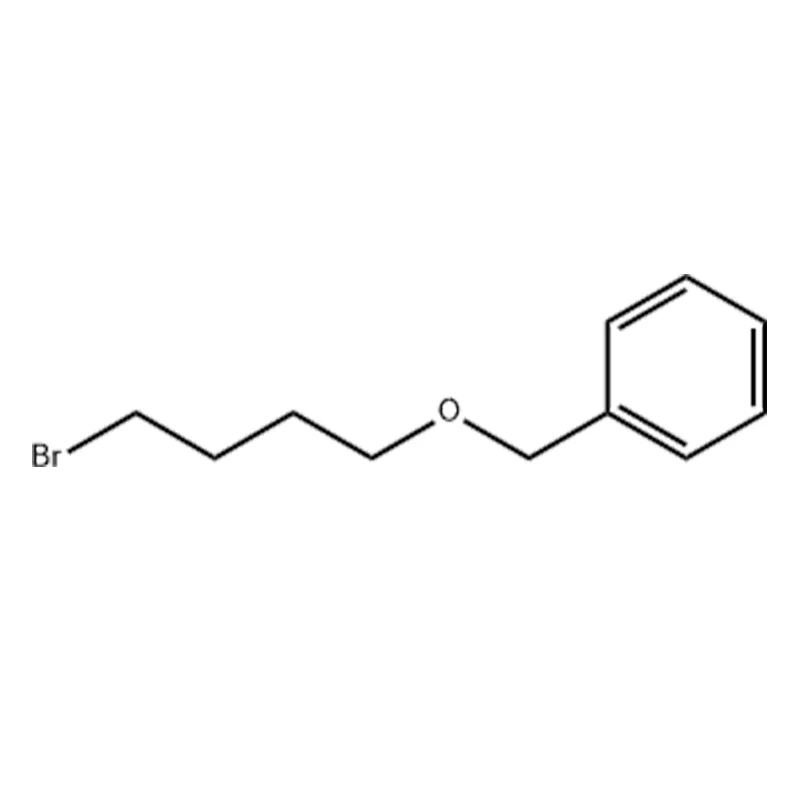
The molecular architecture of Benzyl 4-bromobutyl ether (C₁₁H₁₅BrO, MW 243.14) features a benzyl-protected four-carbon alkyl chain terminated by a primary alkyl bromide. The molecule is constructed around a flexible butoxy spacer, where the oxygen atom is connected to a benzyl group—a phenyl ring attached via a methylene (-CH₂-) bridge—at one terminus and a four-carbon chain ending in a bromine atom at the other. The benzyl ether moiety provides a robust protecting group for the alcohol functionality, offering stability under a range of reaction conditions while remaining susceptible to selective cleavage via hydrogenolysis (H₂, Pd/C) or Lewis acid-mediated debenzylation, thereby revealing the free hydroxyl group when desired. The primary alkyl bromide serves as a versatile electrophilic center, primed for nucleophilic substitution (SN2) reactions, metal-halogen exchange, and cross-coupling transformations. This combination of a stable benzyl-protected alcohol and a reactive alkyl bromide makes Benzyl 4-bromobutyl ether a bifunctional C4 building block with precisely differentiated, orthogonal reactive handles suitable for convergent synthetic strategies.
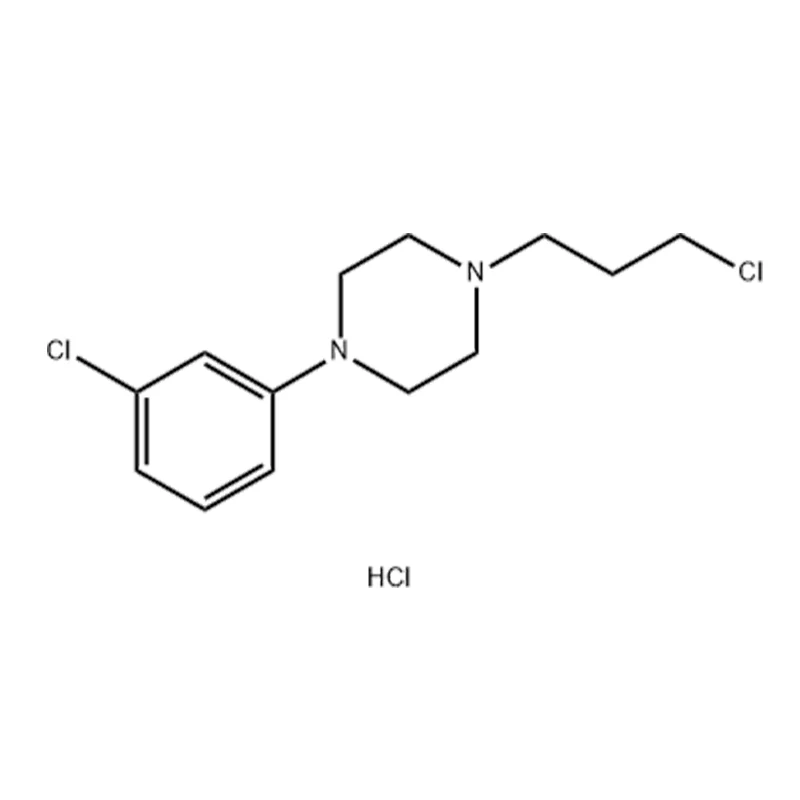
The product is 1-(3-Chlorophenyl)-4-(3-chloropropyl)piperazine hydrochloride, a symmetrically disubstituted piperazine derivative bearing a 3-chlorophenyl group on one nitrogen and a 3-chloropropyl chain on the other. Structurally, the molecule consists of a central piperazine ring — a six-membered saturated heterocycle with two nitrogen atoms in the 1,4-positions — which serves as the rigid backbone. The 3-chlorophenyl substituent, attached to the N1 position, is a 1,3-disubstituted benzene ring bearing a chlorine atom in the meta orientation relative to the piperazine connection point, a configuration known to influence binding affinity at serotonin receptor subtypes. The 3-chloropropyl group at the N4 position provides an electrophilic handle capable of undergoing nucleophilic substitution reactions, making the molecule a versatile alkylating agent. The hydrochloride salt form, present as the monohydrochloride, protonates one piperazine nitrogen to yield a stable crystalline solid with enhanced water solubility (3.9 g/L at 28 °C) relative to the free base. This combined architecture — a rigid piperazine spacer, a meta-chlorinated aromatic ring for receptor recognition, and a terminal chloropropyl group for further functionalization — underpins the compound‘s utility as a key building block in CNS drug synthesis.
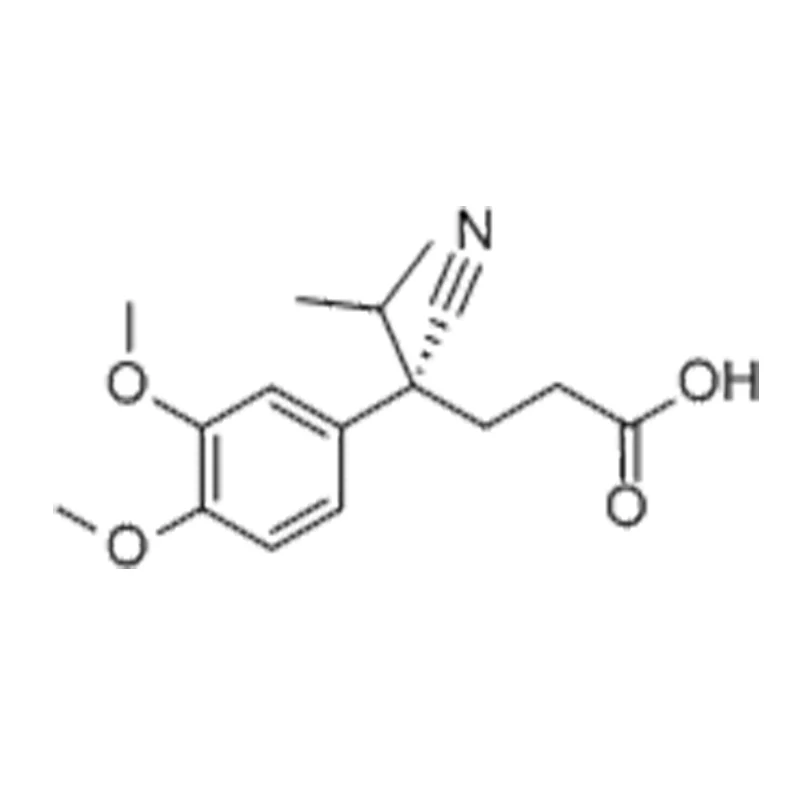
The product is (S)-(-)-Verapamilic Acid, a single-enantiomer carboxylic acid bearing a quaternary stereocenter at the C4 position of a 5-methylhexanoic acid backbone. The molecule features a cyano group (-CN) directly attached to the quaternary chiral carbon, an electron-rich 3,4-dimethoxyphenyl aromatic ring, and a terminal carboxylic acid functionality. The (S)-configuration at the quaternary center is the defining chiral feature that distinguishes this enantiomer and underpins its biological relevance — the (S)-enantiomer is known to be approximately 8 to 20 times more potent than its (R)-antipode in blocking atrioventricular (AV) node conduction. The presence of both an aromatic ring bearing two electron-donating methoxy substituents and a nitrile group adjacent to the chiral center creates a distinctive electronic environment that governs the compound‘s stability, solubility, and reactivity in downstream transformations such as amide coupling and selective borane-mediated reduction.
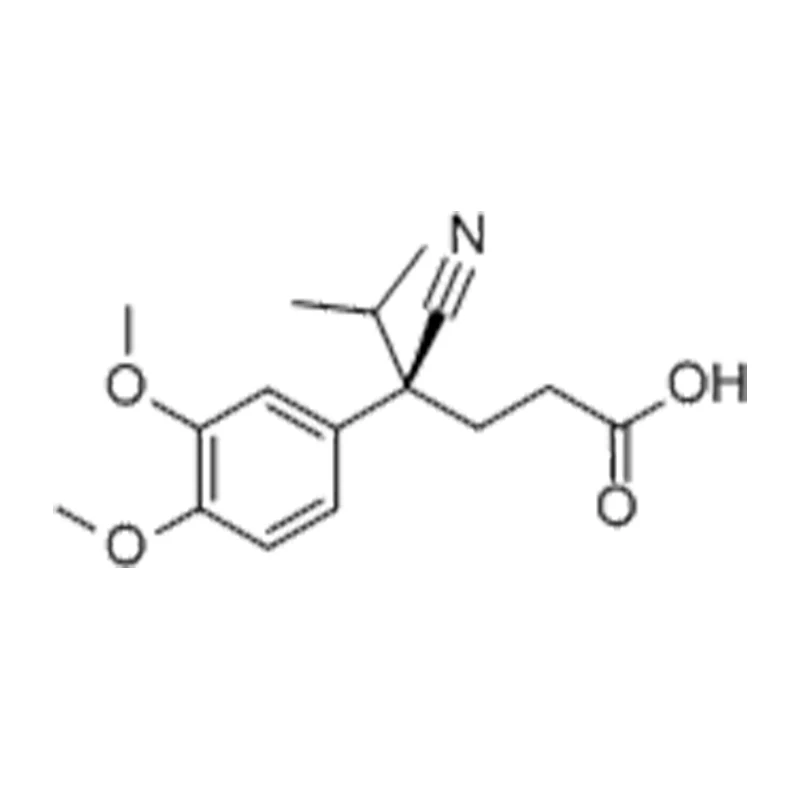
The product is (R)-(+)-Verapamilic Acid, a chiral intermediate bearing a quaternary stereocenter at the C4 position of a 5-methylhexanoic acid backbone. The molecule features a cyano group (-CN) attached to the quaternary carbon, a 3,4-dimethoxyphenyl aromatic ring, and a terminal carboxylic acid functionality — structural motifs that collectively define its role in calcium channel blocker synthesis. The (R)-configuration at the quaternary carbon is the distinguishing feature that makes this single enantiomer particularly valuable, as it has been demonstrated to be a more potent inhibitor of calcium channels than its (S)-antipode. The presence of both an electron-rich dimethoxyphenyl ring and a nitrile group creates a distinctive electronic environment that influences both the compound‘s stability and its reactivity in downstream amide coupling and reduction steps.
The product is 1,2,4-Triazolo[4,3-a]pyridin-3(2H)-one, a fused heterocyclic compound characterized by a five-membered 1,2,4-triazole ring annulated to a six-membered pyridine ring at the nitrogen bridgehead, forming a bicyclic [4,3-a] fusion pattern. Structurally, the triazole ring at the 2-position bears a carbonyl group, while the pyridine ring retains its aromaticity with a nitrogen atom at the 4-position of the fused system. This unique ring fusion creates an extended conjugated π-system that underlies the molecule‘s photochemical sensitivity and broad biological activity profile. The presence of both endocyclic nitrogen atoms (as hydrogen bond acceptors) and the exocyclic carbonyl oxygen (as a hydrogen bond acceptor) generates multiple potential interaction sites with biological targets, while the NH group at the 2-position acts as a hydrogen bond donor. This amphoteric character — featuring both hydrogen bond donor (NH) and acceptor (N, C=O) capabilities — positions 1,2,4-Triazolo[4,3-a]pyridin-3(2H)-one as a pharmacologically privileged scaffold capable of engaging with a wide range of enzyme active sites and receptor binding pockets.
We use cookies to offer you a better browsing experience, analyze site traffic and personalize content. By using this site, you agree to our use of cookies. Privacy Policy


![Tris[2-(MethylaMino)ethyl]aMine](https://www.cosperpharma.com/upload/8820/tris-2-methylamino-ethyl-amine-485485.webp "Tris[2-(MethylaMino)ethyl]aMine")
![1,2,4-Triazolo[4,3-a]pyridin-3(2H)-one](https://www.cosperpharma.com/upload/8820/1-2-4-triazolo-4-3-a-pyridin-3-2h-one-440735.webp "1,2,4-Triazolo[4,3-a]pyridin-3(2H)-one")