
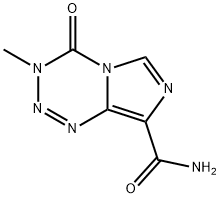
Temozolomide is an oral alkylating agent and antineoplastic drug approved for the treatment of glioblastoma multiforme and anaplastic astrocytoma. As a DNA-methylating prodrug, Temozolomide undergoes rapid chemical conversion in the systemic circulation at physiological pH to the active compound MTIC, which covalently interacts with guanine residues in DNA. Temozolomide induces apoptosis and causes cell cycle arrest at the G2/M checkpoint. Temozolomide is supplied as a crystalline solid and is available as both an API for pharmaceutical manufacturing and as an analytical reference standard. For pharmaceutical quality control and analytical development, Temozolomide serves as an essential reference standard for impurity profiling, method validation, and stability studies.
Product Parameters
|
Parameter |
Specification |
|
Product Name |
Temozolomide |
|
CAS Number |
85622-93-1 |
|
Molecular Formula |
C₆H₆N₆O₂ |
|
Molecular Weight |
194.15 g/mol |
|
Appearance |
White to light brown powder |
|
Melting Point |
212 °C (dec.) |
|
Boiling Point |
526.6±42.0℃ |
|
Density |
1.97±0.1 g/cm3 |
|
Storage Condition |
2–8 °C |
Antitumor D rug
Temozolomide was synthesized by the UK Cancer Research Group and subsequently transferred to Schering-Plough in the United States for development. Unlike existing antitumor drugs, this agent possesses a novel chemical structure as an imidazolotetrazine derivative. Temozolomide does not act directly; under physiological pH conditions, it rapidly converts via a non-enzymatic pathway into the active compound MTIC [5-(3-methyltriazepin-1)-imidazole-4-amide]. The cytotoxicity of MTIC is primarily attributed to its DNA alkylating (methylation) effect, which predominantly occurs at the O6 and N7 positions of guanine. Basic and clinical studies have demonstrated that temozolomide is effective against several common types of gliomas. It was approved for marketing in both the European Union and the United States in 1999: in the US, it was indicated for second-line treatment of glioblastoma multiforme and degenerative astrocytoma, while in EU countries, it was approved for glioblastoma multiforme with disease progression or recurrence after conventional therapy. The efficacy of temozolomide against glioblastoma multiforme has gained broader recognition in Europe.
Pharmacokinetics
Clinical E valuation
Temozolomide demonstrates significant efficacy against gliomas, particularly the most common type, glioblastoma multiforme, whether in terms of tumor response rate, patient survival rate, or tolerability. More importantly, it markedly improves patients' quality of life compared to the current standard treatment, procarbazine, representing a promising advancement in the management of this malignancy. The role of temozolomide as first-line therapy for progressive metastatic melanoma has been validated by clinical trials, with applications submitted in Europe and the United States. A recently published Phase III randomized controlled trial revealed that among 305 patients treated with temozolomide (200 mg/m²) combined with dacarbazine (250 mg/m² daily for 5 consecutive days every 21 days), the overall survival time and treatment response rate in the temozolomide group were 7.9 months and 13.5%, respectively, superior to those of the dacarbazine group (5.7 months and 12.1%). Temozolomide also exhibited better tolerability than dacarbazine, with significantly improved quality-of-life assessments measured by functional decline rates (18% vs. 42% after 3 months of treatment). Melanoma is a rare cutaneous tumor accounting for only approximately 4% of all skin cancers but contributing to about 79% of mortality cases; dacarbazine remains the current standard treatment for this condition. Temozolomide has demonstrated remarkable clinical efficacy in refractory gliomas and melanomas, warranting further attention.
Contact Us
Address
No. 2 Yangguang 3rd Road, Duodao Chemical Cycle Industrial Park, Jingmen City, Hubei Province, China
Tel