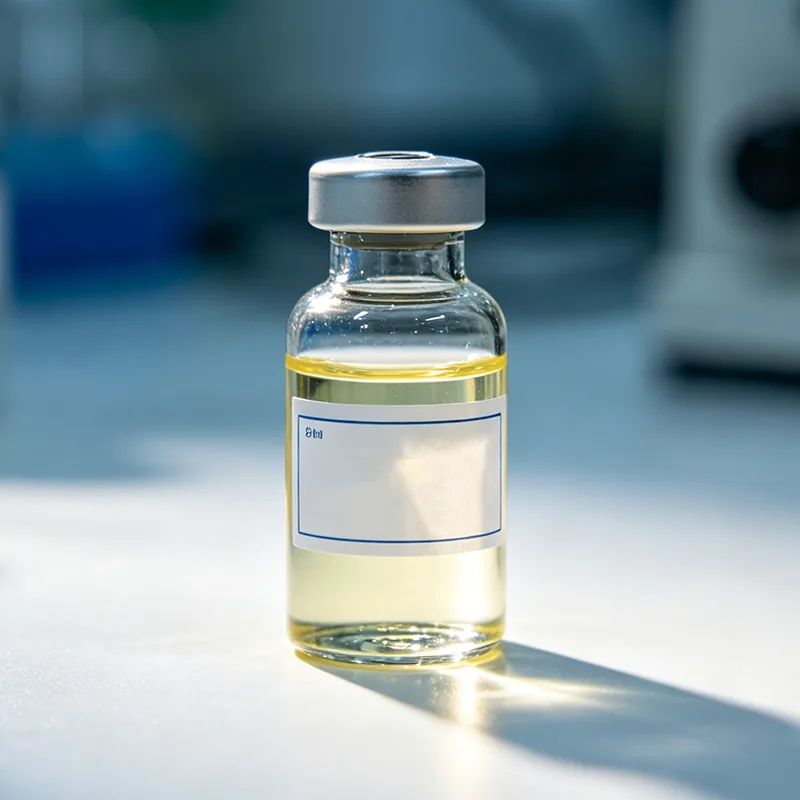

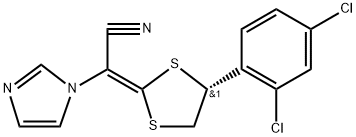
Luliconazole is a novel, broad-spectrum imidazole antifungal agent indicated for the topical treatment of interdigital tinea pedis (athlete‘s foot), tinea corporis (ringworm), and tinea cruris (jock itch) . Luliconazole demonstrates potent in vitro activity against dermatophytes, with minimum inhibitory concentrations (MIC) of 0.12–2 μg/mL against Trichophyton species, showing superior activity compared to terbinafine, ketoconazole, and miconazole . Luliconazole also exhibits strong activity against Malassezia furfur (MIC: 0.004–0.016 μg/mL), the causative agent of pityriasis versicolor, with efficacy comparable to or exceeding that of ketoconazole . Luliconazole was initially developed by Nihon Nohyaku Co., Ltd., received Japanese approval in 2005 under the brand name Lulicon, and was approved by the U.S. FDA in 2013 as a 1% cream formulation marketed as Luzu® . As the active R-enantiomer of a chiral molecule, Luliconazole represents a significant advancement in topical antifungal therapy, particularly for dermatophyte infections where its potent activity and favorable skin penetration profile offer clinical advantages .
|
Parameter |
Specification |
|
Product Name |
Luliconazole |
|
CAS Number |
|
|
Molecular Formula |
|
|
Molecular Weight |
|
|
Appearance |
|
|
Melting Point |
|
|
Boiling Point |
|
|
Density |
|
|
pKa |
|
|
Stability |
|
|
Storage Condition |
When your antifungal API development or analytical method validation requires high-quality Luliconazole, Cosperpharm delivers with the analytical rigor, documentation depth, and supply reliability that pharmaceutical customers demand.
Optical purity starts here. Luliconazole is the active R-enantiomer, and its stereochemical integrity is essential for antifungal potency . Our release protocol includes chiral HPLC verification of enantiomeric purity, optical rotation measurement (−48.0 to −53.0°), and identity confirmation by NMR and MS — because racemization or stereochemical impurity would compromise your formulation‘s efficacy.
Documentation that supports regulatory submission. Every shipment includes a Certificate of Analysis (COA) with batch‑specific HPLC purity (≥98.0%), optical rotation data, residual solvent analysis, and chromatographic traceability. Stability summaries and DMF‑ready documentation packages are available to support your ANDA or NDA filings.
Flexible supply for research and manufacturing. Cosperpharm supplies Luliconazole across all scales — from gram quantities for R&D, process development, and reference standard applications, to bulk quantities for commercial formulation manufacturing.
Technical support for the full development cascade. Our team can advise on formulation compatibility, stability considerations (the compound is light‑sensitive), and analytical methods for impurity profiling.
Potent Broad‑Spectrum Antifungal Activity
Luliconazole exhibits superior in vitro activity against dermatophytes (Trichophyton rubrum, T. mentagrophytes, T. tonsurans) with MIC values of 0.12–2 μg/mL, outperforming terbinafine, ketoconazole, and miconazole . Against Malassezia furfur, MIC values range from 0.004–0.016 μg/mL, comparable to or exceeding ketoconazole .
Optically Active R‑Enantiomer
Luliconazole is the active R‑enantiomer of a chiral molecule, with stereochemical configuration essential for its pharmacological activity . This structural specificity ensures targeted inhibition of fungal lanosterol 14α‑demethylase, the enzyme responsible for ergosterol biosynthesis .
Clinically Proven Topical Antifungal
Approved in Japan (2005), the United States (2013), and multiple other countries, Luliconazole is indicated for tinea pedis, tinea corporis, tinea cruris, and pityriasis versicolor, with demonstrated clinical efficacy and favorable safety profiles .
Unique Dithiolane Scaffold
The 1,3‑dithiolane ring structure of Luliconazole distinguishes it from other imidazole antifungals, contributing to its potent activity and favorable dermatological penetration properties .
Q1: What is Luliconazole used for?
A: Luliconazole is a topical antifungal agent indicated for the treatment of interdigital tinea pedis (athlete‘s foot), tinea corporis (ringworm), tinea cruris (jock itch), and pityriasis versicolor .
Q2: What is the mechanism of action?
A: Luliconazole inhibits fungal lanosterol 14α‑demethylase, blocking ergosterol synthesis and disrupting fungal cell membrane integrity, leading to fungal cell death .
Whether you are developing generic luliconazole formulations, validating analytical methods for regulatory submission, or requiring a reliable reference standard for quality control, we are here to support your project with consistent quality and responsive service.
Address
No. 2 Yangguang 3rd Road, Duodao Chemical Cycle Industrial Park, Jingmen City, Hubei Province, China
Tel