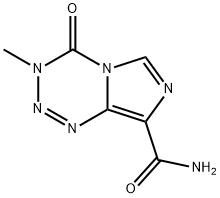
Temozolomide (CAS 85622-93-1), chemically designated as 3-methyl-4-oxoimidazo[5,1-d][1,2,3,5]tetrazine-8-carboxamide, is a small lipophilic alkylating agent belonging to the imidazotetrazine class of chemotherapy drugs. The molecule features a unique fused heterocyclic ring system—an imidazole fused to a tetrazine ring—that serves as a prodrug for the active alkylating species MTIC (monomethyl triazeno imidazole carboxamide).
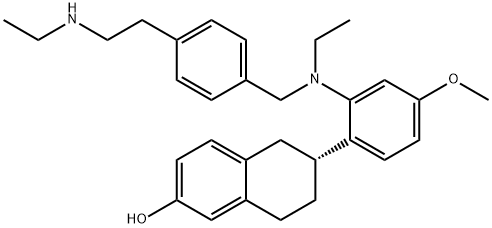
Elacestrant (CAS 722533-56-4), chemically designated as (6R)-6-{2-[ethyl({4-[2-(ethylamino)ethyl]phenyl}methyl)amino]-4-methoxyphenyl}-5,6,7,8-tetrahydronaphthalen-2-ol, is a first-in-class orally bioavailable selective estrogen receptor degrader (SERD). The molecule features a complex chiral tetralin core with a single stereocenter at the C6 position, conferring potent and selective estrogen receptor binding.
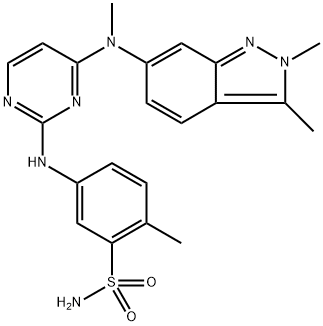
Pazopanib (CAS 444731-52-6), chemically designated as 5-[[4-[(2,3-dimethyl-2H-indazol-6-yl)methylamino]-2-pyrimidinyl]amino]-2-methylbenzenesulfonamide, is a potent, orally active multi-targeted tyrosine kinase inhibitor. The molecule features a complex heterocyclic architecture incorporating an indazole ring, a pyrimidine core, and a sulfonamide-substituted benzene ring. This unique structural arrangement enables Pazopanib to simultaneously inhibit multiple receptor tyrosine kinases, including VEGFR1, VEGFR2, VEGFR3, PDGFRα, PDGFRβ, FGFR, and c-Kit.
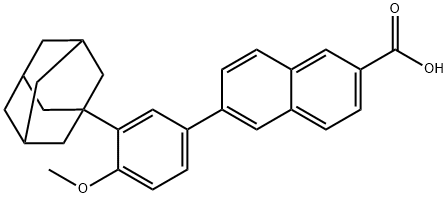
Adapalene (CAS 106685-40-9), chemically designated as 6-[3-(1-adamantyl)-4-methoxyphenyl]-2-naphthoic acid, is a synthetic retinoid that uniquely combines a rigid adamantyl group with a naphthoic acid ring system. The molecule features a distinctive chemical structure characterized by a naphthoic acid core linked to an adamantyl-substituted methoxyphenyl group.
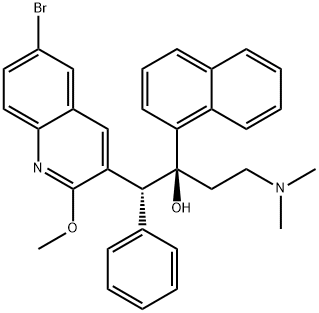
Bedaquiline (CAS 843663-66-1), chemically designated as (1R,2S)-1-(6-bromo-2-methoxyquinolin-3-yl)-4-(dimethylamino)-2-(naphthalen-1-yl)-1-phenylbutan-2-ol, is a first-in-class diarylquinoline antimycobacterial agent. The molecule features a complex chiral architecture with two contiguous stereocenters at the C1 and C2 positions of the butan-2-ol backbone, creating a rigid three-dimensional conformation that is essential for its selective inhibition of mycobacterial ATP synthase.
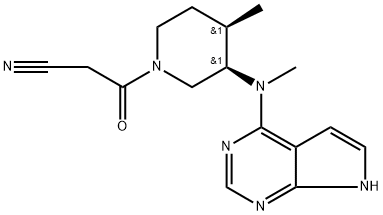
Tofacitinib (CAS 477600-75-2) is a first-in-class, orally bioavailable pan-Janus kinase (JAK) inhibitor. The molecule features a pyrrolo[2,3-d]pyrimidine core linked to a chiral 3-((3R,4R)-4-methyl-3-(methylamino)piperidin-1-yl)-3-oxopropanenitrile side chain. This unique structural arrangement enables Tofacitinib to inhibit JAK1, JAK2, JAK3, and, to a lesser extent, TYK2, with particular potency against JAK3 (IC₅₀ = 1 nM).
We use cookies to offer you a better browsing experience, analyze site traffic and personalize content. By using this site, you agree to our use of cookies. Privacy Policy