
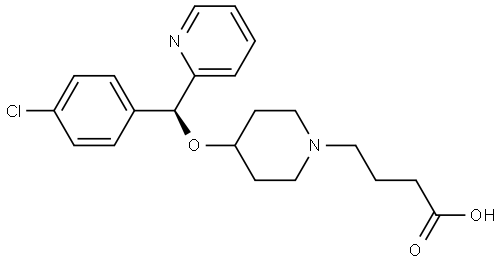
Bepotastine is a clinically established antihistamine API used in the treatment of allergic conditions including allergic rhinitis, allergic conjunctivitis, and urticaria. As a selective H1 receptor antagonist, Bepotastine blocks the action of histamine at peripheral H1 receptors without significant CNS penetration, thereby avoiding the sedative side effects commonly associated with first‑generation antihistamines. Bepotastine is available in both oral and ophthalmic formulations, with the topical ophthalmic solution (Bepreve®) indicated for the treatment of ocular itching associated with allergic conjunctivitis. Bepotastine continues to be an important therapeutic option for patients suffering from allergic diseases, offering a favorable safety and efficacy profile.
Product Parameters
|
Parameter |
Specification |
|
Product Name |
Bepotastine |
|
CAS Number |
125602-71-3 |
|
Molecular Formula |
|
|
Molecular Weight |
|
|
Melting Point |
56 – 58 °C |
|
Boiling Point |
|
|
Density |
|
|
Storage Condition |
−20 °C, under inert atmosphere |
Bioactivity
In Vitro Study
At concentrations of 10–100 micrometers, βpotastine significantly inhibits antigen-induced IL-5 production in human peripheral blood mononuclear cells (PBMCs), and this effect is enhanced when PBMCs are pre-incubated with Bepotastine.
Leukotriene B4 increased the Ca2+ concentration in cultured neutrophils, and this concentration was inhibited by beparastine ethanesulfonate (1–100 μM). Leukotriene B4 also elevated the Ca2+ concentration in cultured dorsal root ganglion neurons, which was similarly inhibited by beparastine besylate (100 μM).
In Vivo Studies
Bepalastine (1–10 mg/kg, oral administration) exhibits dose-dependent inhibition of scratching induced by substance P (100 nmol per site) and leukotriene B4 (0.03 nmol per site; Chemicalbook). In vivo, bepalastine dose-dependently suppresses the acceleration of histamine-induced vascular permeability, and in guinea pig studies, it inhibits homologous passive skin anaphylactic shock.
In mouse pruritus models, oral administration of Bepotastine inhibited the frequency and duration of scratching behavior.
Contact Us
Address
No. 2 Yangguang 3rd Road, Duodao Chemical Cycle Industrial Park, Jingmen City, Hubei Province, China
Tel