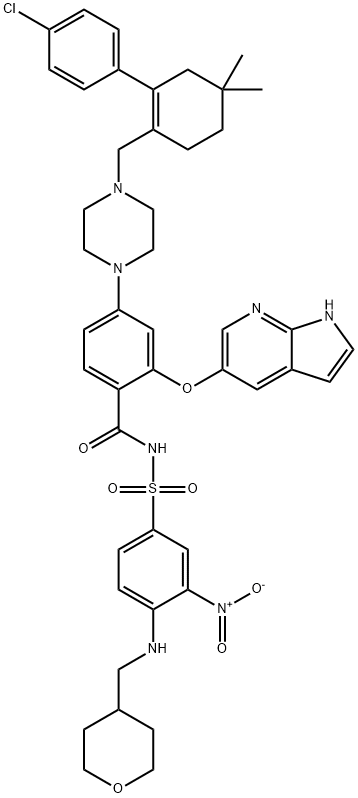
Venetoclax (ABT-199, GDC-0199) is a first-in-class, orally bioavailable small-molecule inhibitor of the B‑cell lymphoma 2 (BCL‑2) protein. Structurally, Venetoclax features a complex heterocyclic core anchored by a biaryl acylsulfonamide pharmacophore, with a nitro‑substituted benzenesulfonamide moiety and a tetrahydropyran-containing substituent that together confer exquisite selectivity for BCL‑2 over other anti‑apoptotic BCL‑2 family members.
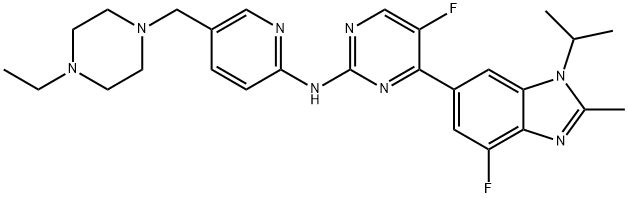
Abemaciclib (CAS 1231929-97-7, LY2835219, Verzenio®) is a reversible, ATP-competitive inhibitor of cyclin-dependent kinases 4 and 6 (CDK4/6). Structurally, Abemaciclib features a 2-aminopyrimidine core substituted with a fluorinated benzimidazole moiety and an N-ethylpiperazinylmethyl pyridine side chain. The molecule contains two fluorine atoms, eight nitrogen atoms, and a molecular framework that enables potent and selective inhibition of CDK4/cyclin D1 over CDK6/cyclin D1 complexes.
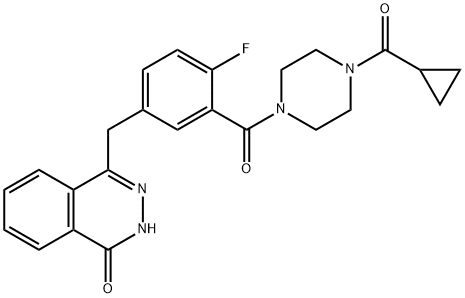
Olaparib (CAS 763113-22-0, AZD2281, Lynparza®) is a first-in-class, orally bioavailable small-molecule inhibitor of poly(ADP-ribose) polymerase (PARP) 1 and 2. Structurally, Olaparib features a phthalazinone core substituted with a fluorobenzyl group and a piperazine ring bearing a cyclopropanecarbonyl moiety. The molecule contains a phthalazin-1(2H)-one scaffold that is essential for PARP inhibitory activity, with the piperazine ring providing key interactions within the PARP active site.
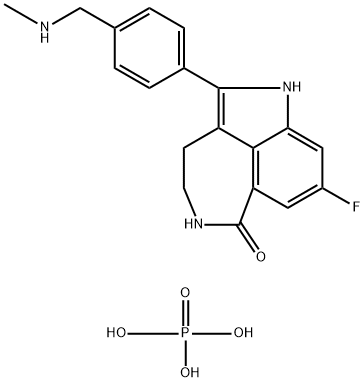
Rucaparib Phosphate (CAS 459868-92-9, AG014699 phosphate, PF-01367338 phosphate) is the phosphate salt form of rucaparib, a tricyclic indole poly(ADP-ribose) polymerase (PARP) inhibitor with potential chemosensitizing, radiosensitizing, and antineoplastic activities. Structurally, Rucaparib Phosphate features a tricyclic indole core with a fluorinated aromatic ring and a methylaminomethyl phenyl substituent.
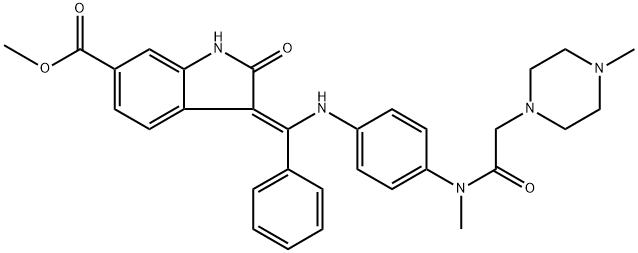
Nintedanib (CAS 656247-17-5, BIBF 1120, Ofev®, Vargatef®) is a small molecule kinase inhibitor used in the treatment of idiopathic pulmonary fibrosis (IPF), systemic sclerosis-associated interstitial lung disease, and certain types of cancer including non-small cell lung cancer. Structurally, Nintedanib features an indole core with a methyl piperazinyl acetamide substituent and a methylamino carbonyl phenyl group.
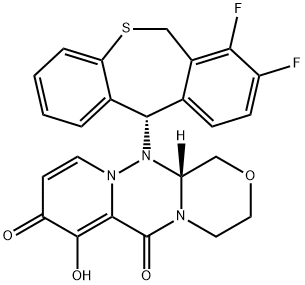
Baloxavir (CAS 1985605-59-1, baloxavir acid, BXA, S-033447) is a first-in-class cap-dependent endonuclease inhibitor indicated for the treatment of acute uncomplicated influenza in patients aged 12 years and older who have been symptomatic for no more than 48 hours. Structurally, Baloxavir features a unique bicyclic core with a difluorinated benzothiepine ring system fused to a triazatricyclic dione scaffold.
We use cookies to offer you a better browsing experience, analyze site traffic and personalize content. By using this site, you agree to our use of cookies. Privacy Policy