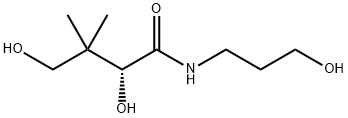
Dexpanthenol (CAS 81-13-0), chemically identified as (R)-2,4-dihydroxy-N-(3-hydroxypropyl)-3,3-dimethylbutanamide, is the alcohol analog of pantothenic acid (vitamin B5). Structurally, Dexpanthenol features a dihydroxy-dimethylbutanamide backbone with a terminal 3-hydroxypropyl amide substituent, incorporating a single stereocenter at the C2 position that defines its D-(+) configuration.
Dexpanthenol is the alcohol analog of vitamin B5, serving as a provitamin that is converted to pantothenic acid in the body. Dexpanthenol has been shown to have various biological activities, including wound healing, anti-inflammatory, and moisturizing effects. Dexpanthenol acts as a humectant, which helps to retain moisture in the skin, and as an emollient, which softens and soothes the skin. In skincare, Dexpanthenol promotes wound healing and improves skin hydration, elasticity, and softness. In hair care products, Dexpanthenol strengthens hair, enhances shine, and prevents damage. Dexpanthenol also has anti-inflammatory properties, making it beneficial for treating mild skin irritations.
Product Parameters
Parameter
Specification
Product Name
Dexpanthenol
CAS Number
81-13-0
Molecular Formula
C₉H₁₉NO₄
Molecular Weight
205.25 g/mol
Appearance
Clear colorless to slightly yellow viscous liquid or semi-solid
Density
1.20 g/mL at 20 °C (lit.)
Boiling Point
118–120 °C at 0.02 mmHg
Water Solubility
Freely soluble
Solubility
Freely soluble in methanol, water, alcohol; slightly soluble in ether
Storage Condition
−20 °C
Content Analysis
Accurately weigh approximately 400 mg of Dexpanthenol sample and place it in a 300 mL reflux flask with a standard mouthpiece. Add 50.0 mL of an ice acetic acid solution containing 0.1 mol/L perchloric acid and reflux for 5 hours. After cooling, cover the condenser with metal foil to prevent water contamination and rinse it with ice acetic acid. Add 5 drops of crystal violet test solution (TSL 174) and titrate with an ice acetic acid solution of 0.1 mol/L potassium hydrogen phthalate until reaching the blue-green endpoint. Perform a blank experiment and make necessary corrections. Each mL of 0.1 mol/L perchloric acid is equivalent to 20.53 mg of dexpanthenol (C₉H₁₉NO₄).
Application
Dexpanthenol is widely used in the pharmaceutical, food, and cosmetic industries. In the pharmaceutical sector, it serves as a vitamin B compound that participates in metabolic processes; in the food industry, it functions as a nutritional supplement and fortifier to promote the metabolism of proteins, fats, and carbohydrates, maintain skin and mucosal health, enhance hair luster, boost immunity, and prevent diseases; in cosmetics, its dermatological benefits include deep penetration as a moisturizer that stimulates epithelial cell growth, promotes wound healing, and exhibits anti-inflammatory effects; for hair care, it provides sustained hydration, prevents split ends and damage, increases hair density, and improves hair quality; for nail care, it enhances nail hydration and improves flexibility.
Identification Test
In 1 mL of a 10% sample solution, add 5 mL of sodium hydroxide test solution (TS-224) and copper sulfate test solution (TS-78) dropwise, then shake vigorously; a deep blue color should develop. In 1 mL of a 1% sample aqueous solution, add 1 mL of 1 M hydrochloric acid and heat over a steam bath for approximately 30 minutes. After cooling, add 100 mg of hydroxylamine hydrochloride and mix thoroughly, followed by 5 mL of sodium hydroxide test solution (TS-224). Let stand for 5 minutes, adjust the pH to 2.5–3.0 with 1 M hydrochloric acid, and add 1 drop of ferric chloride test solution (TS-101); a red-purple color should appear.
Contact Us
Need Dexpanthenol for your skincare, hair care, or pharmaceutical formulation? Cosperpharm is ready to supply — get in touch today.
Hot Tags: Dexpanthenol, China, Manufacturer, Supplier, Factory
We use cookies to offer you a better browsing experience, analyze site traffic and personalize content. By using this site, you agree to our use of cookies.Privacy Policy