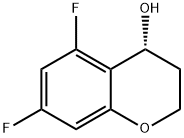
(R)-5,7‑Difluorochroman‑4‑ol (CAS 1270294‑05‑7) is a chiral chromanol derivative featuring a benzodihydropyran (chroman) scaffold with fluorine substituents at the 5‑ and 7‑positions and a hydroxyl group at the 4‑position in the R‑configuration. The molecule consists of a fused benzene‑dihydropyran ring system with two fluorine atoms on the aromatic ring and a chiral secondary alcohol at C4, molecular formula C₉H₈F₂O₂ and molecular weight 186.16 g/mol.
4‑Hydroxy‑N,N,2‑trimethyl‑1‑tosyl‑1H‑benzo[d]imidazole‑6‑carboxamide (CAS 942195‑86‑0) is a complex benzimidazole derivative featuring a 6,5‑fused aromatic heterocyclic system. The molecule incorporates a 4‑hydroxy substituent, a 2‑methyl group, an N,N‑dimethyl carboxamide at the 6‑position, and a para‑toluenesulfonyl (tosyl) protecting group on the imidazole nitrogen, molecular formula C₁₈H₁₉N₃O₄S and molecular weight 373.43 g/mol.
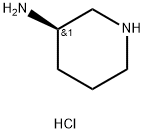
(R)-3-Aminopiperidine Dihydrochloride (CAS 334618-23-4) is the dihydrochloride salt of (R)-3‑aminopiperidine, featuring a chiral piperidine scaffold with a primary amine at the 3‑position in the R‑configuration. The molecule consists of a six‑membered piperidine ring with a free amino group at C3, protonated and stabilised by two chloride counterions, molecular formula C₅H₁₄Cl₂N₂ and molecular weight 173.08 g/mol.
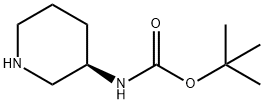
(R)-3-Boc-Aminopiperidine ((R)-3-(Boc-Amino)piperidine, CAS 309956-78-3) is a chiral piperidine derivative featuring a tert‑butoxycarbonyl (Boc) protected amino group at the 3‑position of the piperidine ring in the R‑configuration. The molecule consists of a six‑membered piperidine scaffold with a secondary amine and a Boc‑protected primary amine at C3, molecular formula C₁₀H₂₀N₂O₂ and molecular weight 200.28 g/mol.
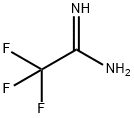
Trifluoroacetamidine (CAS 354‑37‑0) is a fluorinated amidine compound featuring a trifluoromethyl group attached to the amidine carbon. The molecule has the chemical formula CF₃C(=NH)NH₂, molecular formula C₂H₃F₃N₂ and molecular weight 112.05 g/mol. The amidine functional group can exist in various protonated or tautomeric forms depending on the medium.
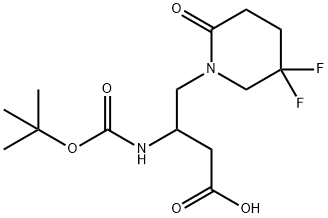
(S)-3-((tert‑Butoxycarbonyl)amino)‑4‑(5,5‑difluoro‑2‑oxopiperidin‑1‑yl)butanoic acid (CAS 911635‑43‑3) is a chiral amino acid derivative featuring a Boc‑protected amino group at the 3‑position in the S‑configuration and a difluoro‑substituted piperidinone moiety at the 4‑position.
We use cookies to offer you a better browsing experience, analyze site traffic and personalize content. By using this site, you agree to our use of cookies. Privacy Policy


![7-hydroxy-N,N,2-triMethyl-3-tosyl-3H-benzo[d]iMidazole-5-carboxaMide](https://www.cosperpharma.com/upload/8820/7-hydroxy-n-n-2-trimethyl-3-tosyl-3h-benzo-d-imidazole-5-carboxamide-681470.png "7-hydroxy-N,N,2-triMethyl-3-tosyl-3H-benzo[d]iMidazole-5-carboxaMide")