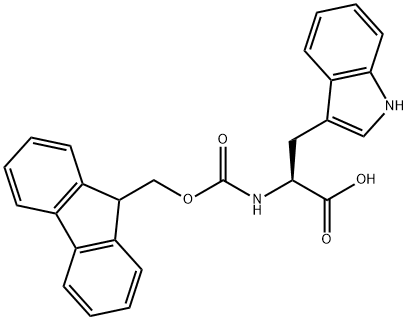
Fmoc-Trp-OH (Nα-Fmoc-L-tryptophan, CAS 35737-15-6) is an Fmoc-protected derivative of the naturally occurring aromatic amino acid L-tryptophan. The molecular structure of Fmoc-Trp-OH consists of a tryptophan backbone with an Fmoc (9-fluorenylmethoxycarbonyl) protecting group attached to the α-amino group. Tryptophan is unique among the proteinogenic amino acids for its indole side chain—a bicyclic aromatic system containing a pyrrole ring fused to a benzene ring.
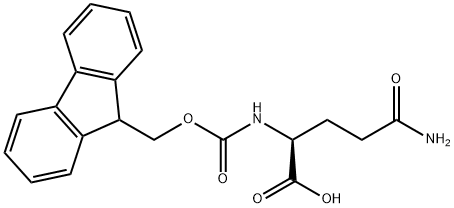
Fmoc-Gln-OH (Nα-Fmoc-L-glutamine, CAS 71989-20-3) is an Fmoc-protected derivative of the naturally occurring amino acid L-glutamine. The molecular structure of Fmoc-Gln-OH consists of a glutamine backbone bearing an Fmoc (9-fluorenylmethoxycarbonyl) protecting group attached to the α-amino group. The Fmoc group is a base-labile protecting moiety that is selectively removed under mild basic conditions (typically piperidine in DMF), enabling orthogonal deprotection strategies in solid-phase peptide synthesis (SPPS).
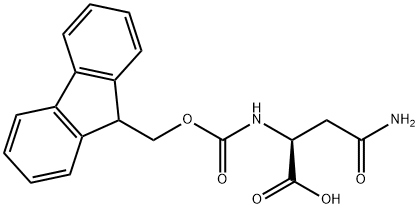
Fmoc-Asn-OH (CAS 71989-16-7), also known as Nα-Fmoc-L-asparagine, is a fundamental Nα-Fmoc-protected amino acid building block for the introduction of asparagine residues in Fmoc-based solid-phase peptide synthesis (SPPS). The molecule consists of the L-asparagine amino acid with its Nα position protected by the base-labile 9-fluorenylmethyloxycarbonyl (Fmoc) group, while the side chain carboxamide remains unprotected.
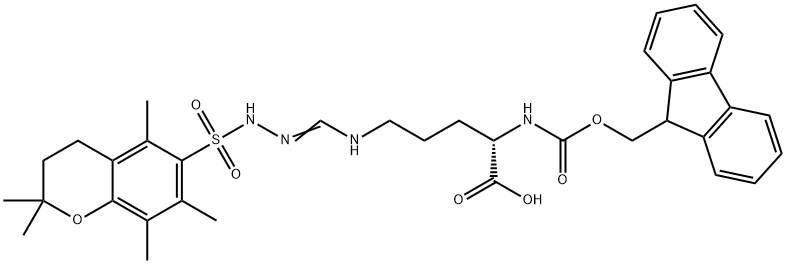
Fmoc-Arg(Pmc)-OH (CAS 119831-72-0) is a premium Nα-Fmoc-protected arginine derivative featuring the Pmc (2,2,5,7,8-pentamethylchroman-6-sulfonyl) protecting group on the guanidinium side chain. The molecule combines the base-labile 9-fluorenylmethyloxycarbonyl (Fmoc) group for temporary Nα-protection during peptide chain assembly with the acid-labile Pmc group that safeguards the highly reactive guanidinium functionality of arginine.
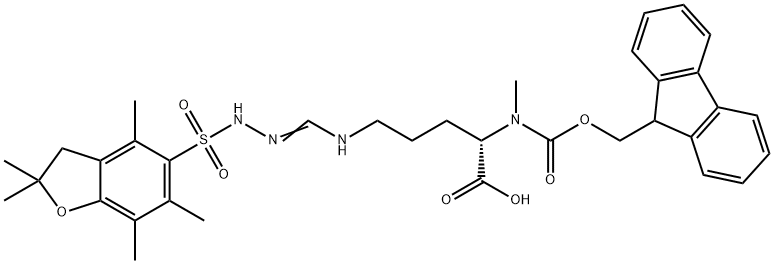
Fmoc-N-Me-Arg(Pbf)-OH (CAS 913733-27-4) is a specialized Nα-Fmoc-protected Nα-methylated arginine derivative featuring the acid-labile Pbf (2,2,4,6,7-pentamethyldihydrobenzofuran-5-sulfonyl) protecting group on the guanidinium side chain. The molecule incorporates three key structural elements: the base-labile 9-fluorenylmethyloxycarbonyl (Fmoc) group for temporary Nα-protection during peptide chain assembly, the Nα-methylation that introduces conformational constraint and enhances metabolic stability in peptide therapeutics, and the Pbf-protected guanidinium group on the arginine side chain that prevents undesired side reactions during coupling.
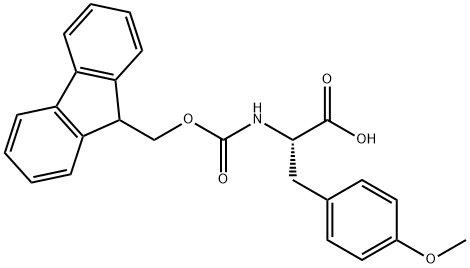
Fmoc-Tyr(Me)-OH (Nα-[(9H-fluoren-9-ylmethoxy)carbonyl]-O-methyl-L-tyrosine, also known as Fmoc-4-methoxy-L-phenylalanine) is a Fmoc-protected tyrosine derivative featuring a methyl ether protecting group on the phenolic hydroxyl side chain. The tyrosine side chain phenol is methylated to form a stable 4-methoxyphenylalanine residue — a non-canonical amino acid that serves as a tyrosine surrogate in peptide research.
We use cookies to offer you a better browsing experience, analyze site traffic and personalize content. By using this site, you agree to our use of cookies. Privacy Policy