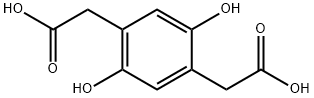
2,5-Dihydroxy-1,4-benzenediacetic acid (also known as 2,5-dihydroxy-p-benzenediacetic acid) is a multifunctional organic compound featuring a central benzene ring substituted with two hydroxyl groups at the 2- and 5-positions and two acetic acid side chains at the 1- and 4-positions. With the molecular formula C₁₀H₁₀O₆ and a molecular weight of 226.18 g/mol, 2,5-Dihydroxy-1,4-benzenediacetic acid presents a symmetric, rigid aromatic core functionalized with four oxygen-containing groups—two phenolic hydroxyls and two carboxylic acids.
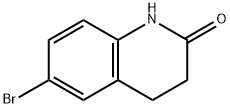
6-Bromo-3,4-dihydro-1H-quinolin-2-one (also known as 6-bromo-1,2,3,4-tetrahydro-2-quinolinone) is a brominated quinolinone derivative featuring a 3,4-dihydro-1H-quinolin-2-one core with a bromine substituent at the 6-position. With the molecular formula C₉H₈BrNO and a molecular weight of 226.07 g/mol, 6-Bromo-3,4-dihydro-1H-quinolin-2-one belongs to the quinolinone class of compounds—a family renowned for their diverse biological activities including antitumor, antimicrobial, antifungal, antiviral, antioxidant, anti-inflammatory, and anticoagulant properties.
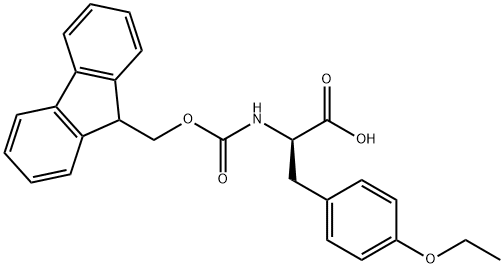
Fmoc-D-Tyr(Et)-OH (N‑[(9H‑fluoren‑9‑ylmethoxy)carbonyl]‑O‑ethyl‑D‑tyrosine; C26H25NO5; MW 431.49 g/mol) is an N‑α‑Fmoc protected, O‑ethylated derivative of the non‑natural D‑tyrosine amino acid. The molecular architecture comprises a fluorenylmethoxycarbonyl carbamate protecting the α‑amino group, a free carboxylic acid terminus for amide bond formation, and a p‑ethoxybenzyl side chain where the phenolic –OH of tyrosine has been alkylated to the ethyl ether (–OEt).
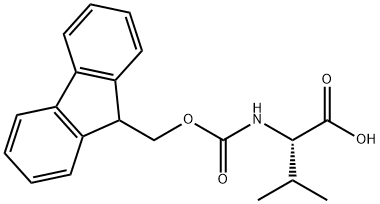
Fmoc-Val-OH (N-[(9H-fluoren-9-ylmethoxy)carbonyl]-L-valine; C20H21NO4; MW 339.39 g/mol) is an N‑α‑Fmoc protected derivative of the branched‑chain amino acid L‑valine. The molecular structure comprises a fluorenylmethoxycarbonyl carbamate attached to the α‑amino group of L‑valine, with a free carboxylic acid terminus available for amide bond formation.
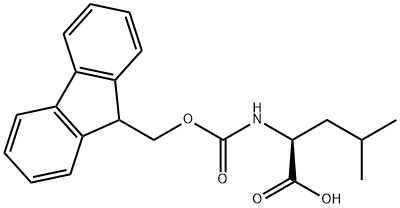
Fmoc-Leu-OH (N-[(9H-fluoren-9-ylmethoxy)carbonyl]-L-leucine; C21H23NO4; MW 353.42 g/mol) is an N‑α‑Fmoc (fluorenylmethyloxycarbonyl) protected derivative of the essential branched‑chain amino acid L‑leucine. The molecular architecture consists of a fluorenylmethoxycarbonyl carbamate linked to the α‑amino group of L‑leucine, while the carboxylic acid terminus remains free for subsequent amide bond formation.
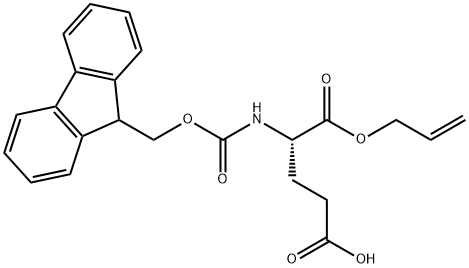
Fmoc-Glu-OAll (N-α-Fmoc-L-glutamic acid α-allyl ester, IUPAC: (4S)-4-(9H-fluoren-9-ylmethoxycarbonylamino)-5-oxo-5-prop-2-enoxypentanoic acid) is an orthogonally protected glutamic acid derivative that carries a base‑labile Fmoc group at the α‑amino terminus and an allyl ester (OAll) protecting the α‑carboxyl group, while the side‑chain γ‑carboxyl remains a free carboxylic acid.
We use cookies to offer you a better browsing experience, analyze site traffic and personalize content. By using this site, you agree to our use of cookies. Privacy Policy