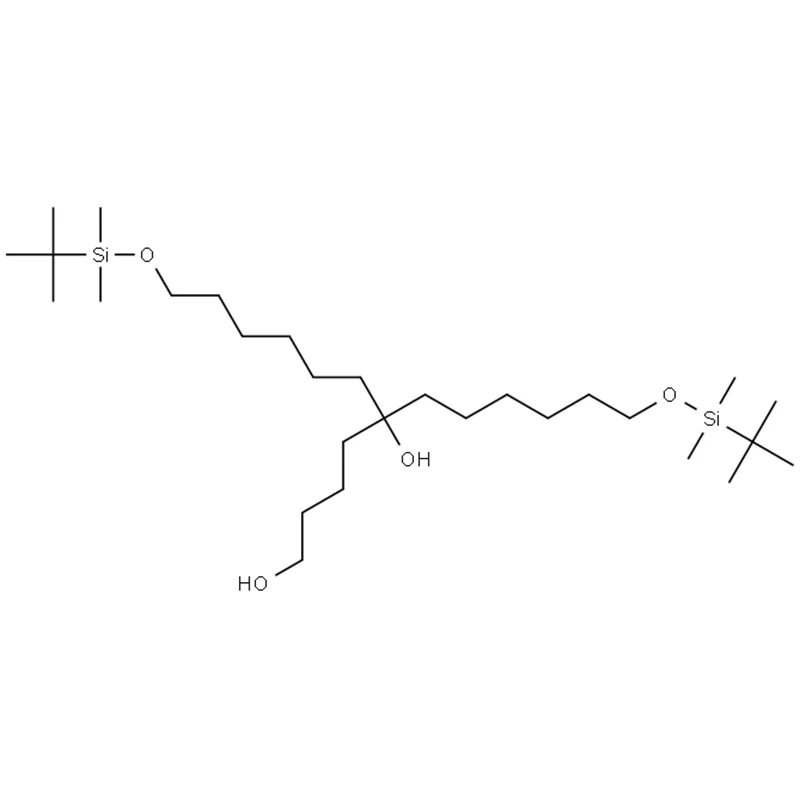
The molecular architecture of 1-(Pentan-5-ol)-2-hydroxyl-3,4-bis(TBDMS-hexane) (C₂₉H₆₄O₄Si₂, MW 532.99) is built around a central 1,5-undecanediol scaffold that has been selectively functionalized to create a highly differentiated, multi-functional synthetic intermediate. At the C1 position, a free primary hydroxyl group terminates a five-carbon alkyl chain, providing a reactive nucleophilic handle for subsequent esterification, etherification, oxidation, or phosphorylation chemistry. The C2 position bears a secondary, tertiary hydroxyl group that serves as a sterically congested hydrogen-bond donor and a latent reactive site. Most characteristically, the C3 and C4 positions of the central undecane backbone each carry a six-carbon hexyl spacer chain terminated by a tert-butyldimethylsilyl (TBDMS) protecting group. These two bulky, lipophilic silyl ether cages (predicted density ~0.909 g/cm³) dominate the physicochemical profile of the molecule, rendering it freely soluble in organic solvents such as dichloromethane, THF, and toluene while effectively shielding the terminal oxygen atoms from unwanted nucleophilic or protic interactions. The TBDMS group remains stable under a broad range of basic, oxidizing, and mildly acidic conditions yet can be selectively removed under mild fluoride-mediated protocols—typically using tetrabutylammonium fluoride (TBAF) in THF—to liberate the corresponding terminal diol for further functional elaboration. This unique combination of a free primary alcohol, a tertiary hydroxyl group, and two orthogonally protected TBDMS ethers arranged on an undecane backbone makes 1-(Pentan-5-ol)-2-hydroxyl-3,4-bis(TBDMS-hexane) a structurally sophisticated platform molecule for the convergent assembly of complex, polyfunctional molecular architectures.
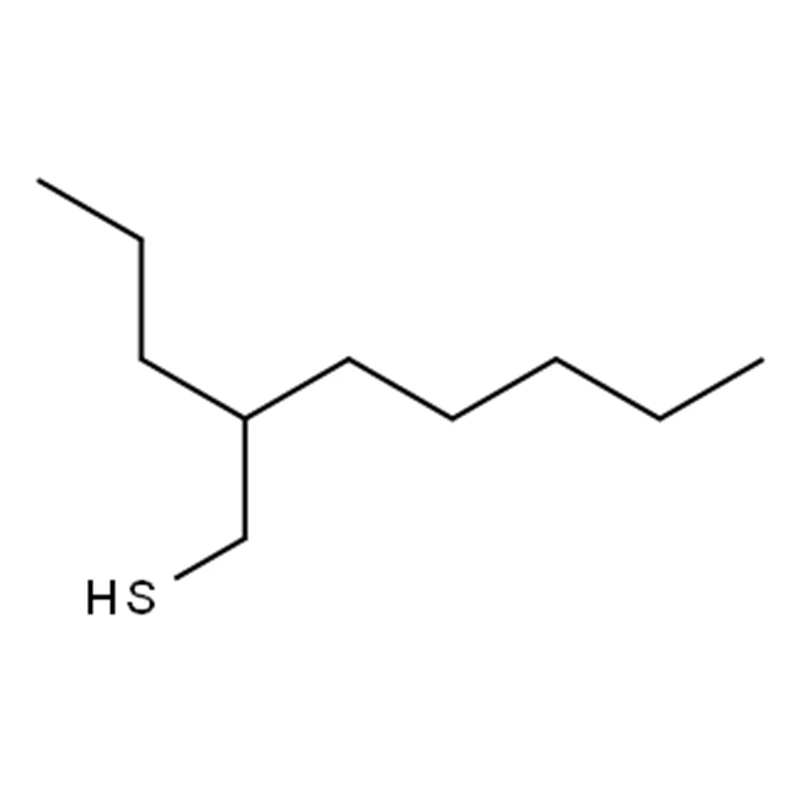
The molecular architecture of MDS-06-01 (C₁₀H₂₂S, MW 174.35) features a 2-propylheptane backbone with a thiol (-SH) group at the C1 position. The thiol group is the defining structural element, consisting of a sulfur atom bonded to a primary alkyl carbon and a hydrogen atom. This terminal -SH group confers distinctive physicochemical properties to MDS-06-01, including a predicted pKa of approximately 10.4, which indicates that the thiol exists predominantly in its neutral, non-ionized form under typical analytical conditions, though it can undergo deprotonation to the more nucleophilic thiolate anion in alkaline environments. The sulfur atom is larger and more polarizable than oxygen, and the S-H bond is weaker than O-H, contributing to the compound‘s characteristic odor and its tendency to form disulfide linkages under oxidative conditions. The 2-propyl branching at the C2 position of the heptyl chain introduces moderate steric bulk near the thiol group, which influences both the compound’s chromatographic retention behavior and its chemical reactivity compared to linear alkanethiols. This combination of a branched C10 alkyl framework with a reactive terminal thiol makes MDS-06-01 a structurally distinctive marker relevant to the comprehensive impurity profiling of pharmaceutical formulations where sulfur-containing intermediates or thiol-based reagents are employed during synthesis.
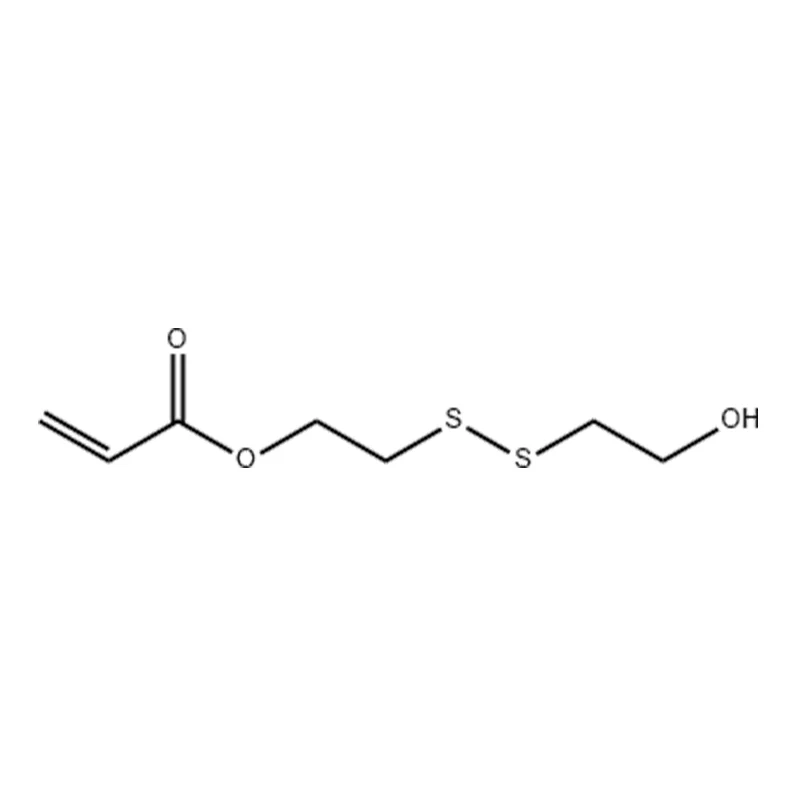
With the molecular formula C₇H₁₂O₃S₂, MDS-06-03 contains a central ester linkage bridging two distinct functional domains: a reactive terminal acrylate moiety and a 2-hydroxyethyl group connected via a disulfide (dithio) bond. The acrylate group introduces an α,β-unsaturated carbonyl system that provides a characteristic UV chromophore suitable for HPLC detection, while the disulfide linkage (-S-S-) constitutes a chemically responsive structural element susceptible to reductive cleavage under specific conditions. The presence of a terminal hydroxyl group contributes modest polarity and hydrogen-bonding capability, partially balancing the hydrophobic character of the aliphatic backbone. This distinctive combination of an acrylate ester with a disulfide-containing alcohol chain defines a molecular architecture of particular relevance to the impurity profiling of solifenacin succinate formulations, where such thioether-related structures may arise during synthesis or degradation.
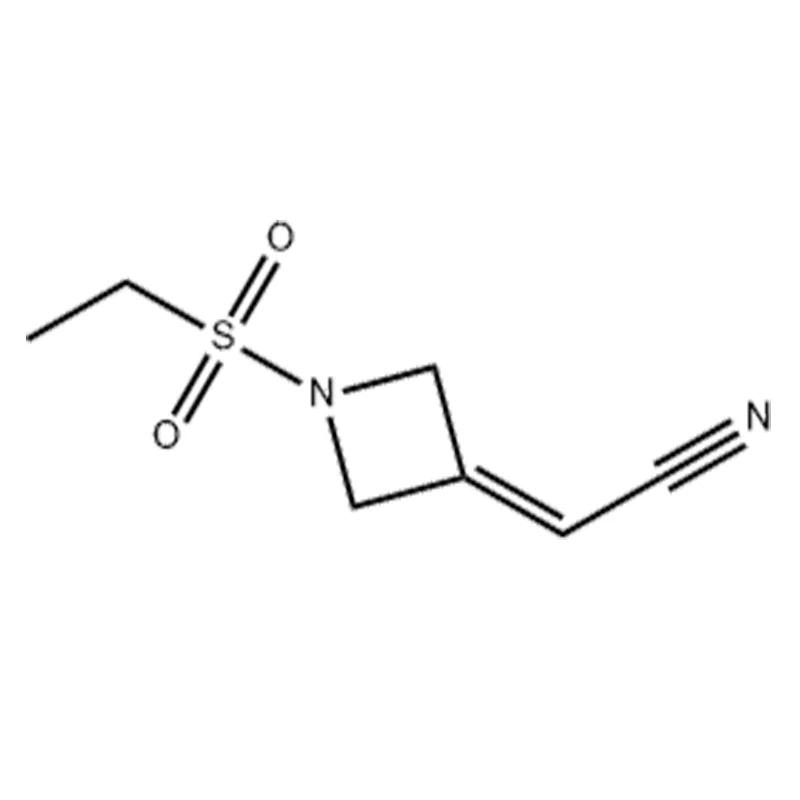
The product is 2-(1-(Ethylsulfonyl)azetidin-3-ylidene)acetonitrile, an unsaturated four-membered azetidine derivative featuring an exocyclic carbon–carbon double bond at the 3-position and an ethylsulfonyl substituent at the 1-position of the azetidine ring. Structurally, the molecule integrates three distinct functional elements: a strained azetidine heterocycle, a conjugated nitrile group (-C≡N) that participates in electron delocalization across the exocyclic double bond, and a sulfonamide-type ethylsulfonyl moiety (-SO₂Et) that enhances aqueous solubility and metabolic stability. The conjugated nitrile–alkene system — specifically the 3-ylideneacetonitrile motif — introduces an electrophilic carbon that is remarkably susceptible to conjugate addition (Michael addition) with nucleophiles. The ethylsulfonyl group at the azetidine nitrogen serves a dual purpose: it protects the ring nitrogen while simultaneously modulating the overall physicochemical profile of 2-(1-(Ethylsulfonyl)azetidin-3-ylidene)acetonitrile through its strong electron-withdrawing effect. This precise combination of a strained ring, a conjugated electrophile, and a sulfonyl handle underlies the compound‘s central role as a key pharmaceutical intermediate in the synthesis of selective JAK inhibitors.
The compound is 2-(1-(Ethylsulfonyl)-3-(4-(7-((2-(trimethylsilyl)ethoxy)methyl)-7H-pyrrolo[2,3-d]pyrimidin-4-yl)-1H-pyrazol-1-yl)azetidin-3-yl)acetonitrile, a fully assembled intermediate that incorporates four distinct pharmacophoric fragments into a single molecular scaffold in the baricitinib synthetic cascade. Structurally, the molecule comprises a 7H-pyrrolo[2,3-d]pyrimidine core (the heterocyclic skeleton common to multiple JAK inhibitors), a pyrazole spacer linking the core to a quaternary azetidine side chain, a ethylsulfonyl group at the azetidine nitrogen, and a terminal nitrile group appended to the azetidine ring. The 4-position of the pyrrolopyrimidine core bears the pyrazole substituent — the result of an earlier SNAr reaction with a pyrazole nucleophile — while the N-7 position remains protected by the acid-labile SEM (2-(trimethylsilyl)ethoxymethyl) group, allowing orthogonal deprotection at a late stage. The azetidine ring features a quaternary carbon bearing the acetonitrile side chain and the pyrazole linkage, a sterically congested architecture that is notably challenging to construct. The ethylsulfonyl group at the azetidine nitrogen persists through to the final API, where it contributes to baricitinib‘s JAK selectivity profile. The trimethylsilyl subunit embedded within the SEM group serves as a distinctive lipophilic handle that enhances solubility in organic media and facilitates chromatographic purification.
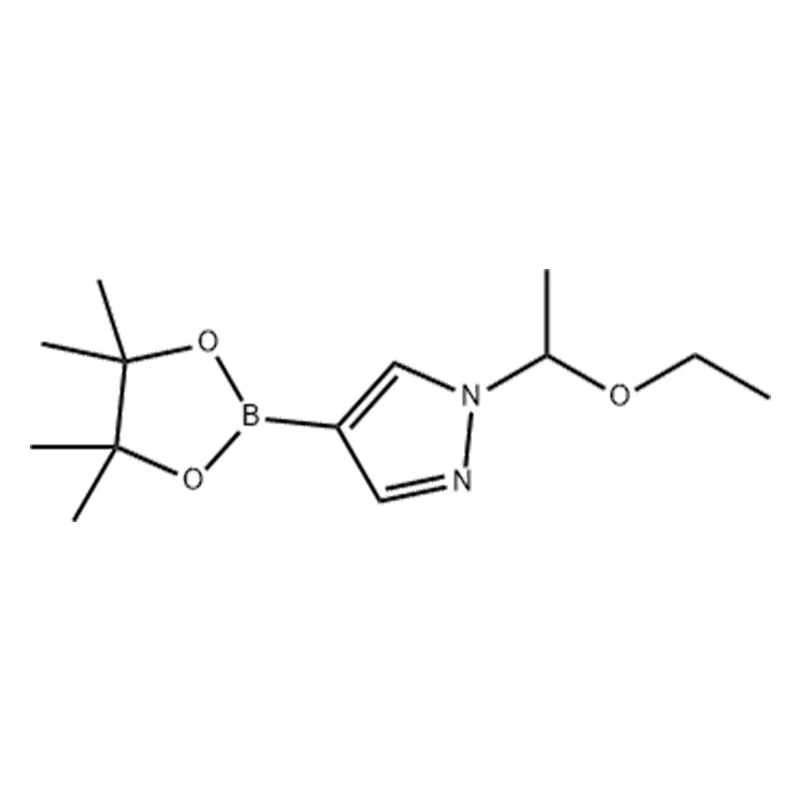
The product is 1-(1-Ethoxyethyl)-4-(4,4,5,5-tetramethyl-1,3,2-dioxaborolan-2-yl)-1H-pyrazole, an N-protected pyrazole-4-boronic acid pinacol ester that integrates three architecturally distinct domains: a pyrazole heterocycle at the core, a boronic acid pinacol ester (Bpin) at the 4-position for cross‑coupling reactions, and a labile 1-(1-ethoxyethyl) (EE) group at the N-1 position of the pyrazole ring. The pinacol boronate ester — featuring two dimethyl-substituted oxygen atoms forming a five-membered dioxaborolane ring — stabilizes the organoboron moiety against premature protodeboronation while remaining fully compatible with palladium‑catalyzed Suzuki–Miyaura coupling conditions. The acid‑labile EE group serves as a transient protecting group, which can be selectively removed under mild acidic conditions without disturbing the Bpin functionality. This orthogonal reactivity — base- and coupling‑compatible protection combined with acid‑triggered deprotection — makes 1-(1-Ethoxyethyl)-4-(4,4,5,5-tetramethyl-1,3,2-dioxaborolan-2-yl)-1H-pyrazole a uniquely versatile building block in contemporary medicinal chemistry.
We use cookies to offer you a better browsing experience, analyze site traffic and personalize content. By using this site, you agree to our use of cookies. Privacy Policy


![2-(1-(ethylsulfonyl)-3-(4-(7-((2-(trimethylsilyl)ethoxy)methyl)-7H-pyrrolo[2,3-d]pyrimidin-4-yl)-1H-pyrazol-1-yl)azetidin-3-yl)acetonitrile](https://www.cosperpharma.com/upload/8820/2-1-ethylsulfonyl-3-4-7-2-trimethylsilyl-ethoxy-methyl-7h-pyrrolo-2-3-d-pyrimidin-4-yl-1h-pyrazol-1-yl-azetidin-3-yl-acetonitrile-713536.webp "2-(1-(ethylsulfonyl)-3-(4-(7-((2-(trimethylsilyl)ethoxy)methyl)-7H-pyrrolo[2,3-d]pyrimidin-4-yl)-1H-pyrazol-1-yl)azetidin-3-yl)acetonitrile")