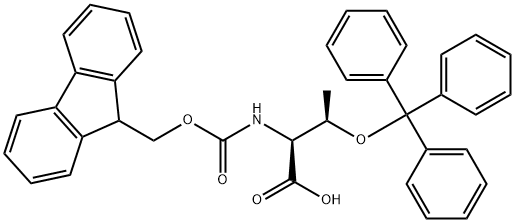
Fmoc-Thr(Trt)-OH (Fmoc-O-trityl-L-threonine) is a strategically protected derivative of the naturally occurring amino acid L-threonine, specifically designed for Fmoc-based solid‑phase peptide synthesis (SPPS). Structurally, the molecule consists of a threonine backbone where the α‑amino group is protected by the base‑labile 9‑fluorenylmethyloxycarbonyl (Fmoc) group, while the side‑chain hydroxyl group is masked by the bulky, acid‑labile trityl (Trt, triphenylmethyl) protecting group. The C‑terminal carboxylic acid remains free for coupling to the resin or to the preceding amino acid residue in the growing peptide chain. This dual protection strategy — orthogonal base‑labile Fmoc and acid‑labile Trt — provides precise control over deprotection sequences in SPPS.
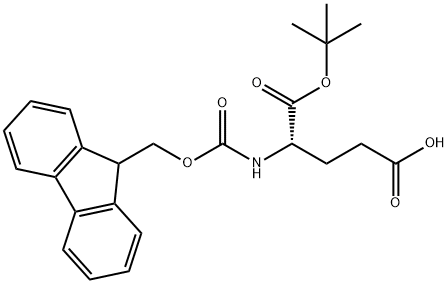
Fmoc-Glu-OtBu (N‑Fmoc‑L‑glutamic acid 1‑tert‑butyl ester) is a selectively protected derivative of the naturally occurring amino acid L‑glutamic acid, specifically designed for Fmoc‑based solid‑phase peptide synthesis (SPPS) and the preparation of γ‑glutamyl peptides. Structurally, the molecule consists of a glutamic acid backbone where the α‑amino group is protected by the base‑labile 9‑fluorenylmethyloxycarbonyl (Fmoc) group, while the side‑chain γ‑carboxyl group is protected as a tert‑butyl ester (OtBu). The α‑carboxyl group remains free for coupling to the resin or to the preceding amino acid residue in the growing peptide chain. This orthogonal protection strategy — base‑labile Fmoc for the α‑amino group and acid‑labile tBu ester for the side‑chain — enables precise control over deprotection sequences in SPPS. The tBu ester is cleaved under strongly acidic conditions (typically 50% TFA in DCM), while the Fmoc group is removed with piperidine in DMF, allowing the side‑chain carboxyl to be selectively unmasked after the completion of chain assembly. This selective unmasking capability makes Fmoc-Glu-OtBu an indispensable building block for the synthesis of branched esters, amides, lactams, and lactones containing the glutamyl unit
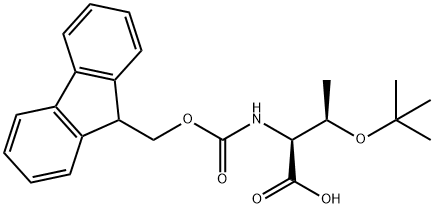
Fmoc-Thr(tBu)-OH (N-α-Fmoc-O-tert-butyl-L-threonine, CAS 71989-35-0) is a protected derivative of the naturally occurring amino acid L-threonine, featuring a 9-fluorenylmethoxycarbonyl (Fmoc) group protecting the N-terminal α-amino function and a tert-butyl ether protecting the β-hydroxyl side chain. The threonine backbone contains two chiral centers at the α-carbon and the β-carbon, with the natural L-threonine configuration (2S,3R). The tert-butyl group (tBu) on the hydroxyl side chain is stable under the basic conditions required for Fmoc removal but is readily cleaved by trifluoroacetic acid (TFA) during final peptide deprotection, making Fmoc-Thr(tBu)-OH a standard building block in Fmoc-based solid-phase peptide synthesis (SPPS). Unlike most amino acids where side-chain protection is optional, threonine requires careful handling of its reactive secondary hydroxyl group — free threonine hydroxyls can participate in undesired side reactions during chain assembly, including acylation leading to branched peptides and dehydration to form dehydrobutyrine. The tBu group effectively addresses these risks by rendering the hydroxyl inert under standard SPPS conditions while remaining orthogonal to the Fmoc removal strategy. This orthogonal protection logic enables the reliable incorporation of threonine residues into peptide chains of any length and complexity, from simple therapeutic peptides to complex depsipeptides containing ester linkages.
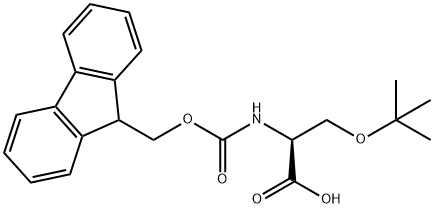
Fmoc-Ser(tBu)-OH (N-α-fluorenylmethyloxycarbonyl-O-tert-butyl-L-serine) is a standard Fmoc-protected amino acid building block featuring a tert-butyl ether protecting group on the serine hydroxyl side chain. The Fmoc group, which protects the α-amino function, is selectively removed under mild basic conditions (20% piperidine in DMF), while the acid-labile tert-butyl (tBu) group remains intact throughout the chain assembly process, only being cleaved during the final TFA-mediated global deprotection step. This orthogonal protecting group strategy—base-labile Fmoc for the α-amine and acid-labile tBu for the side chain—is the cornerstone of standard Fmoc/tBu solid-phase peptide synthesis (Fmoc SPPS) and is employed in virtually all automated peptide synthesizers worldwide.
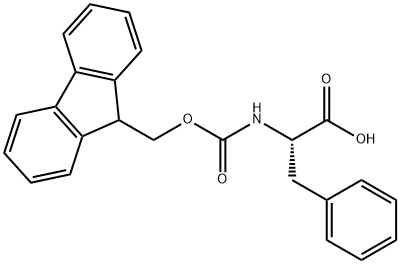
Fmoc-Phe-OH (N-α-Fmoc-L-phenylalanine) is a cornerstone building block in Fmoc-based solid-phase peptide synthesis (SPPS), combining the base‑labile Fmoc protecting group with the native L‑phenylalanine amino acid. The Fmoc (9‑fluorenylmethyloxycarbonyl) group is particularly valued in peptide synthesis because it can be removed under mild alkaline conditions (typically 20% piperidine in DMF) without affecting the integrity of the peptide backbone or the acid‑sensitive side‑chain protecting groups. The aromatic benzyl side chain of Fmoc-Phe-OH imparts predictable hydrophobicity and specific structural properties to synthesized peptides, making it essential for introducing phenylalanine residues in therapeutic peptides, structure‑activity relationship (SAR) studies, and peptidomimetic development. The rigid planar structure of the Fmoc group also enables self‑assembling properties, with Fmoc‑Phe conjugates being widely studied for the formation of functional hydrogels and biomaterials in tissue engineering and regenerative medicine.
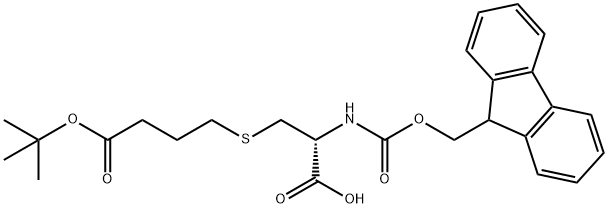
Fmoc-Cys(PrCOOtBu)-OH is an Fmoc-protected cysteine derivative featuring a strategically functionalized thioether side chain terminating in a tert-butyl-protected carboxyl group — specifically, a 4-(tert-butoxy)-4-oxobutyl group appended via a sulfur atom to the β‑position of the cysteine backbone. The Fmoc (9‑fluorenylmethoxycarbonyl) group temporarily masks the α-amino group for controlled stepwise elongation in solid‑phase peptide synthesis (SPPS), and is cleanly removed under mild basic conditions (typically 20% piperidine in DMF) without disturbing acid-labile side‑chain protections or the peptide‑resin linkage. Meanwhile, the tert-butyl ester at the terminus of the C3 spacer provides orthogonal carboxyl protection, allowing the side‑chain carboxylic acid to be selectively unmasked under acidic cleavage conditions (e.g., TFA) while the N‑terminal Fmoc protection remains intact. This orthogonal protection strategy is particularly valuable for the assembly of complex branched peptides, peptide–drug conjugates, and cyclic peptides where the cysteine side‑chain requires selective chemical manipulation.
We use cookies to offer you a better browsing experience, analyze site traffic and personalize content. By using this site, you agree to our use of cookies. Privacy Policy