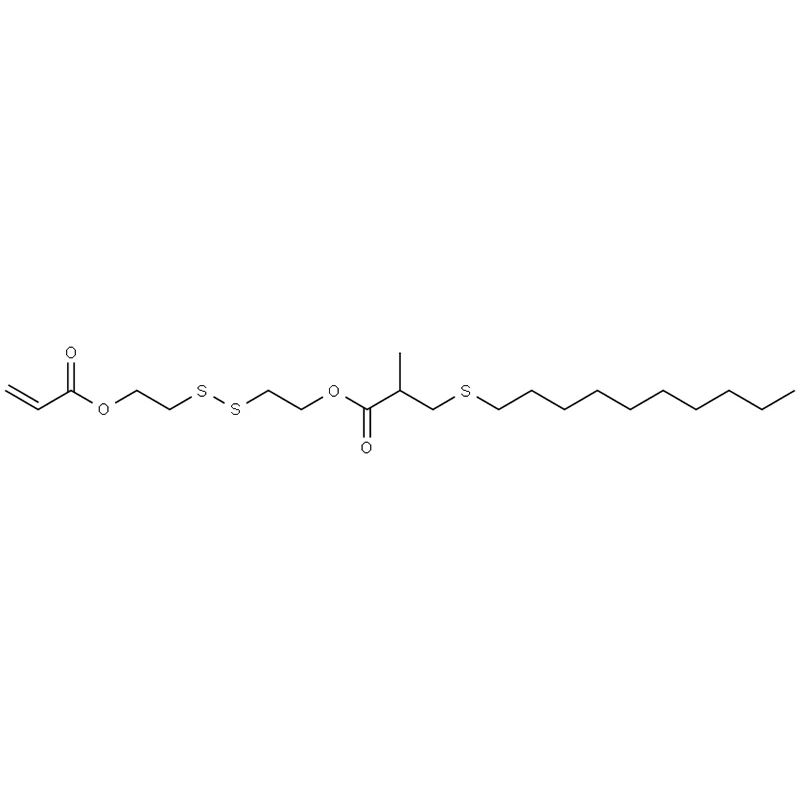
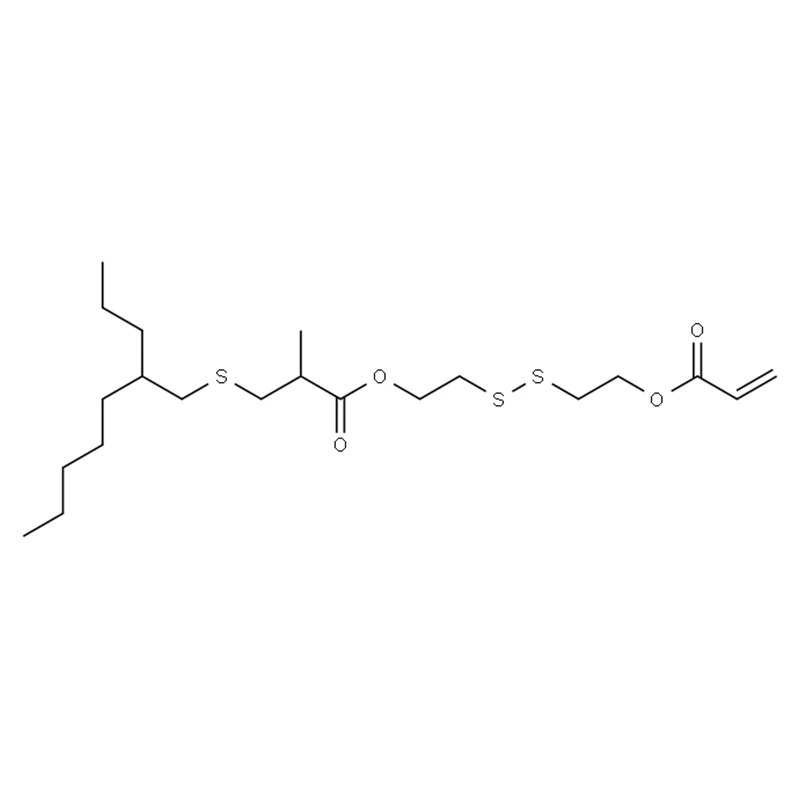
With the molecular formula C₂₁H₃₈O₄S₃, MDS-06-06 is a structural isomer of the previously characterized impurity standard sharing the same empirical composition and molecular weight. The molecule contains a central ester moiety linked to multiple thioether-containing aliphatic chains, a structural arrangement that introduces both hydrophobicity and distinct UV-absorbing properties suitable for HPLC detection. The presence of three sulfur atoms embedded within saturated hydrocarbon backbones, likely in an alternative connectivity pattern compared to its isomeric counterpart, creates a distinct three-dimensional architecture that determines its unique chromatographic retention behavior. This specific arrangement of the poly-thioether scaffold, with its characteristic ester chromophore, makes MDS-06-06 a structurally distinct marker relevant to the comprehensive impurity profiling of solifenacin succinate formulations.
MDS-06-03 is a specialized pharmaceutical impurity reference standard used primarily in the development and quality control of solifenacin succinate formulations. It is a related compound or degradation product identified during stability-indicating method development. This compound functions as a key analytical marker for impurity profiling in overactive bladder medications.
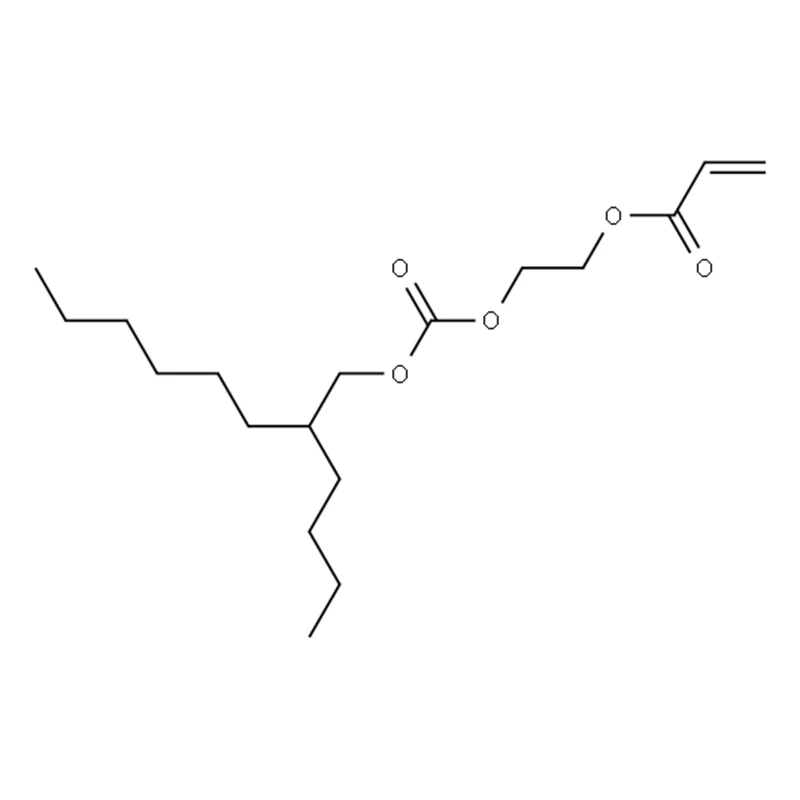
The molecular architecture of MDS-07-01 (C₁₈H₃₂O₅, MW 328.44) is built around a central carbonate diester motif, where a 2-butyloctyl alkyl chain and a 2-hydroxyethyl acrylate fragment are bridged through two oxycarbonyl linkages.Telectron-deficient acrylate ester provides a chromophore for UV detection in HPLC analysis and a reactive Michael acceptor site. In contrast, the branched 2-butyloctyl group imparts significant lipophilicity (predicted density ~0.982 g/cm³) and influences the molecule‘s retention behavior on reversed-phase columns.This unique structure, connecting a reactive terminal alkene to a bulky aliphatic chain via a labile dicarbonate bridge, makes MDS-07-01 a structurally distinct marker relevant to the comprehensive impurity profiling of pharmaceutical formulations.
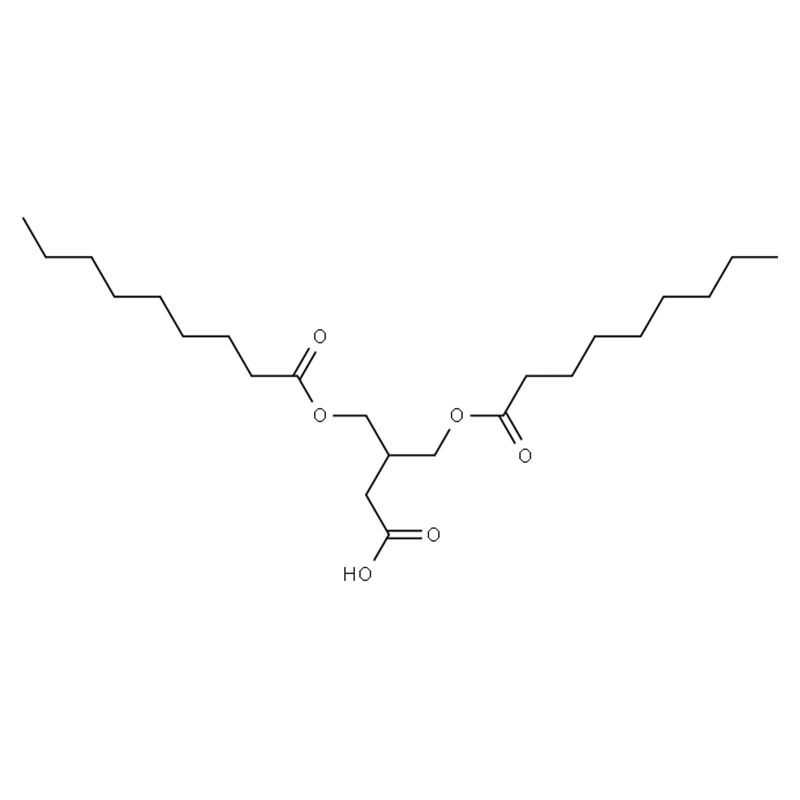
The molecular architecture of MDS-08-01 (C₂₃H₄₂O₆, MW 414.58) is characterized by a central butanoic acid core bearing two nonanoyloxy (pelargonate) chains connected via ester linkages at the 3- and 4-positions. The molecule features a free carboxylic acid group (pKa ~4.19), which contributes both polarity and pH-dependent ionization behavior, while the two C9 aliphatic ester chains impart significant hydrophobicity (predicted density ~1.010 g/cm³) and influence the molecule's retention characteristics on reversed-phase chromatographic systems. This unique arrangement—combining a polar acid head group with dual lipophilic nonanoyloxy tails—produces a surfactant-like amphiphilic architecture that makes MDS-08-01 a structurally distinctive marker relevant to the comprehensive impurity profiling of pharmaceutical formulations involving lipid-based intermediates or excipients.
The molecular architecture of N-[2-(Dodecyldisulfanyl)ethyl]acrylamide (C₁₇H₃₃NOS₂, MW 331.58) is characterized by three distinct functional domains connected in a linear arrangement: a reactive terminal acrylamide group, a two-carbon ethyl spacer, and a lipophilic dodecyl chain attached via a redox-sensitive disulfide (-S-S-) bridge. The acrylamide moiety at one terminus provides an electron-deficient α,β-unsaturated carbonyl system that serves as both a UV chromophore (enabling HPLC detection at approximately 210–240 nm) and a reactive Michael acceptor capable of participating in nucleophilic conjugate additions with thiols, amines, and other nucleophiles. The disulfide linkage (-S-S-) constitutes a chemically responsive structural element that remains stable under extracellular oxidizing conditions but undergoes rapid reductive cleavage in the presence of intracellular concentrations of glutathione (GSH, 1–10 mM), thereby releasing the free dodecanethiol fragment. The dodecyl (C12) alkyl chain contributes substantial lipophilicity (predicted LogP ~5.5–6.0) that dominates the molecule's reversed-phase chromatographic retention and influences its compatibility with lipid-based formulation platforms. This combination of a reactive acrylamide handle, a bioreducible disulfide linker, and a hydrophobic C12 tail makes N-[2-(Dodecyldisulfanyl)ethyl]acrylamide a structurally sophisticated building block at the interface of stimuli-responsive materials science and pharmaceutical delivery system design.
The molecular architecture of Heptanoic acid, 7-[(4-hydroxybutyl)amino]-, 1-hexylnonyl ester (C₂₆H₅₃NO₃, MW 427.7) is characterized by a highly branched, lipid-like structure containing a secondary amine center flanked by two flexible alkyl ester chains. At the core of the molecule, a central heptanoic acid scaffold is esterified at the carboxylic acid terminus with a sterically bulky 1-hexylnonyl (C15) secondary alcohol, forming a branched ester that contributes substantial lipophilicity (predicted density ~0.914 g/cm³) and influences the molecule‘s packing behavior in lipid-based formulations. At the ω-position of the heptanoyl chain, the carboxylic acid is derivatized as an amide with 4-hydroxybutylamine, introducing a secondary amine nitrogen and a terminal primary hydroxyl group. This 4-hydroxybutyl moiety provides both a nucleophilic alcohol handle and a hydrogen-bonding site, partially balancing the hydrophobic character of the two long alkyl domains. The presence of three heteroatom-containing functional groups—an ester carbonyl, a secondary amine, and a terminal alcohol—provides multiple sites for derivatization or intermolecular interactions, while the C15 and C7 alkyl chains provide the hydrophobic character necessary for lipid nanoparticle integration. This combination of a branched ester tail, an internal secondary amine, and a terminal hydroxyl group makes Heptanoic acid, 7-[(4-hydroxybutyl)amino]-, 1-hexylnonyl ester a structurally distinctive lipid-like intermediate relevant to the synthesis of ionizable lipids for nucleic acid delivery applications.
We use cookies to offer you a better browsing experience, analyze site traffic and personalize content. By using this site, you agree to our use of cookies. Privacy Policy


![N-[2-(Dodecyldisulfanyl)ethyl]acrylamide](https://www.cosperpharma.com/upload/8820/n-2-dodecyldisulfanyl-ethyl-acrylamide-913889.webp "N-[2-(Dodecyldisulfanyl)ethyl]acrylamide")
![Heptanoic acid, 7-[(4-hydroxybutyl)amino]-, 1-hexylnonyl ester](https://www.cosperpharma.com/upload/8820/heptanoic-acid-7-4-hydroxybutyl-amino-1-hexylnonyl-ester-832597.webp "Heptanoic acid, 7-[(4-hydroxybutyl)amino]-, 1-hexylnonyl ester")