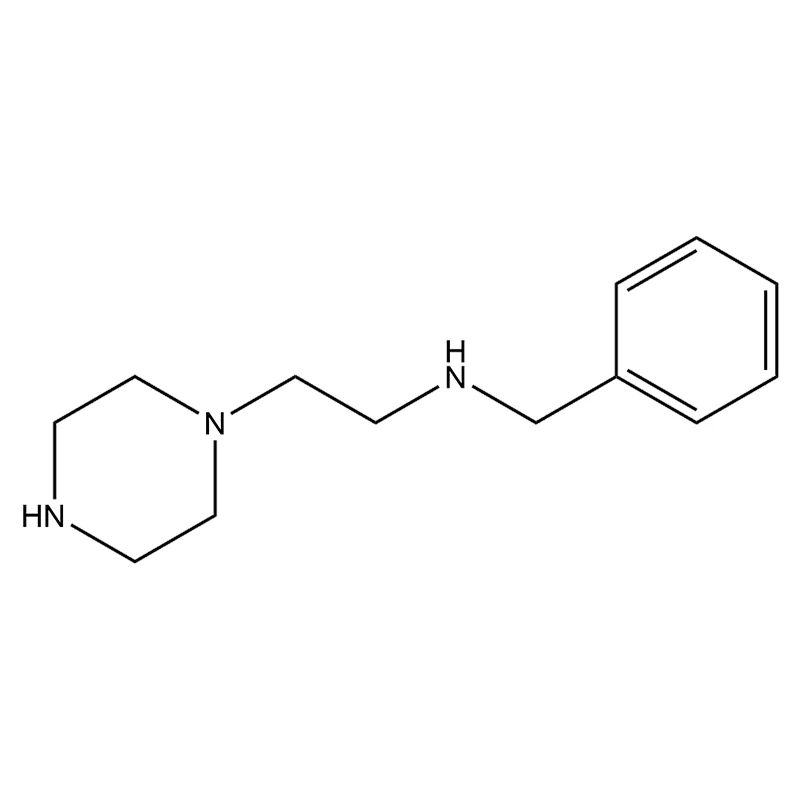
1-Piperazineethanamine, N-(phenylmethyl)- is a chemical compound featuring a piperazine ring—a six-membered saturated heterocycle containing two nitrogen atoms—linked via an ethyl bridge to a secondary amine, which is further substituted with a phenylmethyl (benzyl) group. This structural arrangement creates a molecule with three nitrogen atoms: a secondary amine in the piperazine ring, a tertiary amine at the ring’s substitution point, and an exocyclic secondary amine bearing the benzyl group. The presence of the benzyl moiety introduces aromatic character and significant lipophilicity (LogP ~1.34) to the otherwise polar ethylpiperazine scaffold. This unique combination of a flexible ethylenediamine-like spacer, a basic piperazine core, and a hydrophobic aromatic ring allows 1-Piperazineethanamine, N-(phenylmethyl)- to act as a versatile intermediate or privileged scaffold, capable of engaging in multiple intermolecular interactions such as hydrogen bonding, π-π stacking, and ionic interactions with biological targets.
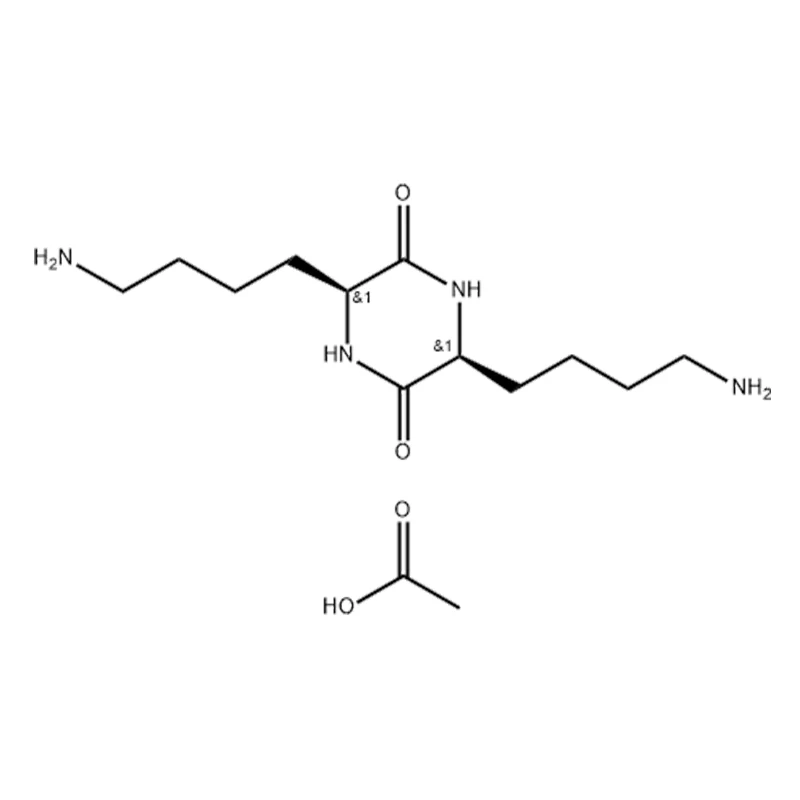
The molecular architecture of MDS-09-01 is built upon a central 2,5-diketopiperazine core—a rigid six-membered cyclic dipeptide scaffold—with two flexible 4-aminobutyl side chains extending from the C3 and C6 positions in the (3S,6S) configuration. This precisely defined stereochemistry places both aminoalkyl arms on the same face of the heterocyclic ring, creating a molecular geometry that pre-organizes the terminal primary amine groups for further derivatization. The diketopiperazine ring, formed by the head-to-tail cyclization of two L-lysine units, provides a conformationally constrained, enzymatically stable scaffold, while each pendant aminobutyl chain terminates in a free -NH₂ group, conferring both nucleophilic reactivity and pH-dependent solubility. This combination of a chiral cyclic dipeptide core with two reactive amino arms makes MDS-09-01 a structurally distinctive marker relevant to the comprehensive impurity profiling of pharmaceutical formulations where lysine-derived intermediates or diketopiperazine scaffolds are employed during synthesis.
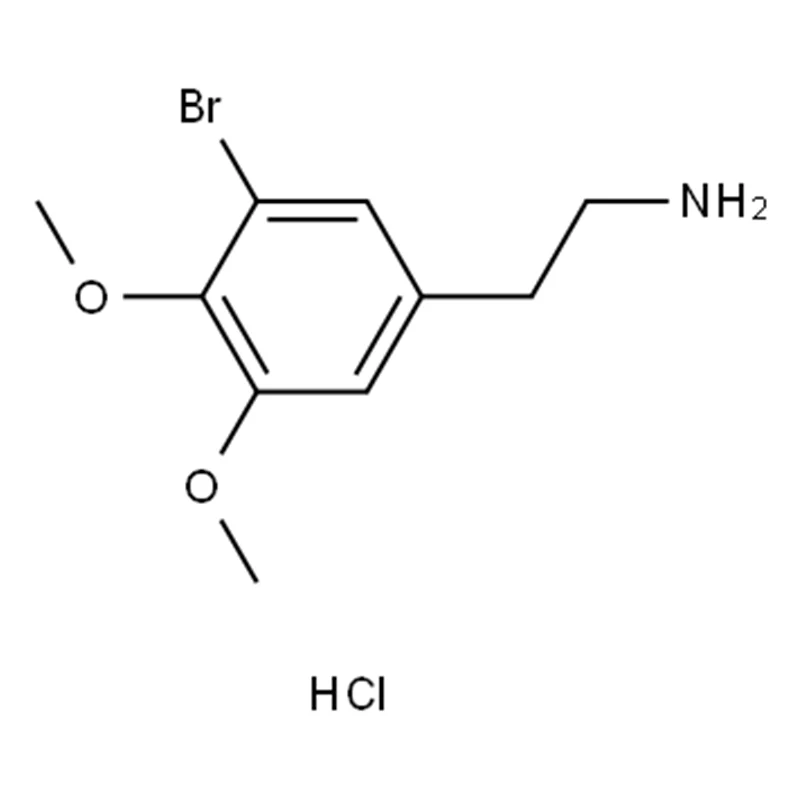
The compound is 2-(3-Bromo-4,5-dimethoxyphenyl)ethan-1-amine hydrochloride, a substituted phenethylamine derivative characterized by the presence of a bromine atom at the meta position relative to the ethylamine side chain, two methoxy groups at the 4- and 5-positions, and a primary amine group forming the hydrochloride salt. Structurally, the molecule comprises a 3,4,5-trisubstituted benzene ring bearing a two‑carbon ethylamine tether, creating an architecture that closely resembles the endogenous neurotransmitters dopamine and noradrenaline, yet with distinct substitutional differences. The bromine atom at the 3‑position introduces a heavy halogen with significant polarizability and electron‑withdrawing character, modulating the electronic environment of the aromatic ring and providing a versatile handle for further cross‑coupling functionalization. The 4,5‑dimethoxy substitution pattern, in contrast to the 3,4‑dihydroxy pattern found in dopamine, substantially enhances lipophilicity and metabolic stability while preserving the distance between the aromatic ring and the basic amine nitrogen. The hydrochloride salt form in 2-(3-Bromo-4,5-dimethoxyphenyl)ethan-1-amine hydrochloride protonates the primary amine to produce a water‑soluble, non‑hygroscopic crystalline solid, conferring advantages in handling, storage, and formulation over the free base. This precise combination — a phenethylamine backbone, a strategically placed bromine atom for synthetic diversification, a 4,5‑dimethoxylation pattern, and stable hydrochloride salt formation — underlies the compound‘s utility as a critical building block in modern pharmaceutical synthesis and medicinal chemistry.
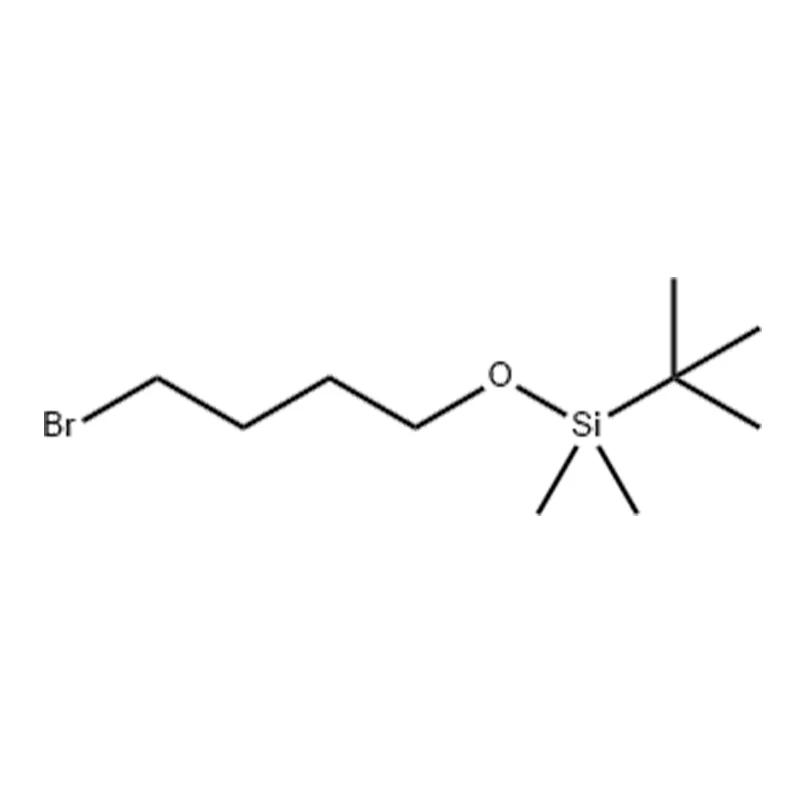
The molecular architecture of 1-Bromo-4-(t-butyldimethylsilyloxy)butane (C₁₀H₂₃BrOSi, MW 267.28) features a linear four-carbon alkyl chain bearing two strategically differentiated terminal functional groups: a primary alkyl bromide and a tert-butyldimethylsilyl (TBS) protected alcohol. This bifunctional arrangement places an electrophilic carbon (C-Br) at one terminus, primed for nucleophilic displacement or metal-halogen exchange, while the bulky, lipophilic TBS group at the opposing end shields the masked hydroxyl from premature reaction. The silicon-containing protecting group, with its characteristic tert-butyl and two methyl substituents, imparts significant hydrophobic character to the molecule—reflected in a predicted density of approximately 1.073 g/cm³—and contributes to its existence as a colorless to pale yellow liquid with a boiling point of approximately 250°C. The molecule possesses one hydrogen bond acceptor (the silyl ether oxygen) and seven freely rotatable bonds, conferring substantial conformational flexibility to the four-carbon tether. This combination of a reactive alkyl bromide with an orthogonal TBS-protected alcohol makes 1-Bromo-4-(t-butyldimethylsilyloxy)butane a versatile and widely employed chemical building block in multi-step organic synthesis.
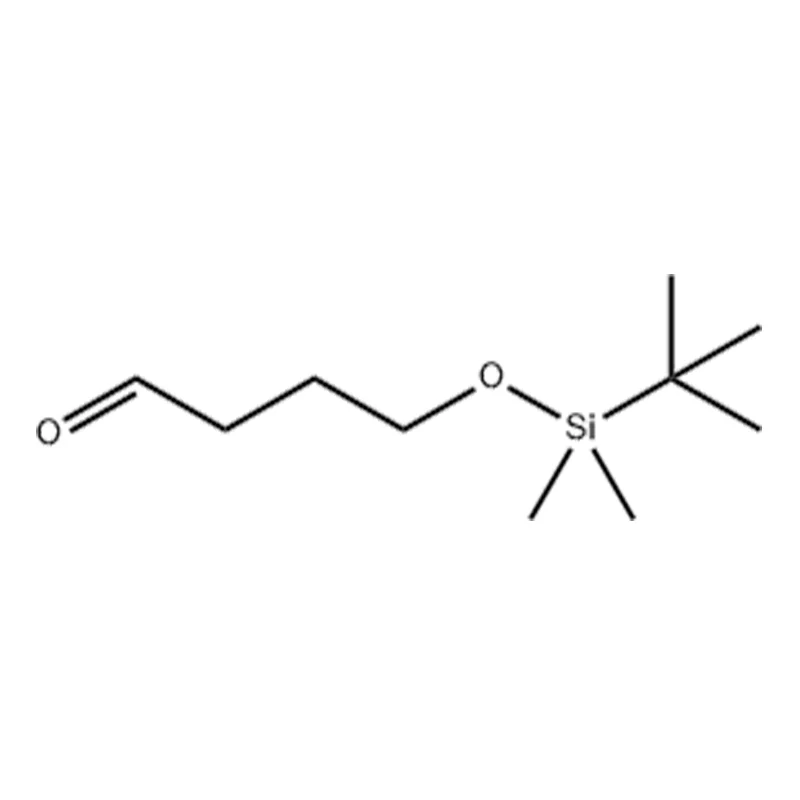
The molecular architecture of 4-((tert-Butyldimethylsilyl)oxy)butanal (C₁₀H₂₂O₂Si, MW 202.37) is constructed around a four-carbon linear butanal backbone, where the terminal hydroxyl group has been chemoselectively protected with a tert-butyldimethylsilyl (TBS) ether. This introduces a bulky, lipophilic silicon-containing cage that shields the oxygen atom from unwanted nucleophilic or protic interactions, while the distal aldehyde remains exposed as the primary reactive handle. The TBS group imparts significant hydrophobic character—reflected in a predicted LogP of approximately 3.0—and dominates the molecule‘s physical behavior, contributing to its existence as a colorless to pale yellow liquid with a predicted density of 0.868 g/cm³ and a boiling point of approximately 225°C. The molecule features zero hydrogen bond donors, two hydrogen bond acceptors (the silyl ether oxygen and the aldehyde carbonyl), and six freely rotatable bonds, conferring substantial conformational flexibility to the protected chain. This bifunctional architecture—combining a robust, sterically demanding silyl protecting group with a reactive terminal aldehyde—makes 4-((tert-Butyldimethylsilyl)oxy)butanal a versatile chemical building block in multi-step organic synthesis.
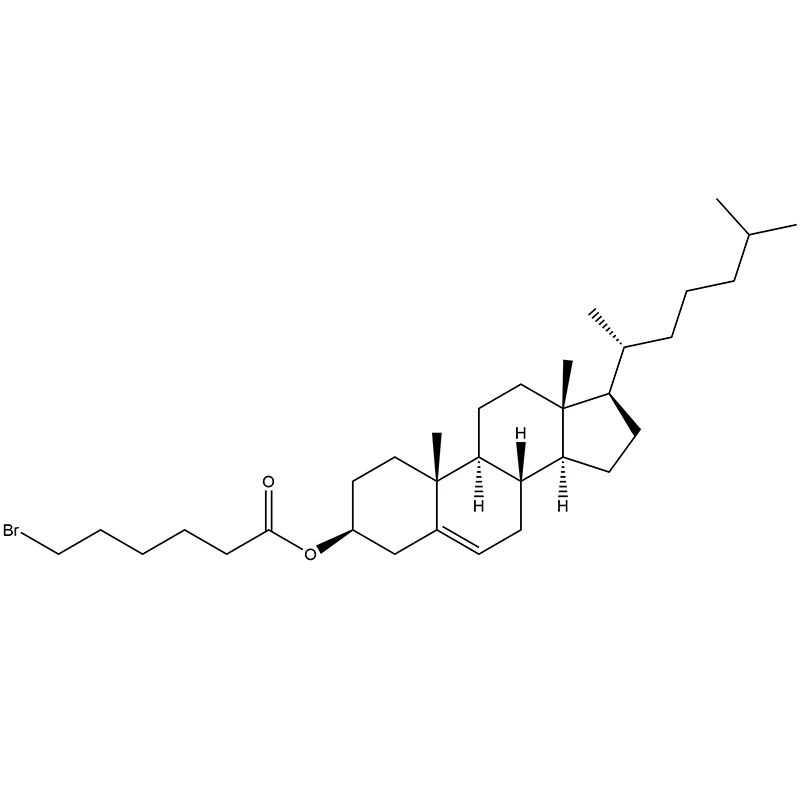
The molecular architecture of Cholest-5-en-3-ol (3β)-, 3-(6-bromohexanoate) (C₃₃H₅₅BrO₂, MW 563.69) is constructed by the esterification of cholesterol at the C3β-hydroxyl position with 6-bromohexanoic acid, yielding a cholesteryl ester bearing a six-carbon ω-bromoalkanoyl chain linked via an ester carbonyl to the steroid A-ring. The cholesterol scaffold—a tetracyclic framework consisting of three fused cyclohexane rings (A, B, C) and one cyclopentane ring (D)—imparts exceptional structural rigidity, with the C5–C6 double bond in ring B contributing to the planarity and conformational pre-organization of the steroid nucleus. The 3β-ester linkage orients the 6-bromohexanoyl chain in an equatorial disposition relative to ring A, extending the flexible six-carbon tether terminated by a primary alkyl bromide into space. This ω-bromo substituent constitutes a reactive electrophilic center primed for nucleophilic displacement (SN2), Williamson ether synthesis, and amine alkylation, while the cholesteryl moiety contributes substantial lipophilicity (predicted LogP ~10–11), lyotropic liquid crystallinity, and a pronounced tendency toward self-assembly in both solution and bulk phases. The molecule exhibits a melting point of 119–120 °C—consistent with the crystalline character imparted by the rigid steroid core—and a predicted boiling point of approximately 579 °C at atmospheric pressure. This combination of a rigid, mesogenic cholesterol scaffold with a reactive terminal alkyl bromide tethered via a six-carbon ester linker makes Cholest-5-en-3-ol (3β)-, 3-(6-bromohexanoate) a versatile platform molecule for the construction of liquid crystalline materials, supramolecular architectures, and cholesterol-functionalized conjugates.
We use cookies to offer you a better browsing experience, analyze site traffic and personalize content. By using this site, you agree to our use of cookies. Privacy Policy