1-(4-BROMO-PHENYL)-1H-PYRROLE is a heteroaryl halide that joins an electron-rich, π-excessive pyrrole ring with a 4-bromophenyl group via a direct N-aryl linkage, creating a polarized, conjugated system where the bromine atom provides a potent handle for cross-coupling while the pyrrole core imparts solubility and the capacity for non-covalent interactions.
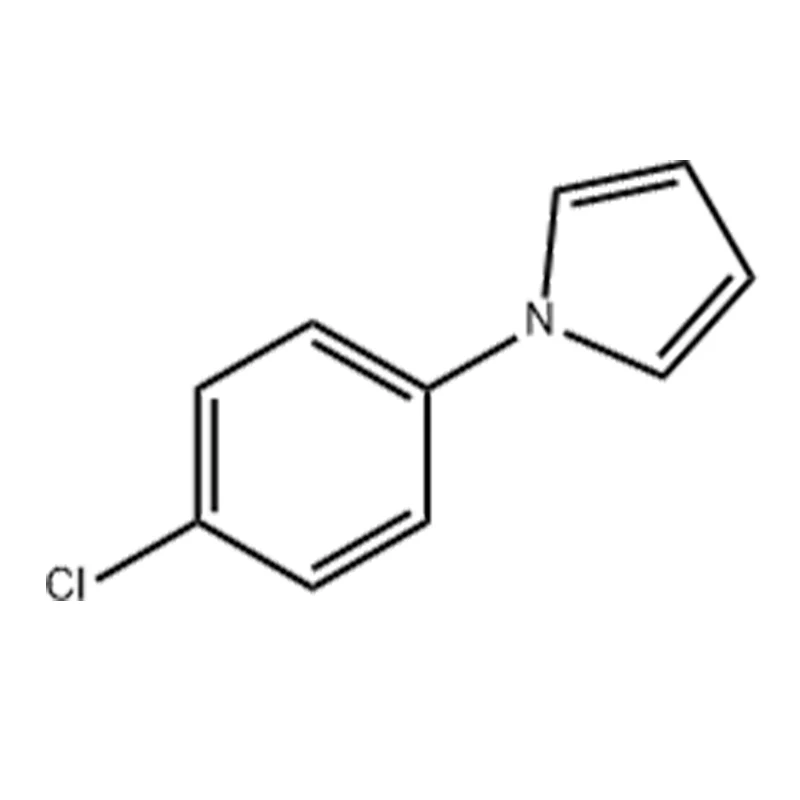
1-(4-Chlorophenyl)-1H-pyrrole is an N-aryl pyrrole in which a π-excessive pyrrole ring is linked directly to a 4-chlorophenyl group via the pyrrole nitrogen, creating a conformationally constrained, conjugated scaffold; the electron-withdrawing para-chloro substituent enhances the compound’s stability and lipophilicity while providing a versatile halogen handle for further functionalization through cross-coupling reactions in medicinal chemistry and materials science.
6-Bromo-3,4-dihydro-2(1H)-quinolinone is a halogenated dihydroquinolinone derivative incorporating a bromine atom at the 6‑position of the aromatic ring, and this strategic substitution converts the parent 3,4-dihydroquinolin-2(1H)-one scaffold into a privileged pharmacophore and a versatile synthetic linchpin for medicinal chemistry and advanced organic synthesis.
3-Methyl-1-benzofuran-2-carbaldehyde, also known as 3-methylbenzofuran-2-carbaldehyde, is a 2,3-disubstituted benzofuran featuring a methyl group at the 3-position of the furan ring and a reactive aldehyde group at the 2-position, whose methyl-adjacent carbonyl and fused bicyclic structure create a rigid, π-conjugated platform for asymmetric catalysis and subsequent heterocycle formation in pharmaceutical research.
5-Chloro-3-methyl-1-benzofuran-2-carbaldehyde is a functionalized 2,3-disubstituted benzofuran featuring a chlorine atom at the 5‑position of the fused benzene ring and a methyl group at the 3‑position of the furan ring, and the combination of the electron-withdrawing chloro substituent and the methyl donor next to the reactive aldehyde handle creates a polarized, sterically tuned platform for subsequent cross‑coupling, condensation, and heterocycle formation in medicinal chemistry and materials science.
N-Thionylaniline (also known as N-sulfinylaniline or phenylthionyl imide) is an organosulfur compound characterized by a sulfinyl group (S=O) directly attached to the nitrogen atom of an aniline ring, and this electrophilic S=O–N motif, with its ambiphilic reactivity and ability to act as both a dienophile and a source of sulfur-functionalized anions, serves as a versatile linchpin for constructing heterocycles, introducing sulfur functionality into aromatic scaffolds, and enabling nucleophilic aromatic substitution in complex organic synthesis.
We use cookies to offer you a better browsing experience, analyze site traffic and personalize content. By using this site, you agree to our use of cookies. Privacy Policy