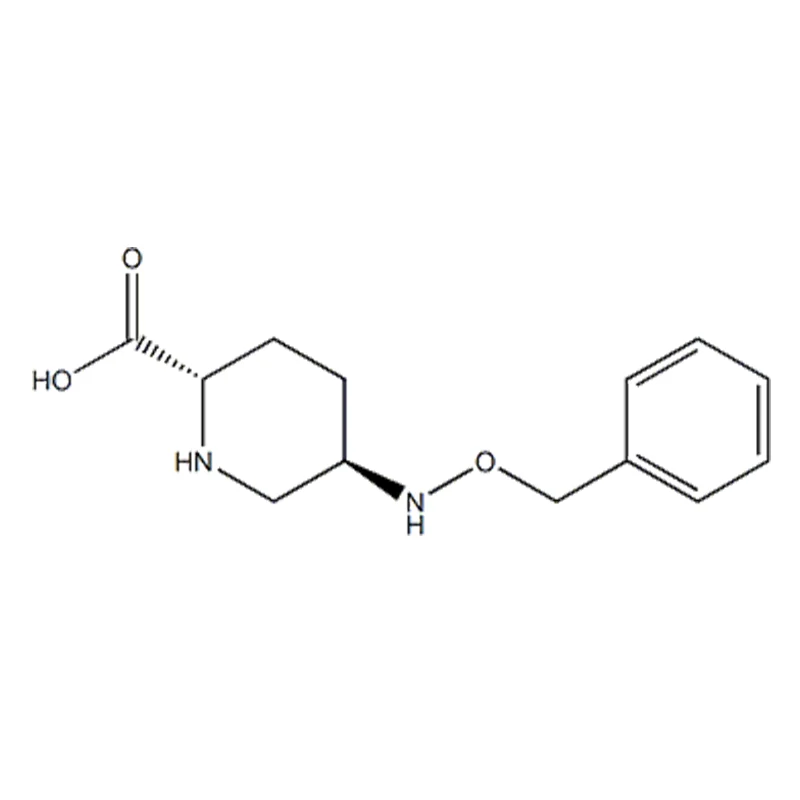
Avibactam Impurity 5, chemically (2S,5R)-5-((benzyloxy)amino)piperidine-2-carboxylic acid, is a chiral piperidine-based carboxylic acid that serves as a key process-related impurity and a critical synthetic intermediate for the blockbuster β‑lactamase inhibitor Avibactam. The molecule features a stereochemically defined (2S,5R) configuration, a free carboxylic acid group at the 2-position, and a benzyloxyamino substituent at the 5-position of the piperidine ring. This precise stereochemical architecture positions Avibactam Impurity 5 as an essential reference standard for pharmaceutical quality control and a valuable building block in the development of next‑generation diazabicyclooctane (DBO) β‑lactamase inhibitors.
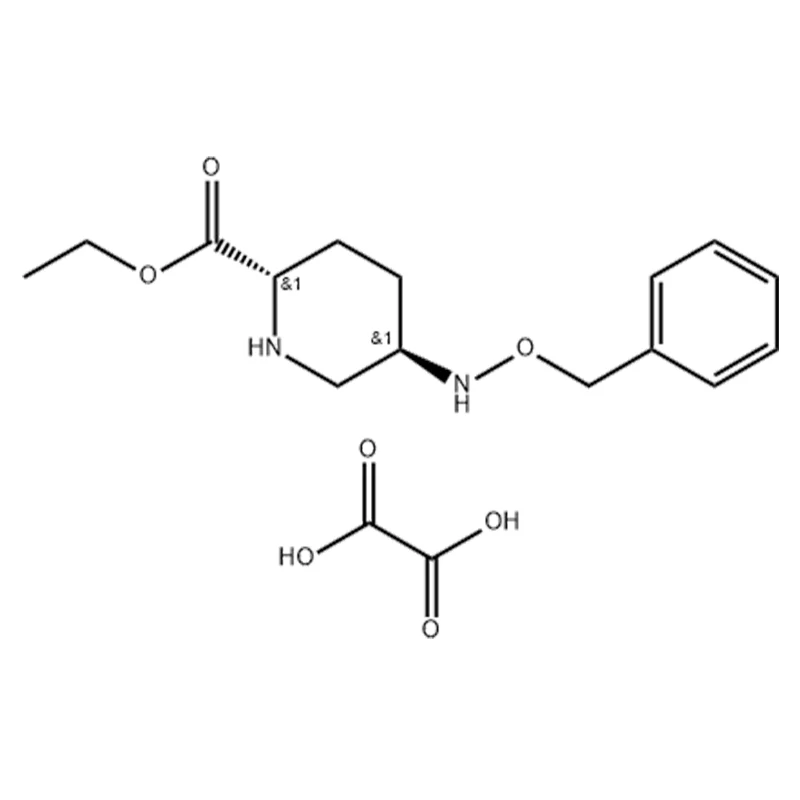
Avibactam INT 1, chemically named (2S,5R)-5-((benzyloxy)amino)piperidine-2-carboxylic acid ethyl ester oxalate, is a chiral piperidine derivative featuring a stereochemically defined (2S,5R)-configured piperidine core, a benzyloxyamino substituent at the 5-position, an ethyl carboxylate at the 2-position, and an oxalate counterion. This precise dual-stereocenter architecture, combined with the oxalate salt form, renders Avibactam INT 1 not only a key synthetic intermediate but also a critical impurity reference standard for the manufacture of the blockbuster β‑lactamase inhibitor Avibactam, positioning it as an indispensable building block in the fight against multidrug‑resistant Gram‑negative bacterial infections.
The compound tert-butyl 4-((2S,5R)-6-(benzyloxy)-7-oxo-1,6-diazabicyclo[3.2.1]octane-2-carboxamido)piperidine-1-carboxylate (CAS 1174020-63-3) possesses a sophisticated architecture built upon the diazabicyclo[3.2.1]octane core, a hallmark structure of next-generation non-β-lactam β-lactamase inhibitors. Its defining element is the seven-membered bicyclic scaffold featuring a unique N-O bond within the 6-(benzyloxy)-7-oxo arrangement, which is essential for the covalent inhibition of serine β-lactamases. The carbonyl group at the 7‑position serves as the reactive warhead that acylates the active site serine residue of the target enzyme. The benzyloxy substituent acts as a protecting group that is cleaved in vivo to unmask the key hydroxylamine functionality. A piperidine ring is appended to the bicyclic core via a carboxamide linkage, terminating in a tert-butyloxycarbonyl (Boc) protecting group that offers orthogonal deprotection selectivity. With its (2S,5R) stereochemistry precisely defined, this compound represents a late-stage intermediate in the synthesis of avibactam and relebactam.
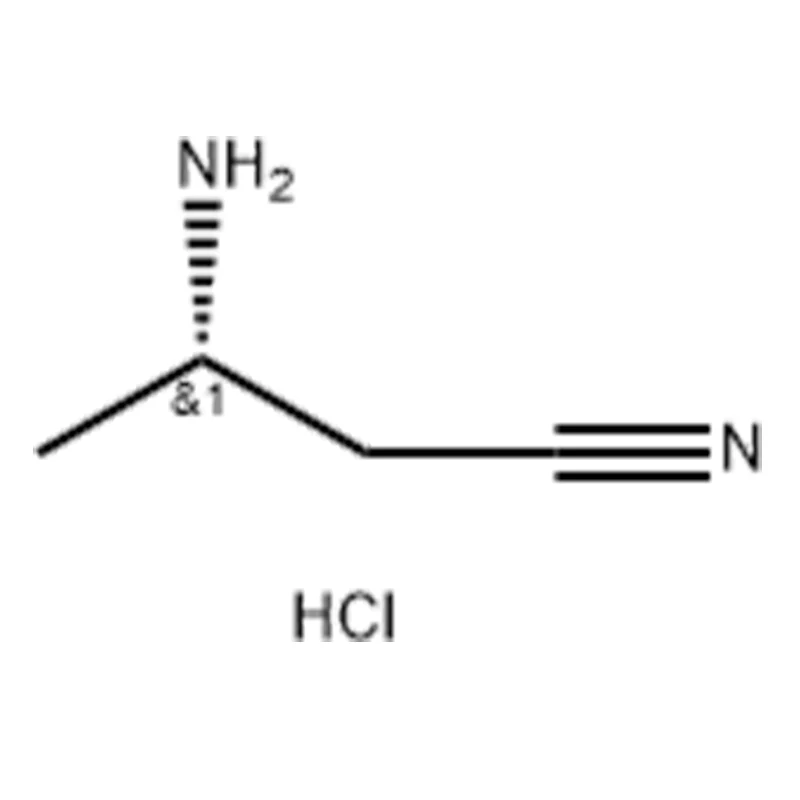
(S)-3-Aminobutanenitrile hydrochloride is a chiral β-aminonitrile hydrochloride salt featuring a specific (S)-configured stereocenter at the third carbon position. The combination of an amino group (–NH₂) and a nitrile group (–CN) on a chiral scaffold, along with the hydrochloride salt form, provides excellent stability and water solubility, making it a crucial chiral building block in asymmetric synthesis and pharmaceutical development.
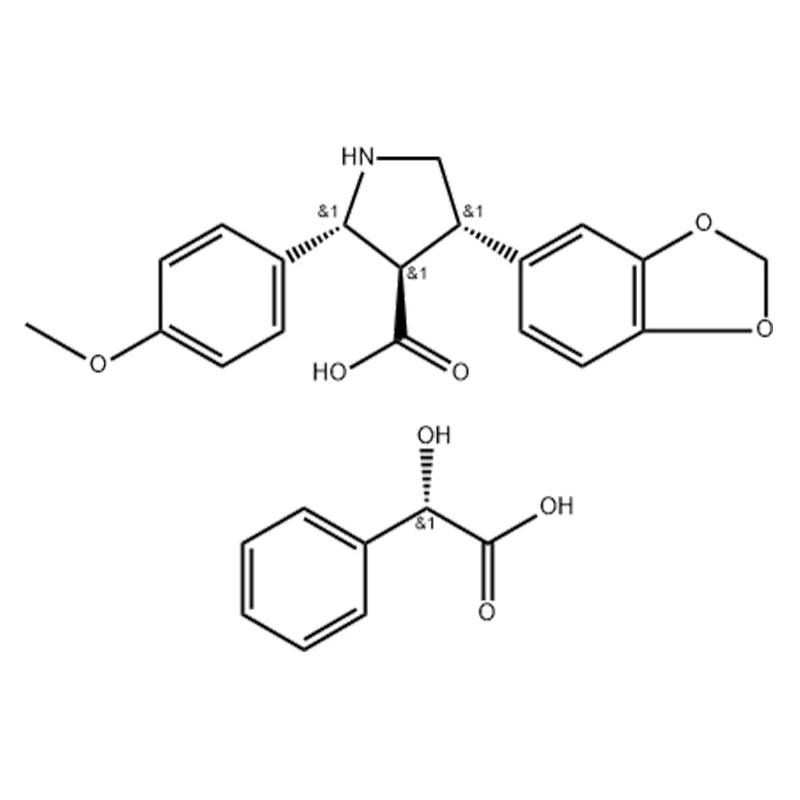
3-Pyrrolidinecarboxylic acid, 4-(1,3-benzodioxol-5-yl)-2-(4-methoxyphenyl)-, (2R,3R,4S)-, (αS)-α-hydroxybenzeneacetate features a chiral 2,4-diaryl-substituted pyrrolidine-3-carboxylic acid core, a pharmacophore framework pioneered by Abbott Laboratories in the discovery of potent endothelin (ET) receptor antagonists such as A-127722 (atrasentan). The pyrrolidine ring bears three contiguous stereocenters at the 2R, 3R, and 4S positions, each essential for precise three-dimensional orientation required for high-affinity binding to the ETA receptor. The (4-methoxyphenyl) group at the 2-position and the (1,3-benzodioxol-5-yl) moiety at the 4-position contribute to lipophilic and electronic complementarity within the receptor’s binding pocket. The carboxylic acid at the 3-position serves as a hydrogen bond donor/acceptor for key active-site interactions. This compound is isolated as a salt with (αS)-α-hydroxybenzeneacetic acid (L-mandelic acid), a chiral resolving agent that stabilizes the enantiomerically pure (2R,3R,4S) configuration for downstream pharmacological applications.
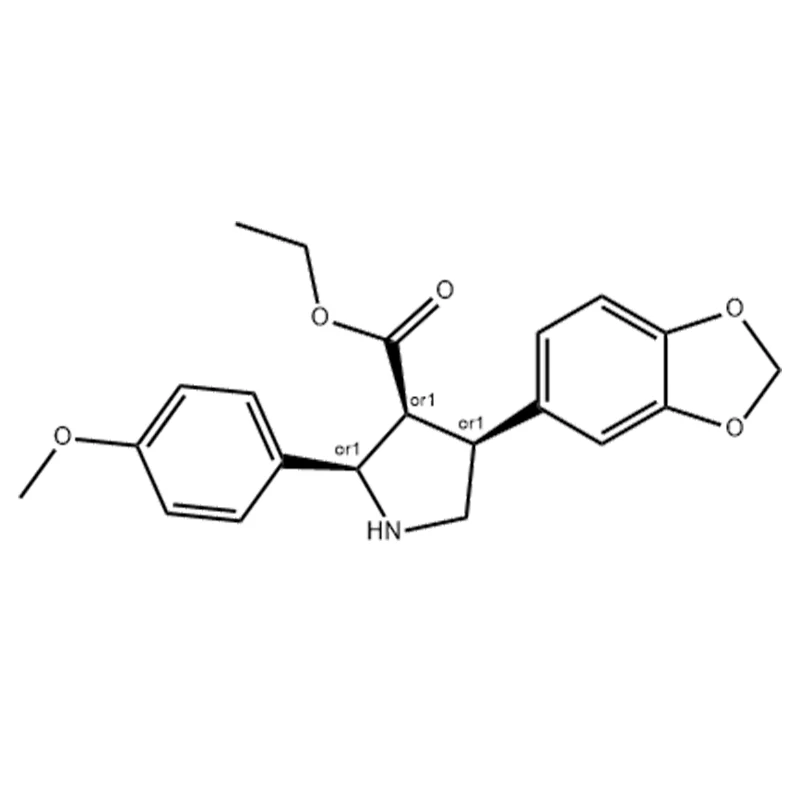
3-Pyrrolidinecarboxylic acid, 4-(1,3-benzodioxol-5-yl)-2-(4-methoxyphenyl)-, ethyl ester, (2α,3α,4α)- (CAS 173937-93-4) is a chirally complex 2,4-diarylpyrrolidine-3-carboxylic acid ethyl ester featuring three contiguous stereocenters in the (2α,3α,4α) configuration. This absolute stereochemical arrangement—specifically the trans,trans orientation of the two aryl substituents across the pyrrolidine ring—is the defining pharmacophoric signature of Abbott Laboratories’ seminal class of potent and selective endothelin A (ETA) receptor antagonists. The 4‑position bears a 1,3‑benzodioxole group, a metabolically stable isostere that enhances lipophilicity and contributes to optimized receptor occupancy. The 2‑position carries a 4‑methoxyphenyl ring, while the 3‑position features an ethyl carboxylate moiety that serves as a versatile handle for late‑stage functionalization via amidation or reduction. This precisely defined (2α,3α,4α) stereochemistry is not merely a structural nuance—it is the critical determinant of the high‑affinity ETA binding that enabled the discovery of the blockbuster drug Atrasentan (ABT-627).
We use cookies to offer you a better browsing experience, analyze site traffic and personalize content. By using this site, you agree to our use of cookies. Privacy Policy


![tert-Butyl 4-((2S,5R)-6-(benzyloxy)-7-oxo-1,6-diazabicyclo[3.2.1]octane-2-carboxamido)piperidine-1-carboxylate](https://www.cosperpharma.com/upload/8820/tert-butyl-4-2s-5r-6-benzyloxy-7-oxo-1-6-diazabicyclo-3-2-1-octane-2-carboxamido-piperidine-1-carboxylate-178506.webp "tert-Butyl 4-((2S,5R)-6-(benzyloxy)-7-oxo-1,6-diazabicyclo[3.2.1]octane-2-carboxamido)piperidine-1-carboxylate")